THE ADVENTURE COLLECTIVE® · Independent discovery and booking for outdoor travel

High-speed rails, a short ferry, and two contrasting must-see sites—Miyajima’s floating torii and Hiroshima’s Peace Memorial Park—make for a compact but powerful day trip from Osaka. This guide explains what to expect, how to plan, and the practical tips that make the most of the journey.
High-speed rails, a short ferry, and two contrasting must-see sites—Miyajima’s floating torii and Hiroshima’s Peace Memorial Park—make for a compact but powerful day trip from Osaka. This guide explains what to expect, how to plan, and the practical tips that make the most of the journey.
You step off the Shinkansen into a quiet station platform and feel the switch from urban Osaka to a different rhythm: salt on the air, gulls wheeling above blue water, and the thin silhouette of a torii gate rising from the tide. The day unfolds fast — a high-speed transfer across Honshu, a ferry crossing the Seto Inland Sea, and the wooden piers and shrine walkways of Miyajima where deer browse the alleys.
Verified experiences and guided adventures in the surrounding area.
Operated by Amigo Tours Japan · Hatsukaichi, Hiroshima Prefecture
You step off the Shinkansen into a quiet station platform and feel the switch from urban Osaka to a different rhythm: salt on the air, gulls wheeling above blue water, and the thin silhouette of a torii gate rising from the tide. The day unfolds fast — a high-speed transfer across Honshu, a ferry crossing the Seto Inland Sea, and the wooden piers and shrine walkways of Miyajima where deer browse the alleys.
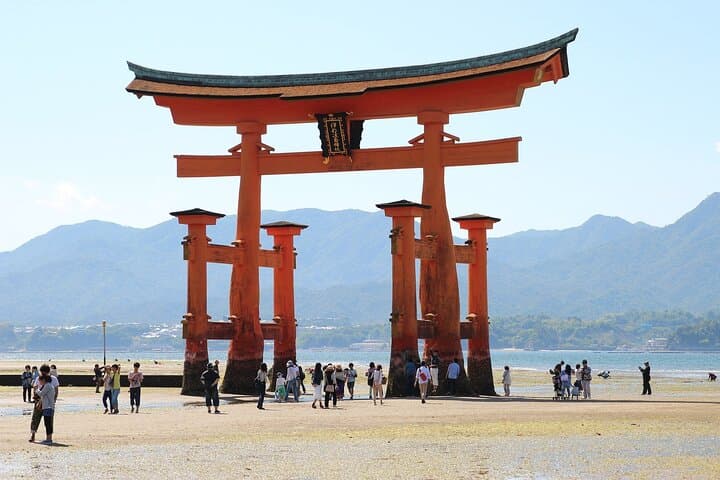
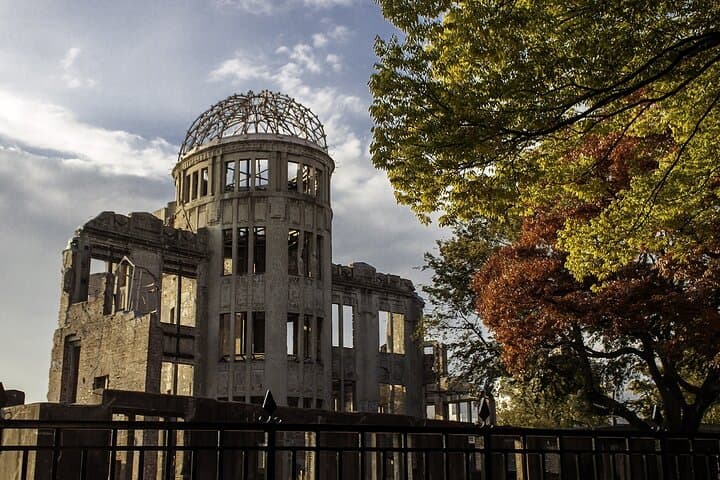
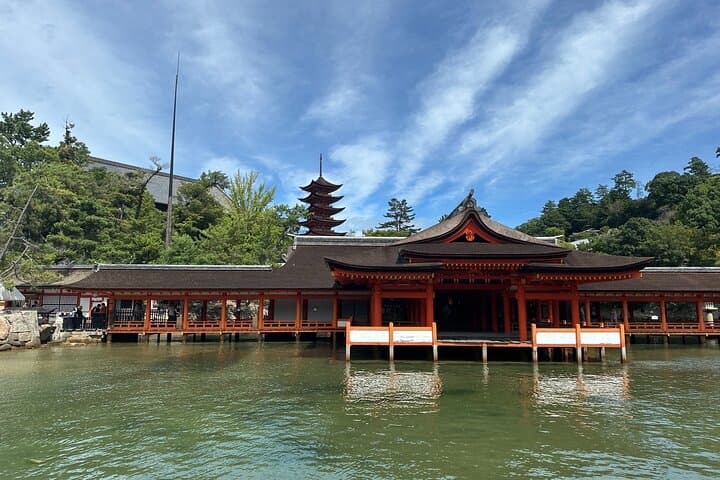
Miyajima’s Itsukushima Shrine dates to the 6th–12th centuries and sits on pilings designed to rise and fall with the tide; the floating torii is a photographic icon. Hiroshima’s Peace Memorial Park, centered on the Atomic Bomb Dome, is modern history etched into city fabric — a place for reflection on resilience and nuclear disarmament.
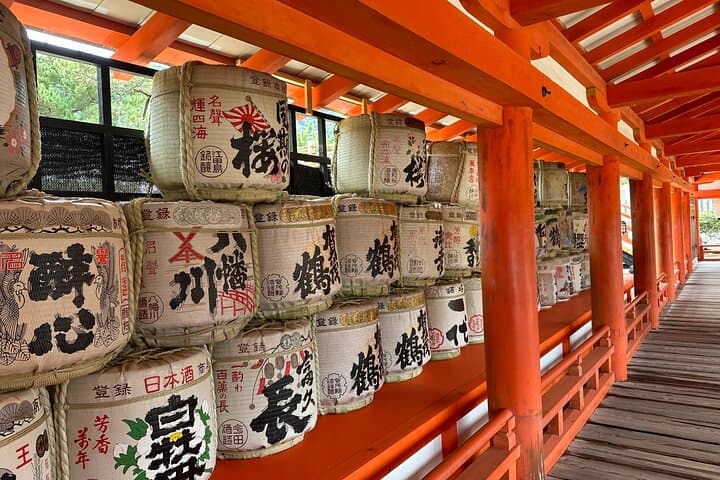
Geology here is coastal rias and island arcs: volcanic islands, sheltered channels, and steep forested ridges like Mount Misen that watch over the bay. Local culture blends Shinto ritual, seafood cuisine (notably Miyajima oysters), and small craft shops selling momiji manju.
Practical guidance: expect an 11–12 hour day with guided transport and walking on uneven surfaces and wooden boardwalks. Wear sturdy, water-resistant walking shoes, bring a light rain layer, water, and cash for small vendors. Plan for tidal photos—low tide reveals the base of the torii, high tide frames it afloat. Midday crowds spike; early ferry runs and afternoon returns are quieter. Respect deer: don’t feed them packaged food and keep bags closed. If you value time and context, combine the island’s vistas with Hiroshima’s museum and memorials for a balanced day that moves from natural spectacle to solemn history.
moderate.
11–12 hours.
Moderate—able to stand and walk several hours with short hikes and stairs
The full guided day trip runs about 11–12 hours round-trip, including Shinkansen travel, ferries, and guided stops.
Yes—ferry tickets to Miyajima Island and entrance to Itsukushima Shrine are included in the tour as described.
Yes—small restaurants offer rice dishes, tempura, and sweets like momiji manju; options vary so ask staff about ingredients.
Significant areas and the museum are accessible, but some outdoor terrain includes steps and uneven surfaces—check with the operator for detailed accommodation.
Itsukushima Shrine has stood in various forms since medieval times and is a UNESCO World Heritage Site; Hiroshima’s Peace Memorial Park preserves the Atomic Bomb Dome as a reminder of 1945 and a focus for peace education.
Visitors are encouraged to follow signage, avoid feeding wildlife, and use designated paths to protect shrine foundations and fragile coastal vegetation; carry out waste and support local businesses that follow sustainable practices.
Amigo Tours Japan operates guided outdoor trips and adventures with an emphasis on safety, stewardship, and memorable experiences.
You step off the Shinkansen into a quiet station platform and feel the switch from urban Osaka to a different rhythm: salt on the air, gulls wheeling above blue water, and the thin silhouette of a torii gate rising from the tide. The day unfolds fast — a high-speed transfer across Honshu, a ferry crossing the Seto Inland Sea, and the wooden piers and shrine walkways of Miyajima where deer browse the alleys.
You step off the Shinkansen into a quiet station platform and feel the switch from urban Osaka to a different rhythm: salt on the air, gulls wheeling above blue water, and the thin silhouette of a torii gate rising from the tide. The day unfolds fast — a high-speed transfer across Honshu, a ferry crossing the Seto Inland Sea, and the wooden piers and shrine walkways of Miyajima where deer browse the alleys.
Miyajima’s Itsukushima Shrine dates to the 6th–12th centuries and sits on pilings designed to rise and fall with the tide; the floating torii is a photographic icon. Hiroshima’s Peace Memorial Park, centered on the Atomic Bomb Dome, is modern history etched into city fabric — a place for reflection on resilience and nuclear disarmament.
Geology here is coastal rias and island arcs: volcanic islands, sheltered channels, and steep forested ridges like Mount Misen that watch over the bay. Local culture blends Shinto ritual, seafood cuisine (notably Miyajima oysters), and small craft shops selling momiji manju.
Practical guidance: expect an 11–12 hour day with guided transport and walking on uneven surfaces and wooden boardwalks. Wear sturdy, water-resistant walking shoes, bring a light rain layer, water, and cash for small vendors. Plan for tidal photos—low tide reveals the base of the torii, high tide frames it afloat. Midday crowds spike; early ferry runs and afternoon returns are quieter. Respect deer: don’t feed them packaged food and keep bags closed. If you value time and context, combine the island’s vistas with Hiroshima’s museum and memorials for a balanced day that moves from natural spectacle to solemn history.