THE ADVENTURE COLLECTIVE® · Independent discovery and booking for outdoor travel

Follow a 9 km mountain route through narrow gorges, ladders and waterfalls that finishes at the striking Vidraru Dam. This guided hike along the Transfagarasan packs technical-feel sections with accessible route-finding for fit hikers.
Follow a 9 km mountain route through narrow gorges, ladders and waterfalls that finishes at the striking Vidraru Dam. This guided hike along the Transfagarasan packs technical-feel sections with accessible route-finding for fit hikers.
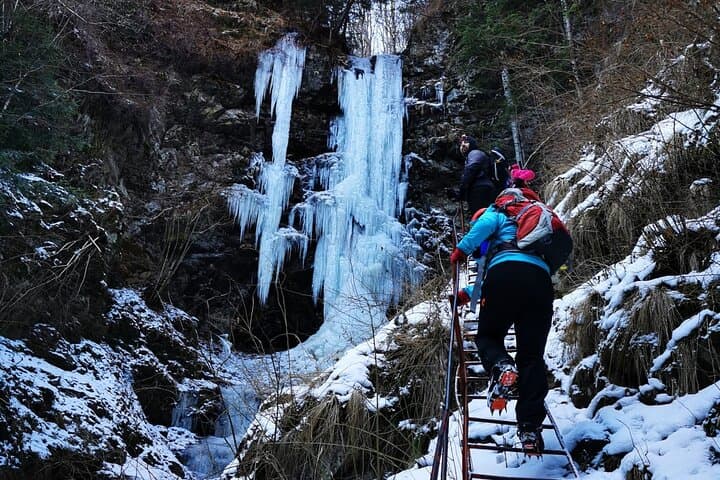
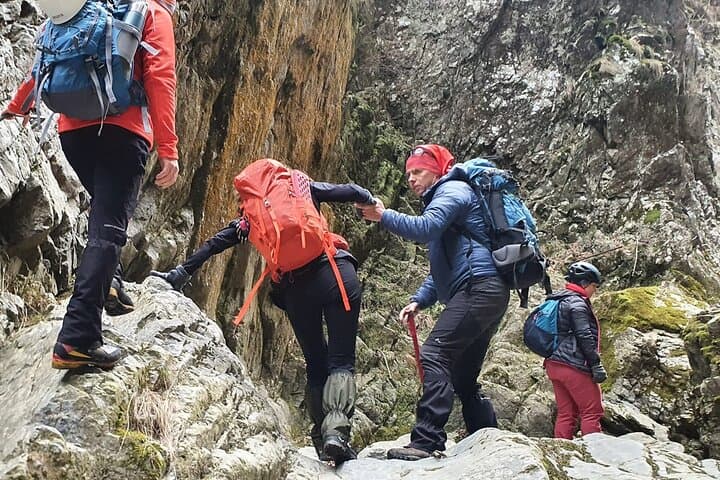
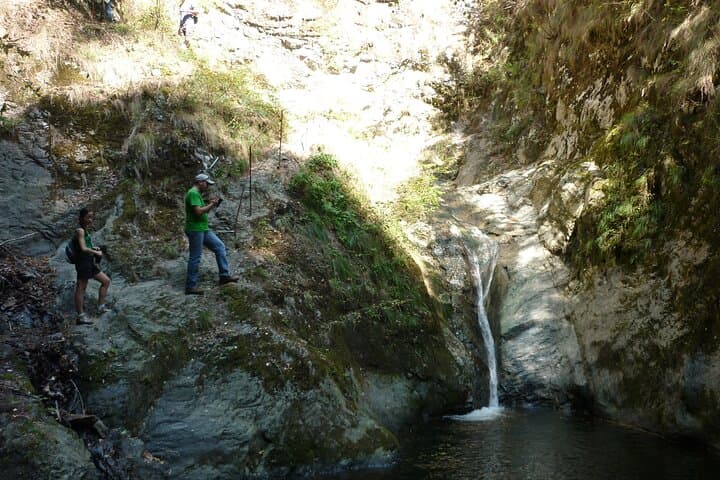
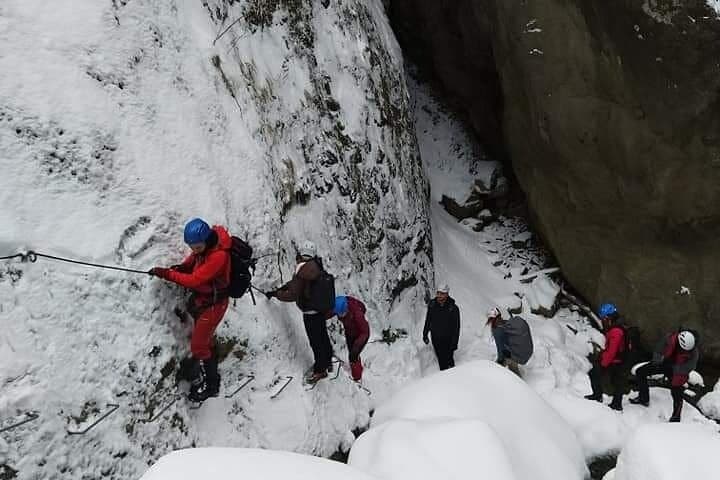
You step off the road where the Transfagarasan curves above Vidraru and enter Valea lui Stan: granite walls compress into a wet corridor, waterfalls calling you forward, and a sequence of ladders and suspended walkways clinging to the canyon.
Verified experiences and guided adventures in the surrounding area.
Operated by ETTA Mundo · Curtea de Argeș, Argeș
You step off the road where the Transfagarasan curves above Vidraru and enter Valea lui Stan: granite walls compress into a wet corridor, waterfalls calling you forward, and a sequence of ladders and suspended walkways clinging to the canyon.
This 9 km route—about 2.5 km through the tight canyon—threads staircases, ladders and short exposed passages that feel engineered for adventure rather than comfort. The stream asks for crossings that are shallow but cold; after rain the flows rise and the canyon becomes a frothing corridor. The trail finishes at Vidraru Dam, an imposing concrete ridge that changed the valley’s hydrology when it was completed in the 1960s.
Geologically the valley cuts through hard metamorphic rock carved by glacial-sourced rivers; vertical faces and tight gorges are the result of concentrated erosion. Culturally the Transfagarasan itself is a modern mountain road built in the late 20th century for strategic and infrastructure reasons—today it’s the dramatic gateway to hikes like this.
Practical guidance: expect up to 6 hours on-trail depending on group fitness; the route is well-laid but demanding—sturdy waterproof hiking shoes, a layered waterproof jacket and a change of clothes are essential. Trekking poles help for river crossings and descending ladders. Start early for stable weather, bring at least 1.5 liters of water, and be prepared for cold water on crossings. Guided trips typically include bottled water, poles and a local guide; cancellations are common in bad weather. Respect the canyon: stay on the route, pack out trash, and give wildlife space—the valley is rugged but sensitive.
challenging.
4–6 hours.
Moderate to strong cardiovascular fitness and good balance for ladders and river crossings
The route is roughly 9 km total with up to 2.5 km inside the canyon; expect 4–6 hours depending on pace and conditions—challenging but accessible for fit hikers.
Yes, several shallow crossings are common; water is cold and you may get wet, so bring quick-dry clothing and plan for a spare set.
A local guide improves safety, route-finding and logistics—many operators provide poles, water and transport from Vidraru Dam.
Avoid during heavy rain, immediately after storms or during rapid snowmelt—flows rise quickly and ladders can become hazardous.
Vidraru Dam and the Transfagarasan corridor were built in the mid–20th century for hydroelectric and strategic purposes; the road opened access to remote mountain valleys.
The canyon’s rock and stream habitat is sensitive to erosion and trampling—stick to established paths, pack out waste, and avoid altering riverbanks.
ETTA Mundo operates guided outdoor trips and adventures with an emphasis on safety, stewardship, and memorable experiences.
You step off the road where the Transfagarasan curves above Vidraru and enter Valea lui Stan: granite walls compress into a wet corridor, waterfalls calling you forward, and a sequence of ladders and suspended walkways clinging to the canyon.
You step off the road where the Transfagarasan curves above Vidraru and enter Valea lui Stan: granite walls compress into a wet corridor, waterfalls calling you forward, and a sequence of ladders and suspended walkways clinging to the canyon.
This 9 km route—about 2.5 km through the tight canyon—threads staircases, ladders and short exposed passages that feel engineered for adventure rather than comfort. The stream asks for crossings that are shallow but cold; after rain the flows rise and the canyon becomes a frothing corridor. The trail finishes at Vidraru Dam, an imposing concrete ridge that changed the valley’s hydrology when it was completed in the 1960s.
Geologically the valley cuts through hard metamorphic rock carved by glacial-sourced rivers; vertical faces and tight gorges are the result of concentrated erosion. Culturally the Transfagarasan itself is a modern mountain road built in the late 20th century for strategic and infrastructure reasons—today it’s the dramatic gateway to hikes like this.
Practical guidance: expect up to 6 hours on-trail depending on group fitness; the route is well-laid but demanding—sturdy waterproof hiking shoes, a layered waterproof jacket and a change of clothes are essential. Trekking poles help for river crossings and descending ladders. Start early for stable weather, bring at least 1.5 liters of water, and be prepared for cold water on crossings. Guided trips typically include bottled water, poles and a local guide; cancellations are common in bad weather. Respect the canyon: stay on the route, pack out trash, and give wildlife space—the valley is rugged but sensitive.