THE ADVENTURE COLLECTIVE® · Independent discovery and booking for outdoor travel

Climb Isabela’s Sierra Negra for a direct view into one of the world’s largest volcanic craters. This 5–6 hour guided hike covers about 17 km round-trip, pairing raw geology with island wildlife and sweeping Pacific views.
Climb Isabela’s Sierra Negra for a direct view into one of the world’s largest volcanic craters. This 5–6 hour guided hike covers about 17 km round-trip, pairing raw geology with island wildlife and sweeping Pacific views.
You stand on the ash-black trail as wind from the Pacific tugs at your hat, the caldera opening ahead like a raw, breathing landscape. Low cloud scud across a rim that drops into a crater spanning roughly 10 km, and the trail climbs with volcanic gravel underfoot—every step a negotiation with the island’s heat and sudden breezes.
Verified experiences and guided adventures in the surrounding area.
Operated by Galápagos Native Tour Operator · Puerto Villamil, Galápagos
You stand on the ash-black trail as wind from the Pacific tugs at your hat, the caldera opening ahead like a raw, breathing landscape. Low cloud scud across a rim that drops into a crater spanning roughly 10 km, and the trail climbs with volcanic gravel underfoot—every step a negotiation with the island’s heat and sudden breezes.
Sierra Negra is one of Isabela’s most active shields; its broad caldera was reshaped by eruptions through the 20th and 21st centuries, most recently in 2018. Geologically the volcano is a study in flows and faults: smooth basaltic sheets interrupted by jagged spatter and fumaroles. Culturally, the hike threads through rural highland farms and past corrals where local families raise goats and grow crops adapted to the island’s thin soils.
Expect a roughly 17 km round-trip route and a 5–6 hour outing that delivers panoramic views of neighboring volcanoes—Cerro Azul and Alcedo—as well as sweeping views back toward Puerto Villamil. Vegetation is sparse but surprising: palo santo and scalesia scrub give way to mosses in sheltered hollows.
Practical guidance: start early to avoid midday sun and wind, carry 2–3 liters of water, and wear grippy boots for loose volcanic scree. A windproof shell, sun protection, and a packed lunch (often provided) make the day manageable. Trails are exposed in places; take breaks on the crater rim to enjoy the scale and scan for wildlife—giant tortoises and marine iguanas sometimes appear en route. Guided hikes follow Galápagos National Park rules—stay on track, don’t touch animals, and pack out what you pack in.
moderate.
5–6 hours.
Moderate level of fitness: several hours of steady uphill on uneven volcanic terrain with short steep sections.
The guided route is approximately 17 km round-trip and typically takes 5–6 hours including breaks and a boxed lunch.
Not recommended for travelers with serious heart or spinal conditions; the tour provider advises moderate fitness—check with your guide about children and mobility limitations.
Guides provided by licensed operators are required in the Galápagos and the tour includes a Galápagos National Park guide; permits and park fees are handled by operators.
Look for Galápagos giant tortoises in highland pastures, and marine iguanas or various ground finches near the crater rim; sightings aren’t guaranteed but are common.
Sierra Negra’s broad caldera and repeated eruptions—including documented activity in 2005 and 2018—have shaped Isabela’s landscape and influenced local settlement patterns.
The trail runs inside Galápagos National Park rules: stick to paths, avoid introducing foreign materials, and follow guide instructions to minimize disturbance to fragile volcanic soils and endemic species.
Galápagos Native Tour Operator operates guided outdoor trips and adventures with an emphasis on safety, stewardship, and memorable experiences.
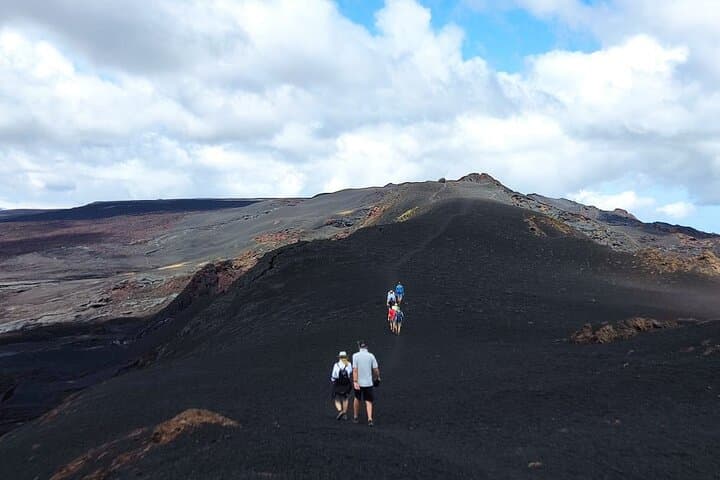
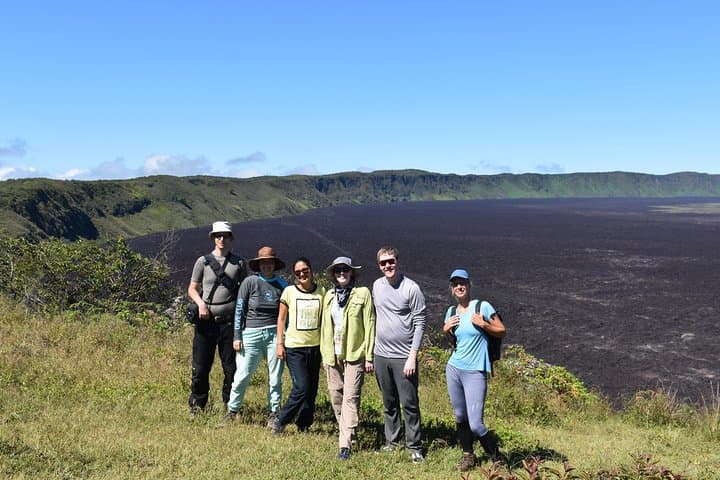
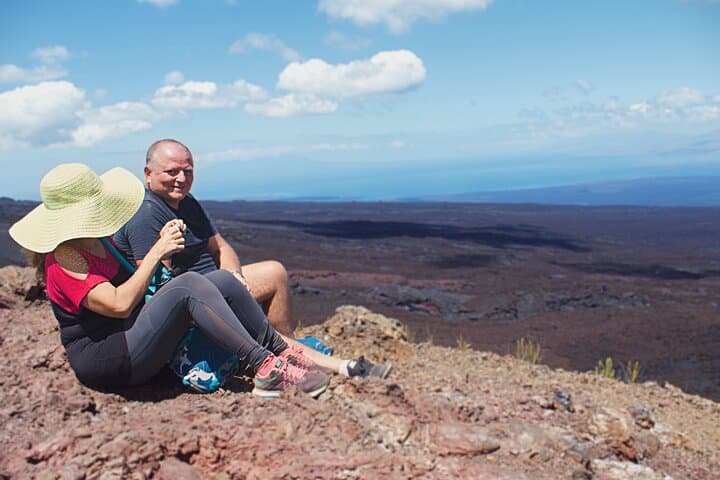
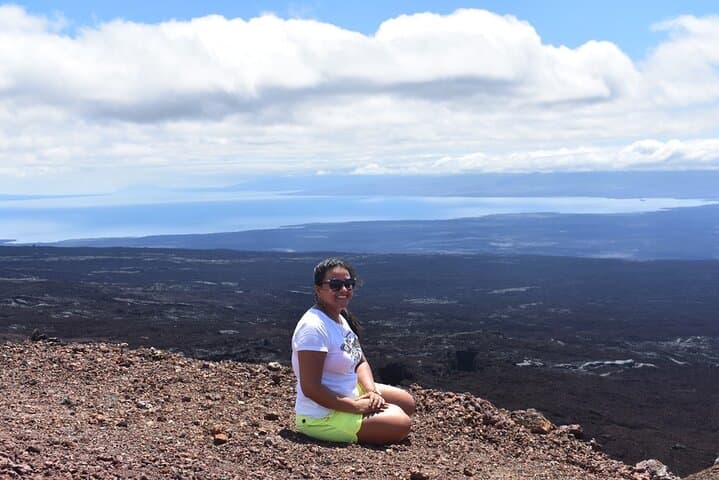
You stand on the ash-black trail as wind from the Pacific tugs at your hat, the caldera opening ahead like a raw, breathing landscape. Low cloud scud across a rim that drops into a crater spanning roughly 10 km, and the trail climbs with volcanic gravel underfoot—every step a negotiation with the island’s heat and sudden breezes.
You stand on the ash-black trail as wind from the Pacific tugs at your hat, the caldera opening ahead like a raw, breathing landscape. Low cloud scud across a rim that drops into a crater spanning roughly 10 km, and the trail climbs with volcanic gravel underfoot—every step a negotiation with the island’s heat and sudden breezes.
Sierra Negra is one of Isabela’s most active shields; its broad caldera was reshaped by eruptions through the 20th and 21st centuries, most recently in 2018. Geologically the volcano is a study in flows and faults: smooth basaltic sheets interrupted by jagged spatter and fumaroles. Culturally, the hike threads through rural highland farms and past corrals where local families raise goats and grow crops adapted to the island’s thin soils.
Expect a roughly 17 km round-trip route and a 5–6 hour outing that delivers panoramic views of neighboring volcanoes—Cerro Azul and Alcedo—as well as sweeping views back toward Puerto Villamil. Vegetation is sparse but surprising: palo santo and scalesia scrub give way to mosses in sheltered hollows.
Practical guidance: start early to avoid midday sun and wind, carry 2–3 liters of water, and wear grippy boots for loose volcanic scree. A windproof shell, sun protection, and a packed lunch (often provided) make the day manageable. Trails are exposed in places; take breaks on the crater rim to enjoy the scale and scan for wildlife—giant tortoises and marine iguanas sometimes appear en route. Guided hikes follow Galápagos National Park rules—stay on track, don’t touch animals, and pack out what you pack in.