THE ADVENTURE COLLECTIVE® · Independent discovery and booking for outdoor travel

Set out from Cusco before dawn and climb through high puna grass to reach Vinicunca’s painted ridgeline at 5,020 m. This 6-hour excursion blends striking mineral geology, traditional Andean landscapes and brisk, altitude-aware hiking.
Set out from Cusco before dawn and climb through high puna grass to reach Vinicunca’s painted ridgeline at 5,020 m. This 6-hour excursion blends striking mineral geology, traditional Andean landscapes and brisk, altitude-aware hiking.
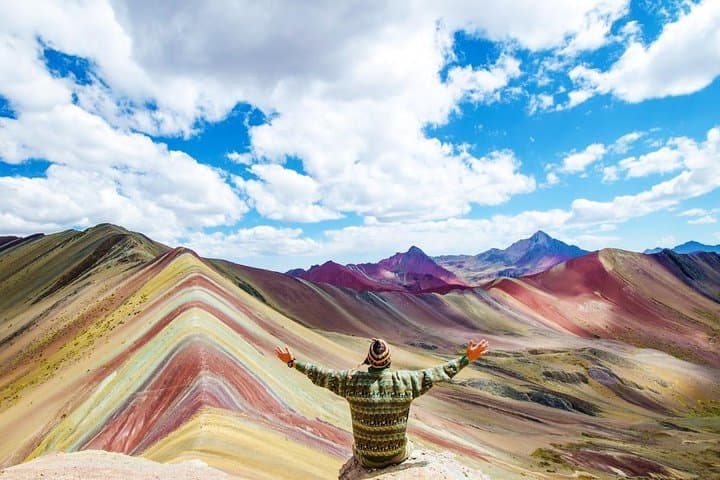
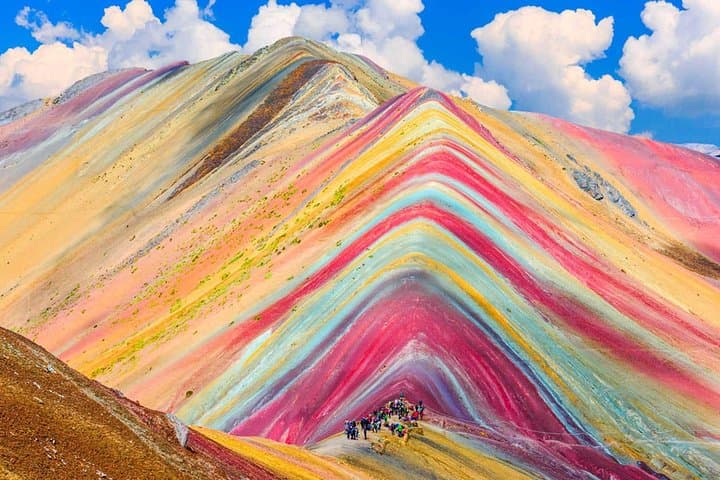
Before dawn the minivan threads down Cusco’s quiet streets, and the Andes shift from shadow to serrated light as you climb. By the time the air thins at Phulawasipata (≈4,600 m), the wind has a voice—sharp, insistent—pushing travelers into layers and onto the trail. The final hour is a steady, honest climb; tufts of puna grass and herds of llamas punctuate the approach, and then, suddenly, the ridge opens onto a banded, painted slope: Vinicunca, the Rainbow Mountain.
Verified experiences and guided adventures in the surrounding area.
Operated by camino peru · Cusco, Cusco Region
Before dawn the minivan threads down Cusco’s quiet streets, and the Andes shift from shadow to serrated light as you climb. By the time the air thins at Phulawasipata (≈4,600 m), the wind has a voice—sharp, insistent—pushing travelers into layers and onto the trail. The final hour is a steady, honest climb; tufts of puna grass and herds of llamas punctuate the approach, and then, suddenly, the ridge opens onto a banded, painted slope: Vinicunca, the Rainbow Mountain.
Geologically the colors are straightforward—iron, copper and other mineral oxides exposed by erosion and freeze-thaw cycles—but the scene carries cultural weight. Local communities have grazed these high pastures for centuries, and Ausangate, the snow-capped massif nearby, remains an important spiritual landmark in Andean cosmology.
Expect a high-altitude daywalk: roughly 1–1.5 hours uphill from the trailhead to the viewpoint at 5,020 m, with broad vistas along the way. The trail is mostly dirt and stone; footing can be loose after snow or rain. Guides handle logistics and entrance tickets, and many itineraries include breakfast in Cusipata and lunch afterward.
Practical edge: prioritize acclimatization—48–72 hours in Cusco helps—and carry water, snacks, sun protection and windproof layers. Take steady paces, use trekking poles if you have them (some companies provide sticks), and allow time at the summit to adjust and photograph. Weather can flip fast; plan the visit in the morning for clearer skies and thinner crowds. Respect local rules, keep to the path, and pack out what you bring in—this fragile highland landscape responds quickly to overuse.
challenging.
5–7 hours.
Should be comfortable walking uphill for 1–2 hours at altitude; prior acclimatization and moderate cardio fitness recommended.
Most organized excursions include the official entrance ticket to Vinicunca; confirm when booking.
The walking portion is a moderate climb of 1–1.5 hours but is challenging due to altitude—expect shortness of breath and slower pace.
Not recommended for pregnant travelers or those with serious heart/spinal conditions; minors and service animals policies vary by operator.
Morning departures (arriving around 9–10 a.m.) usually offer clearer skies and firmer trail conditions; afternoons bring more clouds and wind.
The colorful banding owes to exposed mineral layers; nearby Andean communities have grazed and tended these high pastures for generations.
The puna ecosystem is fragile—stick to marked trails, avoid trampling vegetation and carry out all trash to limit erosion and habitat damage.
camino peru operates guided outdoor trips and adventures with an emphasis on safety, stewardship, and memorable experiences.
Before dawn the minivan threads down Cusco’s quiet streets, and the Andes shift from shadow to serrated light as you climb. By the time the air thins at Phulawasipata (≈4,600 m), the wind has a voice—sharp, insistent—pushing travelers into layers and onto the trail. The final hour is a steady, honest climb; tufts of puna grass and herds of llamas punctuate the approach, and then, suddenly, the ridge opens onto a banded, painted slope: Vinicunca, the Rainbow Mountain.
Before dawn the minivan threads down Cusco’s quiet streets, and the Andes shift from shadow to serrated light as you climb. By the time the air thins at Phulawasipata (≈4,600 m), the wind has a voice—sharp, insistent—pushing travelers into layers and onto the trail. The final hour is a steady, honest climb; tufts of puna grass and herds of llamas punctuate the approach, and then, suddenly, the ridge opens onto a banded, painted slope: Vinicunca, the Rainbow Mountain.
Geologically the colors are straightforward—iron, copper and other mineral oxides exposed by erosion and freeze-thaw cycles—but the scene carries cultural weight. Local communities have grazed these high pastures for centuries, and Ausangate, the snow-capped massif nearby, remains an important spiritual landmark in Andean cosmology.
Expect a high-altitude daywalk: roughly 1–1.5 hours uphill from the trailhead to the viewpoint at 5,020 m, with broad vistas along the way. The trail is mostly dirt and stone; footing can be loose after snow or rain. Guides handle logistics and entrance tickets, and many itineraries include breakfast in Cusipata and lunch afterward.
Practical edge: prioritize acclimatization—48–72 hours in Cusco helps—and carry water, snacks, sun protection and windproof layers. Take steady paces, use trekking poles if you have them (some companies provide sticks), and allow time at the summit to adjust and photograph. Weather can flip fast; plan the visit in the morning for clearer skies and thinner crowds. Respect local rules, keep to the path, and pack out what you bring in—this fragile highland landscape responds quickly to overuse.