THE ADVENTURE COLLECTIVE® · Independent discovery and booking for outdoor travel

A high‑altitude day trek to Vinicunca (Rainbow Mountain) and the neighboring Red Valley offers an intense, color‑streaked landscape at roughly 5,200 m. This guide covers what to expect—terrain, altitude concerns, and gear—to help you prepare for the climb from Cusco.
A high‑altitude day trek to Vinicunca (Rainbow Mountain) and the neighboring Red Valley offers an intense, color‑streaked landscape at roughly 5,200 m. This guide covers what to expect—terrain, altitude concerns, and gear—to help you prepare for the climb from Cusco.
A pale light lifts over the high Andes and the trail out of Pitumarca yawns into wind-cut puna grass. Hikers climb switchbacks, breath short on thin air, and then the first bands of mineral color—ochres, turquoise, crimson—cut across the horizon like paint on a giant stone canvas. Red Valley lies nearby, its rust-red slopes folding into sheltered basins and sweeping viewpoints.
Verified experiences and guided adventures in the surrounding area.
Operated by CrossoverPeru Tours · Cusco, Cusco Region
A pale light lifts over the high Andes and the trail out of Pitumarca yawns into wind-cut puna grass. Hikers climb switchbacks, breath short on thin air, and then the first bands of mineral color—ochres, turquoise, crimson—cut across the horizon like paint on a giant stone canvas. Red Valley lies nearby, its rust-red slopes folding into sheltered basins and sweeping viewpoints.
Geology here is recent and exposed: sedimentary layers of iron, copper and other minerals were revealed as glaciers retreated, producing the banded pigments that give Vinicunca its fame. The area sits on the eastern flank of the Ausangate massif; local Quechua communities have long regarded these peaks as part of a living landscape, with grazing alpacas and seasonal pilgrimages woven into daily life.
Expect an 11–13 hour day that begins before dawn, includes vehicle transfer from Cusco or nearby villages, and reaches roughly 5,200 m (17,060 ft) at the viewpoint. Trails vary from packed dirt to loose scree; altitude, not technical difficulty, is the main challenge—many operators include oxygen and poles. Weather changes fast: sun, wind and sudden rain can come in a single hour.
Practical guidance: pace yourself; drink frequently and eat salty snacks; prioritize layered clothing and sun protection; and favor trekking poles and well-broken-in boots. Start early to avoid afternoon storms and to see the colors in crisp light. Respect local herding paths and follow your guide—these slopes recover slowly from erosion. With preparation, the hike is a compact, unforgettable high‑altitude experience that pairs dramatic geology with living Andean culture.
moderate.
11–13 hours.
Requires good cardiovascular fitness and prior experience with long day hikes or high‑altitude trekking; be prepared for sustained exertion at 4,500–5,200 m.
The viewpoint sits around 5,200 m (17,060 ft); the route is non‑technical but steep and can be physically demanding because of altitude.
Guides and transport are commonly included in organized day tours; park access fees or local entrance systems may apply—book through a reputable operator who handles logistics.
Headache, nausea, dizziness and shortness of breath are common; rest, hydration, slow descent if symptoms worsen, and available oxygen are standard mitigation measures.
The dry season (May–September) generally offers the clearest skies and firmer trails; the wet season (Nov–Mar) brings rain, cloud and mud.
Rainbow Mountain’s colored strata were exposed as glaciers retreated; the site has become a popular stop on routes around the Ausangate sacred range and intersects traditional Quechua pastoral life.
Trails are fragile at high elevation—stick to established paths, avoid trampling vegetation, and support local guides and communities to reduce visitor impact.
CrossoverPeru Tours operates guided outdoor trips and adventures with an emphasis on safety, stewardship, and memorable experiences.
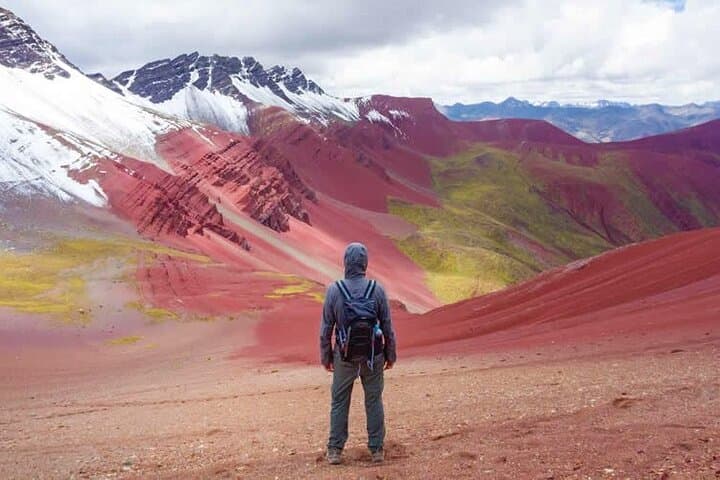
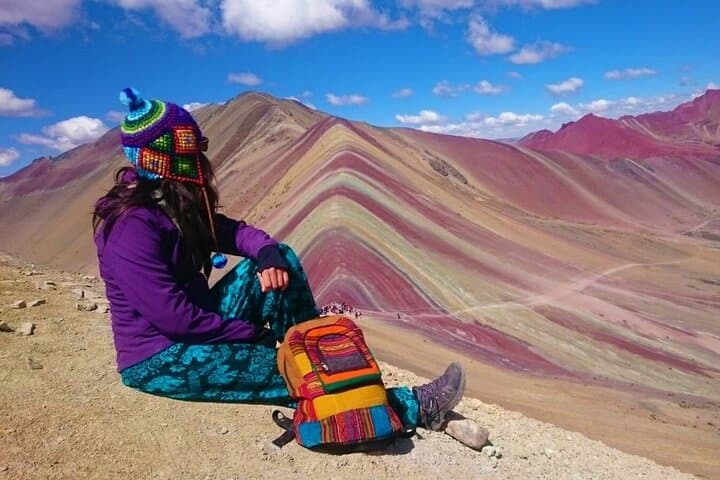
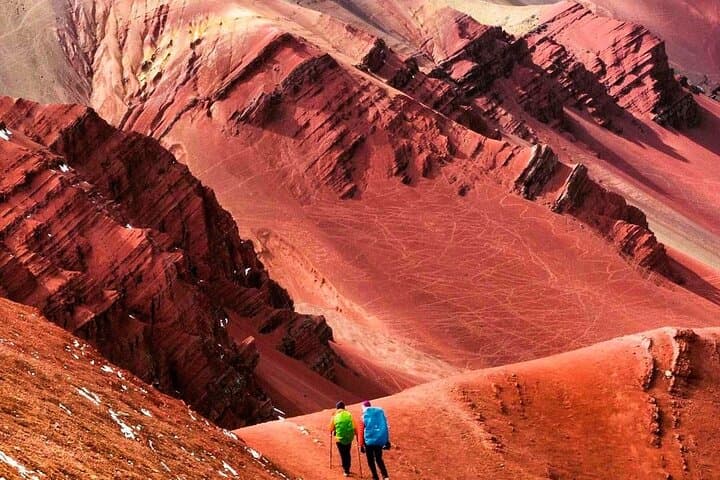
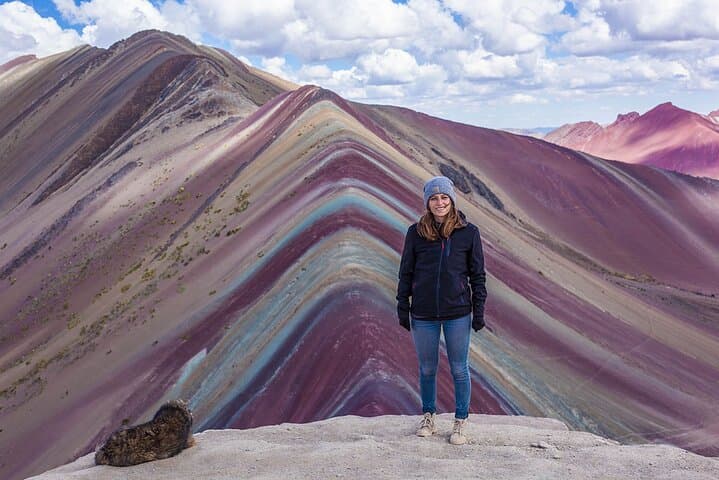
A pale light lifts over the high Andes and the trail out of Pitumarca yawns into wind-cut puna grass. Hikers climb switchbacks, breath short on thin air, and then the first bands of mineral color—ochres, turquoise, crimson—cut across the horizon like paint on a giant stone canvas. Red Valley lies nearby, its rust-red slopes folding into sheltered basins and sweeping viewpoints.
A pale light lifts over the high Andes and the trail out of Pitumarca yawns into wind-cut puna grass. Hikers climb switchbacks, breath short on thin air, and then the first bands of mineral color—ochres, turquoise, crimson—cut across the horizon like paint on a giant stone canvas. Red Valley lies nearby, its rust-red slopes folding into sheltered basins and sweeping viewpoints.
Geology here is recent and exposed: sedimentary layers of iron, copper and other minerals were revealed as glaciers retreated, producing the banded pigments that give Vinicunca its fame. The area sits on the eastern flank of the Ausangate massif; local Quechua communities have long regarded these peaks as part of a living landscape, with grazing alpacas and seasonal pilgrimages woven into daily life.
Expect an 11–13 hour day that begins before dawn, includes vehicle transfer from Cusco or nearby villages, and reaches roughly 5,200 m (17,060 ft) at the viewpoint. Trails vary from packed dirt to loose scree; altitude, not technical difficulty, is the main challenge—many operators include oxygen and poles. Weather changes fast: sun, wind and sudden rain can come in a single hour.
Practical guidance: pace yourself; drink frequently and eat salty snacks; prioritize layered clothing and sun protection; and favor trekking poles and well-broken-in boots. Start early to avoid afternoon storms and to see the colors in crisp light. Respect local herding paths and follow your guide—these slopes recover slowly from erosion. With preparation, the hike is a compact, unforgettable high‑altitude experience that pairs dramatic geology with living Andean culture.