THE ADVENTURE COLLECTIVE® · Independent discovery and booking for outdoor travel

Walk a riverside trail, explore white-village streets, and stand beneath a 2,000-year-old Roman aqueduct on this full-day Ruta de Agua walk near Chelva. Expect varied terrain, historic sights, and a memorable tunnel finish.
Walk a riverside trail, explore white-village streets, and stand beneath a 2,000-year-old Roman aqueduct on this full-day Ruta de Agua walk near Chelva. Expect varied terrain, historic sights, and a memorable tunnel finish.
Step off the village square and into a different pace: eucalyptus-scented air, the river chattering over rocks, and a stone tunnel yawning where Roman hands once carved through limestone.
Verified experiences and guided adventures in the surrounding area.
Operated by Valencia Excursions Club · Chelva, Valencia
Step off the village square and into a different pace: eucalyptus-scented air, the river chattering over rocks, and a stone tunnel yawning where Roman hands once carved through limestone.
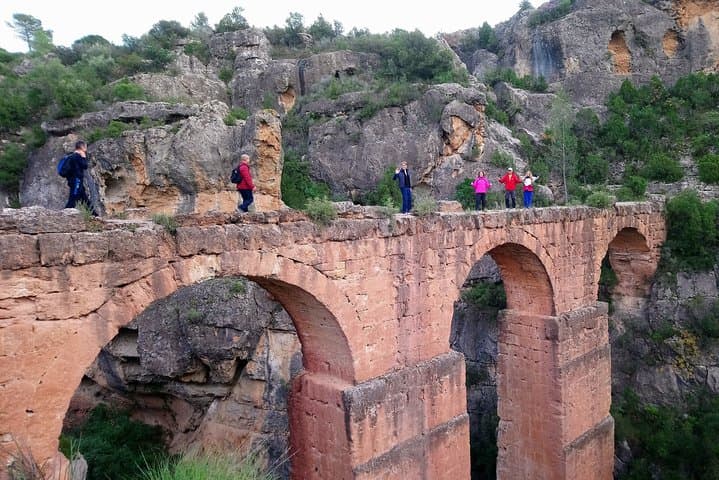
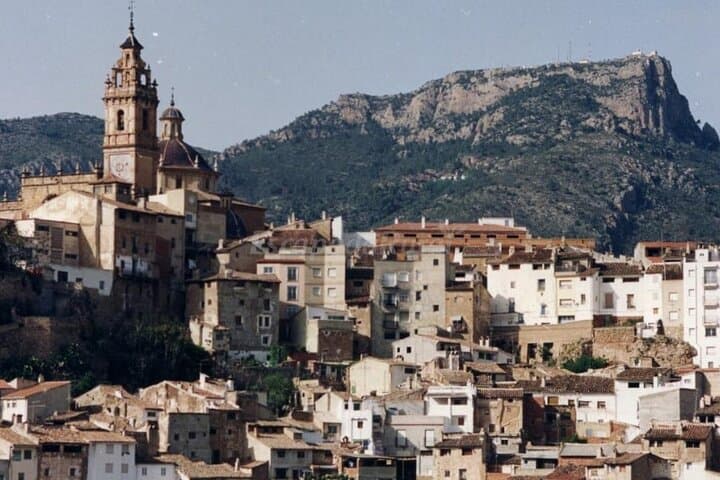
This full-day route threads three distinct chapters — a gentle fluvial walk past rapids and a 19th-century mill, a stroll through the white-washed streets and historic washhouses of Chelva, then the hair-raising arrival at Peña Cortada’s Roman aqueduct and its carved tunnels. The aqueduct dates back roughly 2,000 years, an engineering line in the landscape that later cultures, including medieval Arabic communities, adapted into storage caves and rural mills.
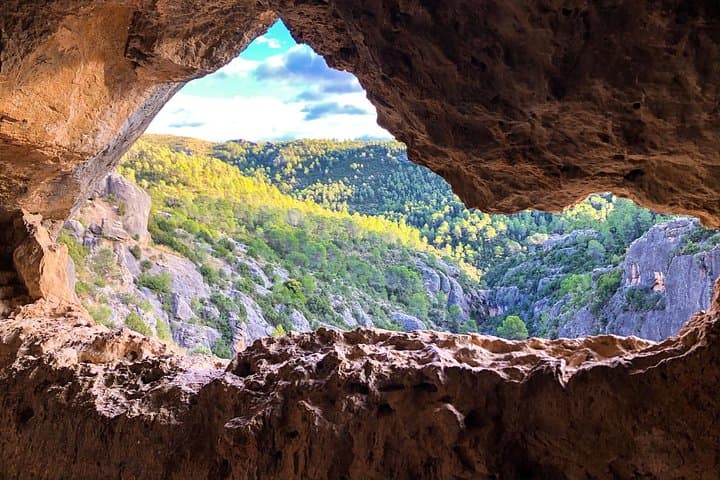
Geologically the gorge exposes layered limestone and compacted fluvial terraces; olive and almond groves cling to those slopes and push views back to the town. Culturally, villages like Calles and Chelva preserve communal fountains and plazas where daily life still centers outside.
Practical guidance: the walk totals about 16 km (10 miles) over mixed dirt tracks, riverbank steps and rocky ravines — expect uneven surfaces and some short steep sections. Bring at least 2 liters of water, sun protection and stout footwear; plan for 6–9 hours including stops and transport. Spring brings almond blossoms and low water; summer can be hot and exposed; autumn is ideal for cooler temperatures and long light. Stay on marked paths to protect fragile terraces and private groves, and give wildlife space — deer are often glimpsed at dawn and dusk.
The route rewards steady pacing: historic architecture, a peaceful riverside picnic spot, and then the sudden scale of an aqueduct tunnel that reorients you to two millennia of human movement through this limestone country.
moderate.
6–9 hours.
Moderate fitness: able to walk 10–16 km with some elevation change and uneven footing.
The walking portion is about 16 km (10 miles) over mixed terrain with some short steep sections; it’s rated moderate and typically takes 4–6 hours of walking within a full-day program.
Many visitors stay in Chelva or the nearby town of Calles for easy access; Valencia city is the nearest large base about an hour’s drive away for broader accommodation options.
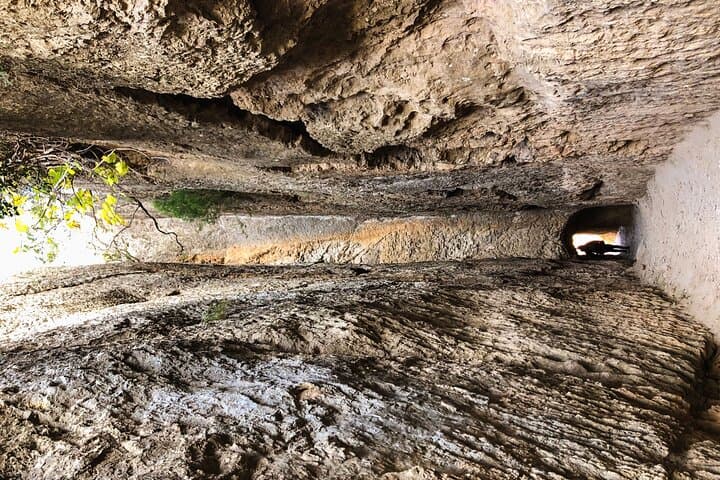
Tunnels are impressive but uneven and may be damp or low in places — proceed carefully, use a headlamp if you plan to enter, and follow the guide’s instructions.
Spring and autumn offer the most comfortable temperatures and scenery (almond blossoms in spring); summer is hot and requires early starts and more water.
The Peña Cortada aqueduct is a Roman-era engineering work, with later medieval and Arabic-era adaptations visible in storage caves and local mills.
Stick to established trails to limit erosion on limestone terraces and avoid disturbing breeding wildlife; pack out all waste and respect private agricultural land.
Valencia Excursions Club operates guided outdoor trips and adventures with an emphasis on safety, stewardship, and memorable experiences.
Step off the village square and into a different pace: eucalyptus-scented air, the river chattering over rocks, and a stone tunnel yawning where Roman hands once carved through limestone.
Step off the village square and into a different pace: eucalyptus-scented air, the river chattering over rocks, and a stone tunnel yawning where Roman hands once carved through limestone.
This full-day route threads three distinct chapters — a gentle fluvial walk past rapids and a 19th-century mill, a stroll through the white-washed streets and historic washhouses of Chelva, then the hair-raising arrival at Peña Cortada’s Roman aqueduct and its carved tunnels. The aqueduct dates back roughly 2,000 years, an engineering line in the landscape that later cultures, including medieval Arabic communities, adapted into storage caves and rural mills.
Geologically the gorge exposes layered limestone and compacted fluvial terraces; olive and almond groves cling to those slopes and push views back to the town. Culturally, villages like Calles and Chelva preserve communal fountains and plazas where daily life still centers outside.
Practical guidance: the walk totals about 16 km (10 miles) over mixed dirt tracks, riverbank steps and rocky ravines — expect uneven surfaces and some short steep sections. Bring at least 2 liters of water, sun protection and stout footwear; plan for 6–9 hours including stops and transport. Spring brings almond blossoms and low water; summer can be hot and exposed; autumn is ideal for cooler temperatures and long light. Stay on marked paths to protect fragile terraces and private groves, and give wildlife space — deer are often glimpsed at dawn and dusk.
The route rewards steady pacing: historic architecture, a peaceful riverside picnic spot, and then the sudden scale of an aqueduct tunnel that reorients you to two millennia of human movement through this limestone country.