THE ADVENTURE COLLECTIVE® · Independent discovery and booking for outdoor travel

An overnight hike to Pedra do Sino leads to the Serra dos Órgãos' highest vantage at 2,275 m. This two-day route combines sustained climbing through Atlantic Forest with an exposed summit and shelter-style overnighting.
An overnight hike to Pedra do Sino leads to the Serra dos Órgãos' highest vantage at 2,275 m. This two-day route combines sustained climbing through Atlantic Forest with an exposed summit and shelter-style overnighting.
The trail opens on a cool morning as transfer vans thread out of Rio de Janeiro and into the steep ribs of Serra dos Órgãos. You step from the car into Atlantic Forest—humid air, ferns dripping, and a single line of hikers folding their packs for an 11–14 km climb toward the shelter beneath Pedra do Sino. The rock rises ahead like a combed ridge, its summit at 2,275 m where clouds can push you back or part to reveal a raw panorama of jagged faces and valleys.
Verified experiences and guided adventures in the surrounding area.
Operated by Rio Running Tour · Teresópolis, Rio de Janeiro
The trail opens on a cool morning as transfer vans thread out of Rio de Janeiro and into the steep ribs of Serra dos Órgãos. You step from the car into Atlantic Forest—humid air, ferns dripping, and a single line of hikers folding their packs for an 11–14 km climb toward the shelter beneath Pedra do Sino. The rock rises ahead like a combed ridge, its summit at 2,275 m where clouds can push you back or part to reveal a raw panorama of jagged faces and valleys.
The range is geologically old granite and gneiss carved by erosion into dramatic spires. Culturally, the park has been central to Brazilian climbing history and the development of conservation around Teresópolis. Trails follow routes once used by settlers and early naturalists; today they thread through remnants of native forest and patches of secondary growth.
Expect trail that’s steep and often rocky, with sustained elevation gain on day one and an exposed summit approach on day two. Nights are spent in a basic park shelter—beds or bivouacs when full—so plan lightweight sleep systems. Water sources exist but treat or filter; weather can swing quickly, turning warm sunlight to wind-driven mist.
Practical tips: arrive with sturdy boots, layered clothing for high-elevation chills, and a small stove if you won’t use shelter meals. Start early both days to avoid afternoon storms and leave no trace: pack out what you pack in. The hike rewards effort with sunrise over needle-like peaks and a close look at Atlantic Forest ecology—rivers daring you to pause and listen before you descend.
challenging.
2 days (overnight).
Good aerobic fitness with experience on sustained uphill trails; able to hike 11–14 km with elevation gain and carry an overnight pack.
The route involves 11–14 km of mostly uphill hiking to the shelter on day one and a shorter, steeper summit approach on day two; moderate-to-high fitness is recommended.
Yes—overnight accommodations are in a basic park shelter with beds or bivouac space and communal kitchen equipment; meals may be added to bookings.
Walkers with regular hiking experience and basic fitness can join, but it’s not ideal for those new to multi-day backpacking or with cardiovascular/spinal issues.
Park admission and shelter arrangements are included by the operator; independent visitors must register and pay park fees at the entrance.
Serra dos Órgãos has a long mountaineering history and was one of Brazil’s earliest protected areas, established to conserve water sources and native forest for nearby towns.
Visitor impact is managed through permit limits and shelter rules—stick to established trails, pack out waste, and avoid fires to protect fragile high-elevation vegetation.
Rio Running Tour operates guided outdoor trips and adventures with an emphasis on safety, stewardship, and memorable experiences.


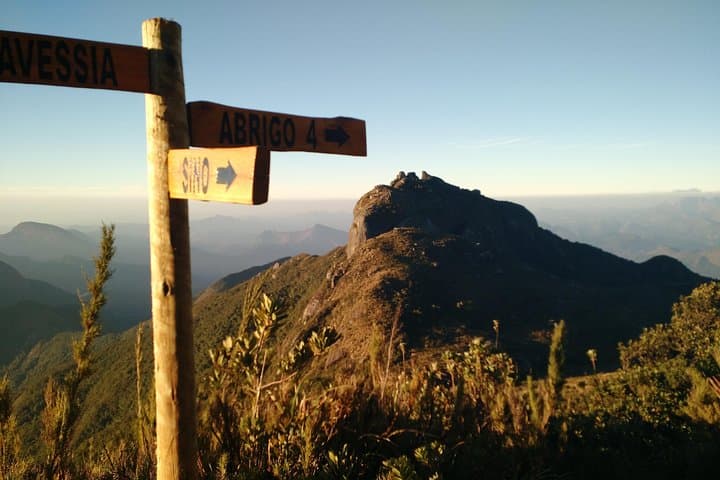
The trail opens on a cool morning as transfer vans thread out of Rio de Janeiro and into the steep ribs of Serra dos Órgãos. You step from the car into Atlantic Forest—humid air, ferns dripping, and a single line of hikers folding their packs for an 11–14 km climb toward the shelter beneath Pedra do Sino. The rock rises ahead like a combed ridge, its summit at 2,275 m where clouds can push you back or part to reveal a raw panorama of jagged faces and valleys.
The trail opens on a cool morning as transfer vans thread out of Rio de Janeiro and into the steep ribs of Serra dos Órgãos. You step from the car into Atlantic Forest—humid air, ferns dripping, and a single line of hikers folding their packs for an 11–14 km climb toward the shelter beneath Pedra do Sino. The rock rises ahead like a combed ridge, its summit at 2,275 m where clouds can push you back or part to reveal a raw panorama of jagged faces and valleys.
The range is geologically old granite and gneiss carved by erosion into dramatic spires. Culturally, the park has been central to Brazilian climbing history and the development of conservation around Teresópolis. Trails follow routes once used by settlers and early naturalists; today they thread through remnants of native forest and patches of secondary growth.
Expect trail that’s steep and often rocky, with sustained elevation gain on day one and an exposed summit approach on day two. Nights are spent in a basic park shelter—beds or bivouacs when full—so plan lightweight sleep systems. Water sources exist but treat or filter; weather can swing quickly, turning warm sunlight to wind-driven mist.
Practical tips: arrive with sturdy boots, layered clothing for high-elevation chills, and a small stove if you won’t use shelter meals. Start early both days to avoid afternoon storms and leave no trace: pack out what you pack in. The hike rewards effort with sunrise over needle-like peaks and a close look at Atlantic Forest ecology—rivers daring you to pause and listen before you descend.