THE ADVENTURE COLLECTIVE® · Independent discovery and booking for outdoor travel

Walk the ridge above Navarino Bay, explore the stone remains of Palaiokastro, then drop to Voidokilia’s perfect crescent and the bird-rich Gialova lagoon. This 4-hour coastal hike blends geology, migration corridors and seaside swimming.
Walk the ridge above Navarino Bay, explore the stone remains of Palaiokastro, then drop to Voidokilia’s perfect crescent and the bird-rich Gialova lagoon. This 4-hour coastal hike blends geology, migration corridors and seaside swimming.
A low ridge of limestone frames the approach to Navarino Bay; olive-scrub slopes give way to the crescent of Voidokilia, where sand curves like a held breath and the lagoon of Gialova glitters inland. You begin on Koryfasio hill, passing the ruins of Palaiokastro—a medieval watchpoint that still reads the coastline in every stone—before descending to a wide beach and a sheltered lagoon that draws migrating birds.
Verified experiences and guided adventures in the surrounding area.
Operated by Explore Messinia · Pylos, Peloponnese
A low ridge of limestone frames the approach to Navarino Bay; olive-scrub slopes give way to the crescent of Voidokilia, where sand curves like a held breath and the lagoon of Gialova glitters inland. You begin on Koryfasio hill, passing the ruins of Palaiokastro—a medieval watchpoint that still reads the coastline in every stone—before descending to a wide beach and a sheltered lagoon that draws migrating birds.
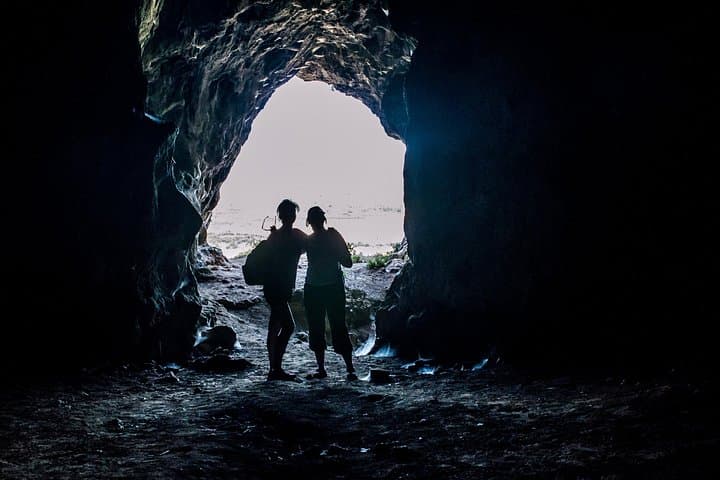
This stretch of western Messinia sits on a complex geological seam: Pliocene marine terraces and recent dune systems overlay older karst limestone, producing caves, cliffs and sheltered wetland basins. Culturally, the coast has long been a crossroads between Greece and the wider Mediterranean; the area around Pylos and Voidokilia has archaeological echoes from Mycenaean to Venetian eras. The Gialova/Yalova lagoon is the southernmost stop for many migratory species between Europe and Africa and is protected under Natura 2000.
Expect 3–4 hours on varied terrain: short rocky steps, grassy tracks, and soft sand. The route includes a short steep section at Palaiokastro and level walking along the shore; bring water, sun protection and shoes that handle both scree and salt-flat sand. A picnic of local cheeses and bread complements a swim at Voidokilia in summer; in spring and fall the lagoon becomes a prime birdwatching stage. Respect nesting areas, stay on marked paths, and carry out waste. With basic fitness and steady footing, this loop offers coastal panoramas, birdlife spectacles and a tangible sense of human history pressed against the sea.
moderate.
4 hours.
Moderate: able to handle uneven coastal trails, short steep sections and up to a few miles of walking.
The organized route runs about 3–4 hours with some short steep sections at Palaiokastro; overall it’s moderate and suitable for most people with basic fitness.
Yes—Voidokilia has safe swimming in summer; check local conditions and be cautious with currents near the bay entrance.
Absolutely—the Gialova (Yalova) lagoon is a key stop for migratory birds and supports species like herons, ospreys and flamingos at certain seasons.
This tour includes a guide and is offered as a private activity, often with local snacks and a picnic included.
Palaiokastro sits on medieval foundations that once guarded a strategic harbor used through Venetian and Ottoman periods; the coastline has long been a maritime crossroads.
The area is part of the Natura 2000 network; stay on marked trails, avoid disturbing wildlife, and follow local guidelines to protect nesting birds and fragile dune systems.
Explore Messinia operates guided outdoor trips and adventures with an emphasis on safety, stewardship, and memorable experiences.
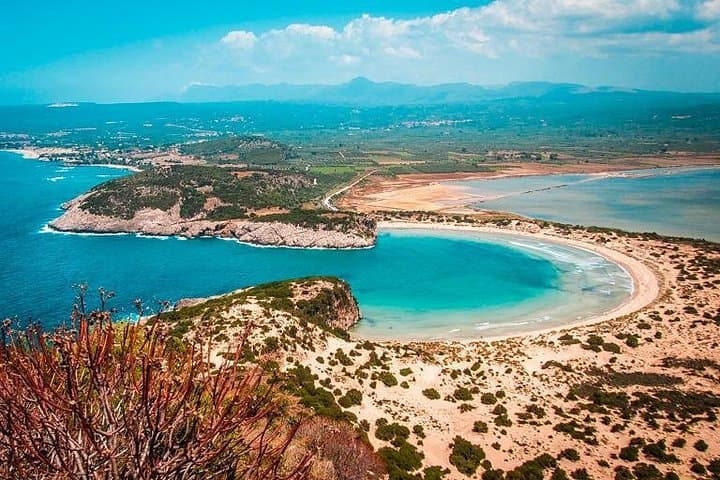
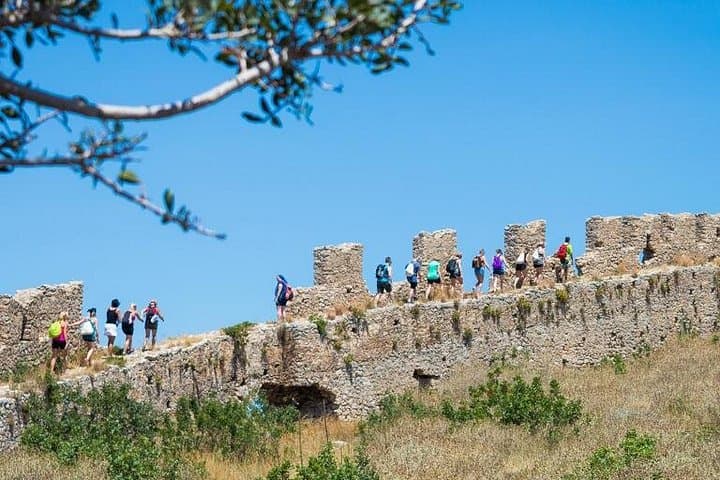
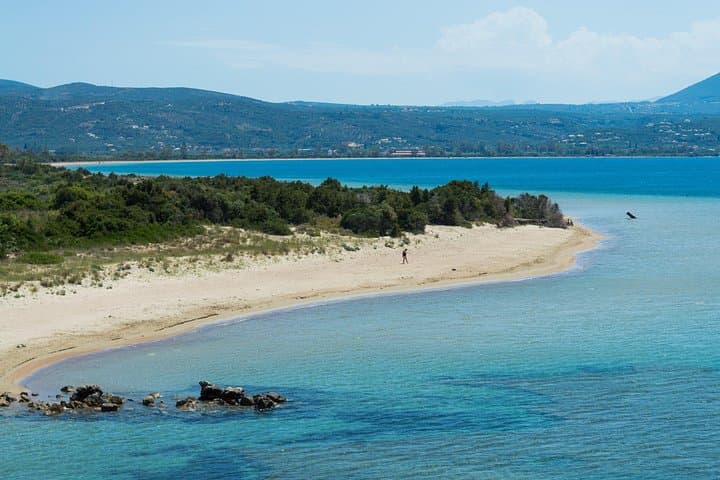
A low ridge of limestone frames the approach to Navarino Bay; olive-scrub slopes give way to the crescent of Voidokilia, where sand curves like a held breath and the lagoon of Gialova glitters inland. You begin on Koryfasio hill, passing the ruins of Palaiokastro—a medieval watchpoint that still reads the coastline in every stone—before descending to a wide beach and a sheltered lagoon that draws migrating birds.
A low ridge of limestone frames the approach to Navarino Bay; olive-scrub slopes give way to the crescent of Voidokilia, where sand curves like a held breath and the lagoon of Gialova glitters inland. You begin on Koryfasio hill, passing the ruins of Palaiokastro—a medieval watchpoint that still reads the coastline in every stone—before descending to a wide beach and a sheltered lagoon that draws migrating birds.
This stretch of western Messinia sits on a complex geological seam: Pliocene marine terraces and recent dune systems overlay older karst limestone, producing caves, cliffs and sheltered wetland basins. Culturally, the coast has long been a crossroads between Greece and the wider Mediterranean; the area around Pylos and Voidokilia has archaeological echoes from Mycenaean to Venetian eras. The Gialova/Yalova lagoon is the southernmost stop for many migratory species between Europe and Africa and is protected under Natura 2000.
Expect 3–4 hours on varied terrain: short rocky steps, grassy tracks, and soft sand. The route includes a short steep section at Palaiokastro and level walking along the shore; bring water, sun protection and shoes that handle both scree and salt-flat sand. A picnic of local cheeses and bread complements a swim at Voidokilia in summer; in spring and fall the lagoon becomes a prime birdwatching stage. Respect nesting areas, stay on marked paths, and carry out waste. With basic fitness and steady footing, this loop offers coastal panoramas, birdlife spectacles and a tangible sense of human history pressed against the sea.