THE ADVENTURE COLLECTIVE® · Independent discovery and booking for outdoor travel

Follow ancient monk paths through the towering sandstone pillars of Meteora on a 5‑hour guided hike from Kastraki. Expect rocky steps, forested gullies and a visit to one of the cliff‑top monasteries.
Follow ancient monk paths through the towering sandstone pillars of Meteora on a 5‑hour guided hike from Kastraki. Expect rocky steps, forested gullies and a visit to one of the cliff‑top monasteries.
You start on a narrow lane in Kastraki, the limestone towers rising like columns around you. Wind slips between rocks and the trail climbs past pines and scrub, the stone underfoot a record of ancient seas. By the time you crest the ridge, cliff‑top monasteries crowd the skyline, their red roofs and stone walls clinging to vertical faces like human resolve.
Verified experiences and guided adventures in the surrounding area.
Operated by TREKKING HELLAS · Kastraki, Thessaly
You start on a narrow lane in Kastraki, the limestone towers rising like columns around you. Wind slips between rocks and the trail climbs past pines and scrub, the stone underfoot a record of ancient seas. By the time you crest the ridge, cliff‑top monasteries crowd the skyline, their red roofs and stone walls clinging to vertical faces like human resolve.
Meteora’s monasteries date to the 14th–16th centuries, when ascetic hermits and later organized communities carved sanctuaries into eroded sandstone pillars. Geologically, the pillars are conglomerate and sandstone formed by river deposits and then sculpted by wind and water—hard ribs left where softer material washed away. Locals still tell stories of monks hauling food and people by rope; the stone paths you use were once the old monk routes.
On this guided five‑hour loop you pass ruins (Pantocrator), restored chapels (Ypapanti), and the cave of St. George Mandila, ending with a visit to one cliff‑top monastery. Expect mixed terrain—packed earth, rocky steps and short steep pitches—over about 7 km with roughly 320 m of ascent.
Practical edge: wear grippy hiking shoes, bring 1–1.5 L water, and dress modestly for monastery entry (shoulders covered; skirts or knee‑length trousers for women). Start early for cooler temperatures and softer light; afternoon thunderstorms are common in summer. Guides handle route finding and local history, but the trail rewards steady legs and attention to footing. Leave no trace and follow monastery rules—this is living heritage, not just a viewpoint.
moderate.
5 hours.
Moderate fitness—able to sustain steady uphill walking and negotiate uneven, rocky trails for 7 km with ~320 m ascent.
The tour includes a visit to one monastery; entrance fees are typically covered or noted in the tour details—confirm at booking.
Optional pickup is offered from Kalambaka, Trikala or Kastraki depending on your booking choice—confirm pickup point when reserving.
The route is described as suitable for varying fitness levels but involves rocky, uneven ground and stair sections—families with children should assess comfort on exposed trails.
Service animals are allowed; private pets may be restricted—notify the operator in advance.
Meteora’s monastic clusters grew from 14th‑century hermitages into organized communities, using ropes and ladders to access isolated cells and chapels.
Meteora is a UNESCO World Heritage site with strict visitor rules; stick to marked paths, avoid leaving waste and respect monastery guidelines to protect fragile rock and cultural heritage.
TREKKING HELLAS operates guided outdoor trips and adventures with an emphasis on safety, stewardship, and memorable experiences.
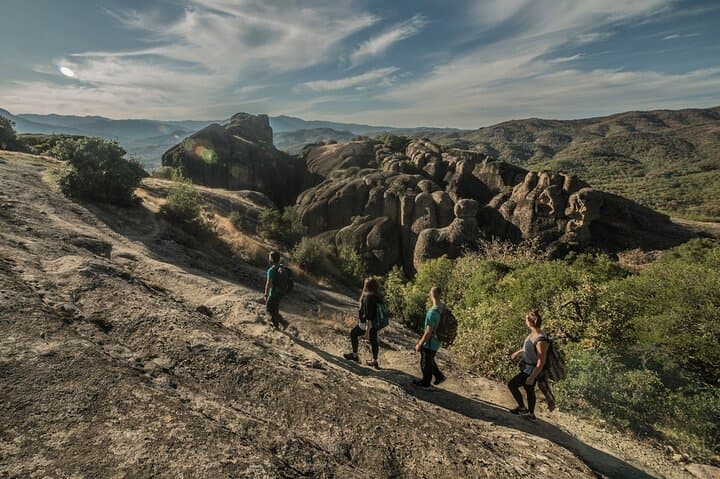
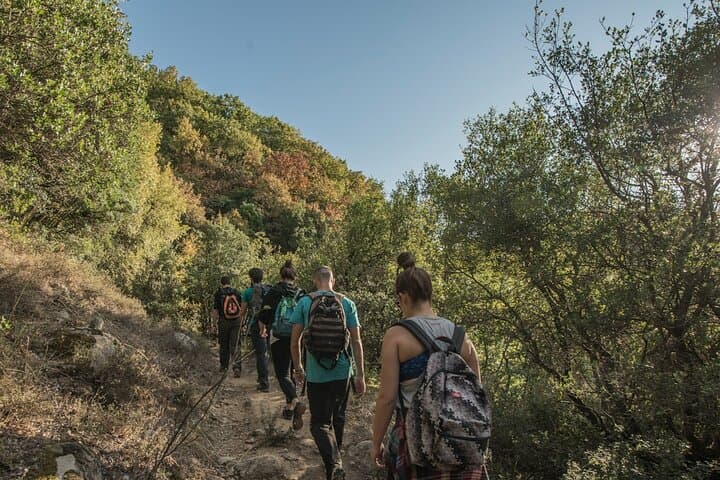
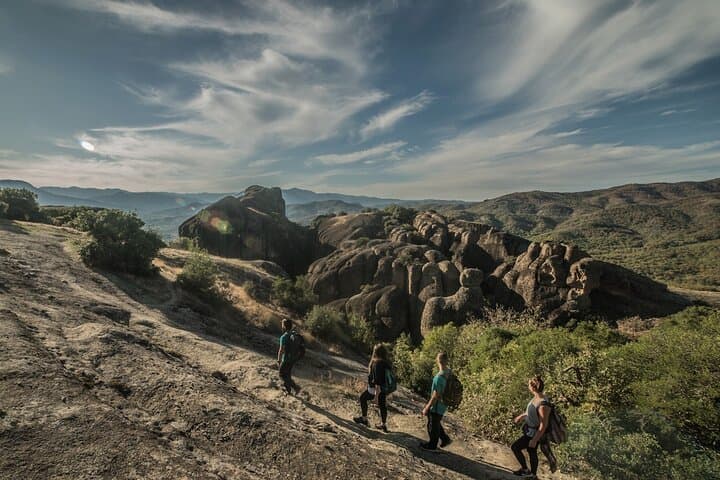
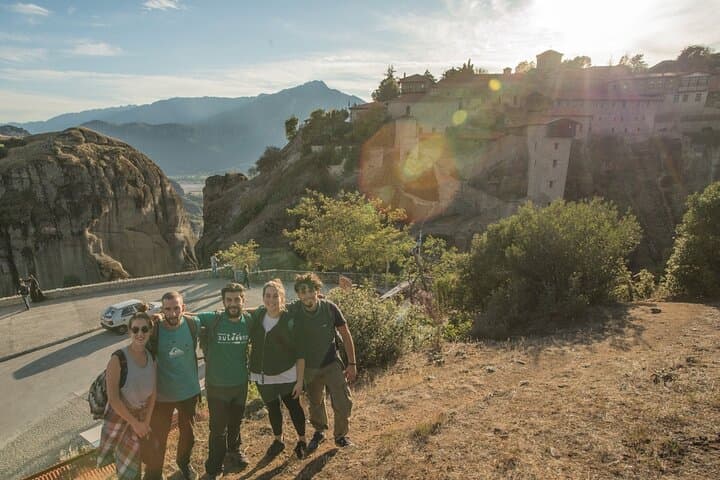
You start on a narrow lane in Kastraki, the limestone towers rising like columns around you. Wind slips between rocks and the trail climbs past pines and scrub, the stone underfoot a record of ancient seas. By the time you crest the ridge, cliff‑top monasteries crowd the skyline, their red roofs and stone walls clinging to vertical faces like human resolve.
You start on a narrow lane in Kastraki, the limestone towers rising like columns around you. Wind slips between rocks and the trail climbs past pines and scrub, the stone underfoot a record of ancient seas. By the time you crest the ridge, cliff‑top monasteries crowd the skyline, their red roofs and stone walls clinging to vertical faces like human resolve.
Meteora’s monasteries date to the 14th–16th centuries, when ascetic hermits and later organized communities carved sanctuaries into eroded sandstone pillars. Geologically, the pillars are conglomerate and sandstone formed by river deposits and then sculpted by wind and water—hard ribs left where softer material washed away. Locals still tell stories of monks hauling food and people by rope; the stone paths you use were once the old monk routes.
On this guided five‑hour loop you pass ruins (Pantocrator), restored chapels (Ypapanti), and the cave of St. George Mandila, ending with a visit to one cliff‑top monastery. Expect mixed terrain—packed earth, rocky steps and short steep pitches—over about 7 km with roughly 320 m of ascent.
Practical edge: wear grippy hiking shoes, bring 1–1.5 L water, and dress modestly for monastery entry (shoulders covered; skirts or knee‑length trousers for women). Start early for cooler temperatures and softer light; afternoon thunderstorms are common in summer. Guides handle route finding and local history, but the trail rewards steady legs and attention to footing. Leave no trace and follow monastery rules—this is living heritage, not just a viewpoint.