THE ADVENTURE COLLECTIVE® · Independent discovery and booking for outdoor travel

Trek from Piano Provenzana up Etna’s northern flank to a 2,100m crater rim formed by recent eruptions. Learn to read fissures, cones and lava fields while navigating loose volcanic terrain with a volcanological guide.
Trek from Piano Provenzana up Etna’s northern flank to a 2,100m crater rim formed by recent eruptions. Learn to read fissures, cones and lava fields while navigating loose volcanic terrain with a volcanological guide.
You step off the narrow road at Piano Provenzana, volcanic wind cutting a clean line across your face as black lapilli crunch underfoot. The trail climbs through fields of fresh tephra and old lava flows, switching between packed ash and rocky ridgelines until the pyroclastic cones of the 2002 eruption loom ahead.
Verified experiences and guided adventures in the surrounding area.
Operated by Guidetna.it - Volcanological Guides on the Etna · Piano Provenzana, Sicily
You step off the narrow road at Piano Provenzana, volcanic wind cutting a clean line across your face as black lapilli crunch underfoot. The trail climbs through fields of fresh tephra and old lava flows, switching between packed ash and rocky ridgelines until the pyroclastic cones of the 2002 eruption loom ahead.
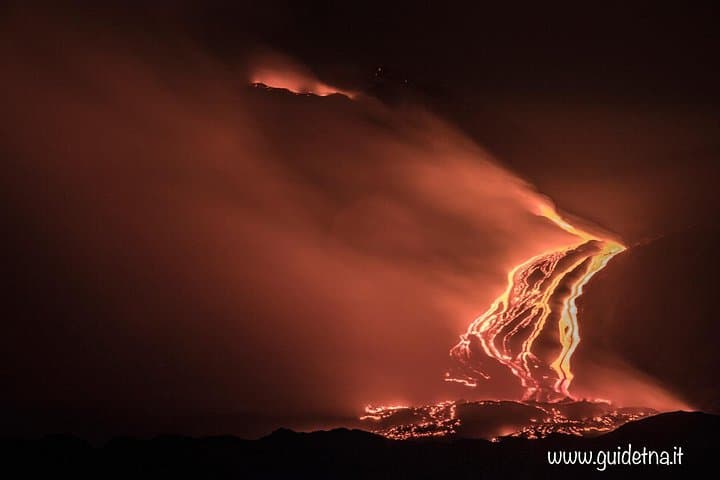
This route traces several eruptive morphologies: hornitos puffing steam, linear fissures that once spat incandescent rock, and the pronounced ‘‘Bottoniera’’ fracture that raked the northern flank in 2002. Geologically, the ground is recent — layers of scoria, later flows and loose sand — so sections are steep and deceptively soft. Culturally, you’re in the Linguaglossa corridor, a place where vine terraces and basalt-built villages grew alongside a historically active volcano.
Expect a steady ascent to roughly 2,100 meters, then a sandy chute descent that funnels you back to Piano Provenzana. Your guide will interpret vents, tephra deposits and the scars of the 1911 and 1923 eruptions that once threatened nearby towns.
Practical notes: footwear with ankle support and grippy soles matters; volcanic sand makes descents quick but abrasive. Layers are essential — temperatures can swing rapidly with altitude and wind. Carry water and a packed lunch; services at Piano Provenzana are sparse outside peak season. Follow your volcanological guide’s route, keep to marked paths to protect fragile soils, and be ready for loose footing that rewards cautious, rhythmic steps.
moderate.
2–5 hours.
Suitable for people in regular, moderate fitness; expect steady uphill walking with loose footing.
The route reaches about 2,100 meters at the crater rim, then descends back to Piano Provenzana.
Yes — guides mark a manageable route, but expect loose terrain and steady climbing; basic stamina and stable footwear are required.
You may see fumaroles and fresh deposits; guides monitor conditions and will avoid active vents if unsafe.
Avoid smooth-soled shoes, sandals or light trainers; they offer poor grip on scoria and can increase risk on slopes.
The northern flank was reshaped by notable eruptions (1911, 1923, 2002) that altered routes and damaged facilities at Piano Provenzana and nearby Linguaglossa.
The volcanic surface recovers slowly; stick to marked trails, pack out waste and avoid disturbing vents or fragile crusts to minimize impact.
Guidetna.it - Volcanological Guides on the Etna operates guided outdoor trips and adventures with an emphasis on safety, stewardship, and memorable experiences.
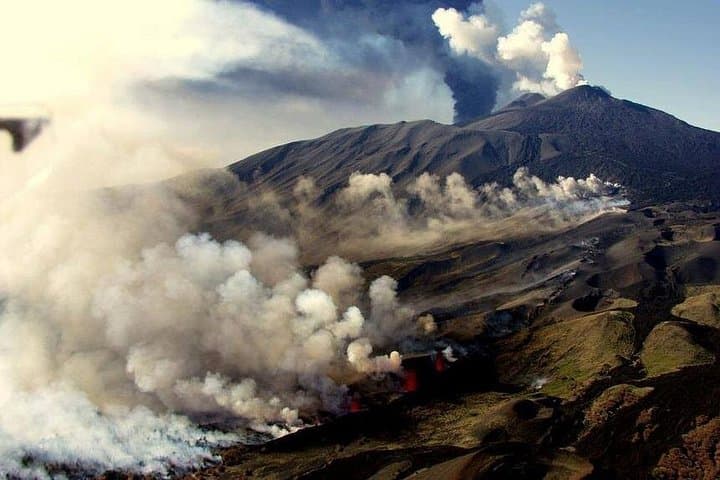
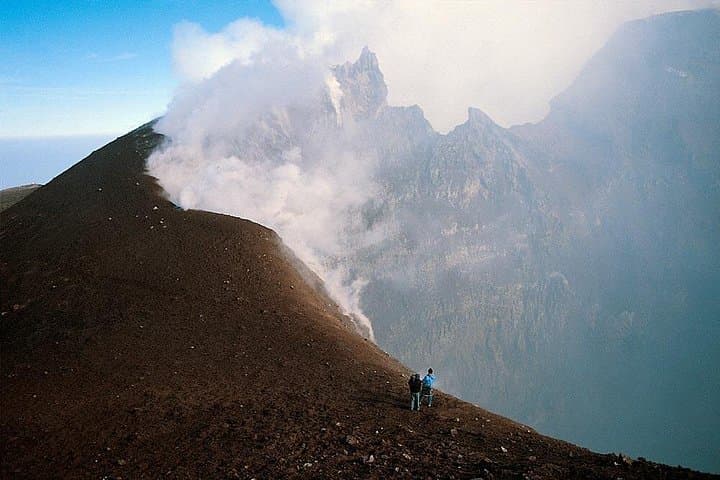
You step off the narrow road at Piano Provenzana, volcanic wind cutting a clean line across your face as black lapilli crunch underfoot. The trail climbs through fields of fresh tephra and old lava flows, switching between packed ash and rocky ridgelines until the pyroclastic cones of the 2002 eruption loom ahead.
You step off the narrow road at Piano Provenzana, volcanic wind cutting a clean line across your face as black lapilli crunch underfoot. The trail climbs through fields of fresh tephra and old lava flows, switching between packed ash and rocky ridgelines until the pyroclastic cones of the 2002 eruption loom ahead.
This route traces several eruptive morphologies: hornitos puffing steam, linear fissures that once spat incandescent rock, and the pronounced ‘‘Bottoniera’’ fracture that raked the northern flank in 2002. Geologically, the ground is recent — layers of scoria, later flows and loose sand — so sections are steep and deceptively soft. Culturally, you’re in the Linguaglossa corridor, a place where vine terraces and basalt-built villages grew alongside a historically active volcano.
Expect a steady ascent to roughly 2,100 meters, then a sandy chute descent that funnels you back to Piano Provenzana. Your guide will interpret vents, tephra deposits and the scars of the 1911 and 1923 eruptions that once threatened nearby towns.
Practical notes: footwear with ankle support and grippy soles matters; volcanic sand makes descents quick but abrasive. Layers are essential — temperatures can swing rapidly with altitude and wind. Carry water and a packed lunch; services at Piano Provenzana are sparse outside peak season. Follow your volcanological guide’s route, keep to marked paths to protect fragile soils, and be ready for loose footing that rewards cautious, rhythmic steps.