THE ADVENTURE COLLECTIVE® · Independent discovery and booking for outdoor travel

Walk a steel-and-boardway clinging to 100-meter cliffs above a river that carved a gorge through limestone. El Caminito del Rey is both a piece of industrial history and a precise, adrenaline-tinged hike — one that rewards planning and respect for exposure.
Walk a steel-and-boardway clinging to 100-meter cliffs above a river that carved a gorge through limestone. El Caminito del Rey is both a piece of industrial history and a precise, adrenaline-tinged hike — one that rewards planning and respect for exposure.
You step off the minibus at the Guadalhorce reservoir and the canyon takes the conversation out of you. The path threads along an almost vertical limestone wall, a narrow ribbon of boardwalk and steel clinging to the face of the Gaitanes Gorge. Wind carves the air into cold, bright slices; the river below glints jade and dares you to look down. Your guide checks helmets and points out the original 1921 stonework, then leads the group onto the walkway — an exposed, human-made ledge that suddenly feels as old as the mountain itself.
Verified experiences and guided adventures in the surrounding area.
Operated by Argania Travel · Ardales, Málaga
You step off the minibus at the Guadalhorce reservoir and the canyon takes the conversation out of you. The path threads along an almost vertical limestone wall, a narrow ribbon of boardwalk and steel clinging to the face of the Gaitanes Gorge. Wind carves the air into cold, bright slices; the river below glints jade and dares you to look down. Your guide checks helmets and points out the original 1921 stonework, then leads the group onto the walkway — an exposed, human-made ledge that suddenly feels as old as the mountain itself.
El Caminito del Rey began as a maintenance route for the hydroelectric dams and earned its royal nickname after King Alfonso XIII crossed it in 1921. For decades the path fell into ruin and earned a dark reputation as one of Europe’s most dangerous walks; today it has been rebuilt with modern safety standards, but the history remains visible in the masonry, the rusted remains tucked into cliff niches, and the scale of human ambition against rugged geology.
Geologically, the gorge is a lesson in slow force: Jurassic and Cretaceous limestones folded and faulted, sculpted by the river into dramatic overhangs and potholes. The result is a corridor where microclimates shift in minutes — scrub oak and Mediterranean shrubs hold on in cracks, while swifts and griffon vultures wheel above the cliff shoulders. Locals from Ardales and El Chorro still fish and farm in the valley below; the provincial culture here is Andalusian plainspokenness — tapas first, stories later.
For practical planning: the visit from Seville is a full day. The operator schedules hotel pickup, a roughly two-hour drive to the reservoir, the guided crossing of the path, time for a local lunch in Ardales or El Chorro, then return to Seville in the afternoon. The on-path portion is linear, mostly flat but exposed; expect walking time of about 2–3 hours on the trail itself, with total excursion time between 6 and 10 hours including transit. The walkway is fenced and supervised, but it sits 100–300 meters above the river in sections — if you have a fear of heights this is not the place to try exposure therapy.
Tips: wear sturdy, closed shoes with good grip; carry water and sun protection; pack a lightweight wind or rain shell for unpredictable canyon gusts; allow time to linger at the main viewpoints for photos. Book your ticket in advance — daily slots are limited and sell out, particularly in spring and autumn. Respect the fragile scrubland: stay on the trail and dispose of waste properly; the long-term health of this place depends on low-impact visitors.
moderate.
6–10 hours.
Suitable for people with basic fitness who can walk 2–4 hours at a steady pace and are comfortable with exposure.
The on-path section takes about 2–3 hours depending on pace and stops; the full organized trip from Seville is typically a 6–10 hour day including transport and lunch.
The renovated walkway meets modern safety standards with fences and controlled access, but it remains high and exposed — follow guide instructions and use provided safety equipment.
Children can attend but must be supervised at all times; operators may impose minimum age limits and all children should be comfortable with heights.
No — helmets and any required safety gear are typically provided by the operator or included in the entrance management plan.
Pets are generally not permitted on the official walkway for safety and conservation reasons; check with the tour operator for specifics.
Closed, comfortable hiking shoes, layered clothing, sun protection, and a light shell are recommended; avoid flip-flops or high heels.
Constructed in the early 1900s to serve local dam works and visited by King Alfonso XIII in 1921, the path links industrial heritage with dramatic Andalusian geology.
Controlled access and visitor limits reduce erosion and disturbance; stick to marked paths and avoid dropping litter to protect rare canyon scrub and nesting birds.
Argania Travel operates guided outdoor trips and adventures with an emphasis on safety, stewardship, and memorable experiences.
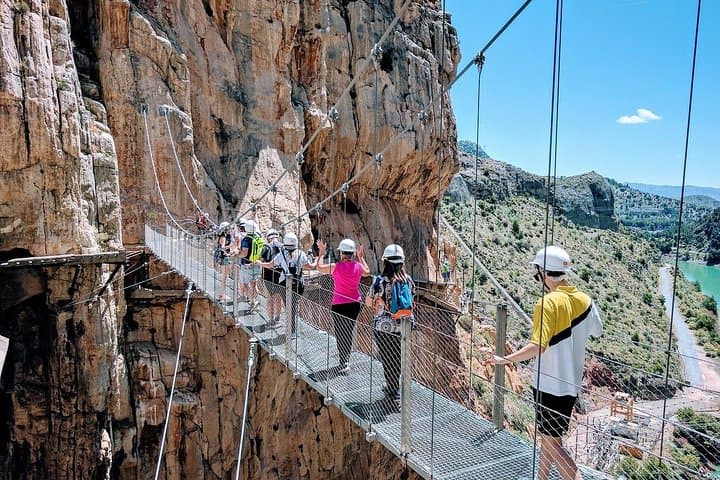
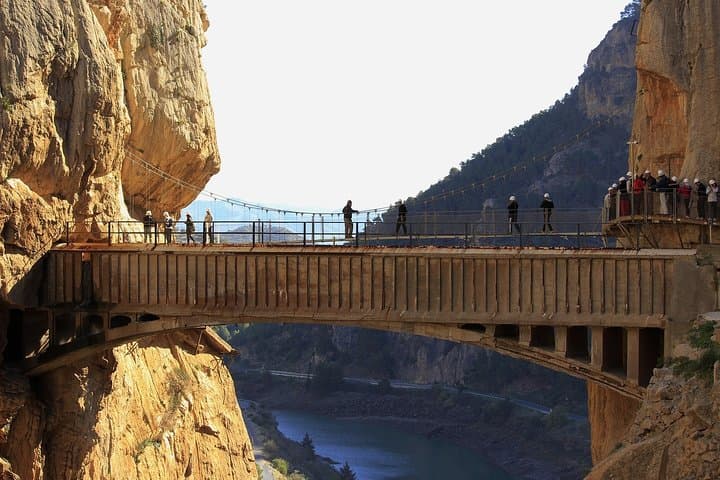
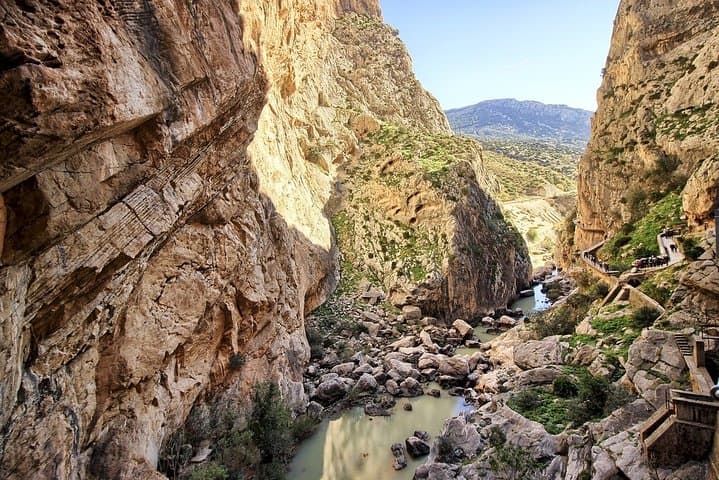
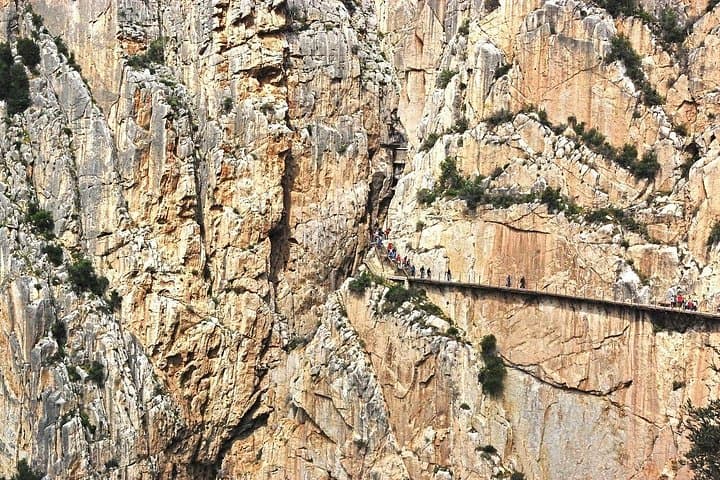
You step off the minibus at the Guadalhorce reservoir and the canyon takes the conversation out of you. The path threads along an almost vertical limestone wall, a narrow ribbon of boardwalk and steel clinging to the face of the Gaitanes Gorge. Wind carves the air into cold, bright slices; the river below glints jade and dares you to look down. Your guide checks helmets and points out the original 1921 stonework, then leads the group onto the walkway — an exposed, human-made ledge that suddenly feels as old as the mountain itself.
You step off the minibus at the Guadalhorce reservoir and the canyon takes the conversation out of you. The path threads along an almost vertical limestone wall, a narrow ribbon of boardwalk and steel clinging to the face of the Gaitanes Gorge. Wind carves the air into cold, bright slices; the river below glints jade and dares you to look down. Your guide checks helmets and points out the original 1921 stonework, then leads the group onto the walkway — an exposed, human-made ledge that suddenly feels as old as the mountain itself.
El Caminito del Rey began as a maintenance route for the hydroelectric dams and earned its royal nickname after King Alfonso XIII crossed it in 1921. For decades the path fell into ruin and earned a dark reputation as one of Europe’s most dangerous walks; today it has been rebuilt with modern safety standards, but the history remains visible in the masonry, the rusted remains tucked into cliff niches, and the scale of human ambition against rugged geology.
Geologically, the gorge is a lesson in slow force: Jurassic and Cretaceous limestones folded and faulted, sculpted by the river into dramatic overhangs and potholes. The result is a corridor where microclimates shift in minutes — scrub oak and Mediterranean shrubs hold on in cracks, while swifts and griffon vultures wheel above the cliff shoulders. Locals from Ardales and El Chorro still fish and farm in the valley below; the provincial culture here is Andalusian plainspokenness — tapas first, stories later.
For practical planning: the visit from Seville is a full day. The operator schedules hotel pickup, a roughly two-hour drive to the reservoir, the guided crossing of the path, time for a local lunch in Ardales or El Chorro, then return to Seville in the afternoon. The on-path portion is linear, mostly flat but exposed; expect walking time of about 2–3 hours on the trail itself, with total excursion time between 6 and 10 hours including transit. The walkway is fenced and supervised, but it sits 100–300 meters above the river in sections — if you have a fear of heights this is not the place to try exposure therapy.
Tips: wear sturdy, closed shoes with good grip; carry water and sun protection; pack a lightweight wind or rain shell for unpredictable canyon gusts; allow time to linger at the main viewpoints for photos. Book your ticket in advance — daily slots are limited and sell out, particularly in spring and autumn. Respect the fragile scrubland: stay on the trail and dispose of waste properly; the long-term health of this place depends on low-impact visitors.