THE ADVENTURE COLLECTIVE® · Independent discovery and booking for outdoor travel

Trade Alba’s cobbles for vineyard tracks on a 6 km hike through the Langhe hills, finishing with a mid-hill winery tasting. This guided walk combines sustained uphill walking with panoramic views and regional wine and bites.
Trade Alba’s cobbles for vineyard tracks on a 6 km hike through the Langhe hills, finishing with a mid-hill winery tasting. This guided walk combines sustained uphill walking with panoramic views and regional wine and bites.
Morning in Alba spills gold across cobbles, and within an hour walkers trade town squares for the steady rhythm of a vineyard track. The trail climbs through corridors of trellised vines and open pasture, delivering repeated vistas of rolling hills that frame the walk: a quiet, steady ascent that rewards each step with broader panoramas.
Verified experiences and guided adventures in the surrounding area.
Operated by albaway sas di Maria Margherita Airale · Alba, Piedmont
Morning in Alba spills gold across cobbles, and within an hour walkers trade town squares for the steady rhythm of a vineyard track. The trail climbs through corridors of trellised vines and open pasture, delivering repeated vistas of rolling hills that frame the walk: a quiet, steady ascent that rewards each step with broader panoramas.
This route threads through the Langhe — wine country officially recognized by UNESCO for its cultural vineyard landscape — where calcareous marl and sandstone soils sculpt both slope and flavor. Centuries of winemaking and small-scale farming shape the local culture; Barolo and Barbera labels are common conversation, and truffle-season flavors linger in nearby kitchens.
Mid-hill a family-run winery opens its doors for a guided tasting: several regional wines paired with local bites that illustrate Piedmont’s culinary traditions. Because vineyards are active working land, expect farm paths, occasional tractors, and stone walls marking small parcels.
Practical guide: the walk is about 6 km (3.7 mi) with roughly 350 m (1,148 ft) cumulative ascent and lasts around 3–4 hours including tasting. The route suits hikers accustomed to uphill walking; sturdy footwear, 1–1.5 liters of water, sun protection, and a light wind layer are recommended. Public transportation to Alba makes this accessible without a car; wineries visited may vary by availability. Bookings typically include a licensed guide and tasting. Time your visit for shoulder seasons to avoid high summer heat and to catch harvest activity in autumn.
Pace conservatively on steeper sections, carry ID for the tasting, and leave no trace — the vineyards’ scenic value depends on respectful stewardship.
moderate.
3–4 hours.
Suitable for hikers with regular uphill walking experience and moderate cardiovascular fitness
The route is about 6 km with ~350 m ascent, rated moderate — expect sustained uphill passages but no technical climbing.
Yes, the tour typically includes a mid-hill winery visit with several tastings and small local bites; the specific winery may vary.
Yes — the tour starts in Alba, which is well served by regional trains and buses; no car is required.
Service animals are allowed, but the tour notes it’s best for people in good shape accustomed to uphill walking; check operator rules for minors.
The Langhe has been cultivated for centuries; terraced fields and parcel boundaries reflect a long tradition of smallholder viticulture that shaped the modern wine appellations.
Vineyard landscapes depend on responsible farming and waste-free visits; stick to paths to avoid trampling young vines and follow winery guidance to minimize disturbance.
albaway sas di Maria Margherita Airale operates guided outdoor trips and adventures with an emphasis on safety, stewardship, and memorable experiences.

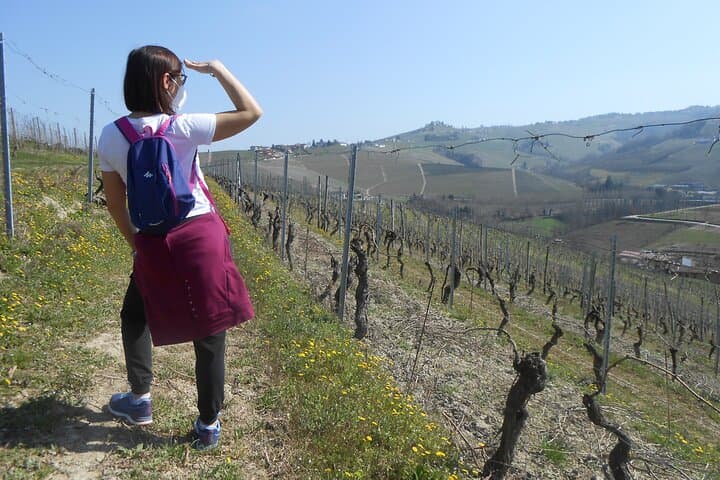


Morning in Alba spills gold across cobbles, and within an hour walkers trade town squares for the steady rhythm of a vineyard track. The trail climbs through corridors of trellised vines and open pasture, delivering repeated vistas of rolling hills that frame the walk: a quiet, steady ascent that rewards each step with broader panoramas.
Morning in Alba spills gold across cobbles, and within an hour walkers trade town squares for the steady rhythm of a vineyard track. The trail climbs through corridors of trellised vines and open pasture, delivering repeated vistas of rolling hills that frame the walk: a quiet, steady ascent that rewards each step with broader panoramas.
This route threads through the Langhe — wine country officially recognized by UNESCO for its cultural vineyard landscape — where calcareous marl and sandstone soils sculpt both slope and flavor. Centuries of winemaking and small-scale farming shape the local culture; Barolo and Barbera labels are common conversation, and truffle-season flavors linger in nearby kitchens.
Mid-hill a family-run winery opens its doors for a guided tasting: several regional wines paired with local bites that illustrate Piedmont’s culinary traditions. Because vineyards are active working land, expect farm paths, occasional tractors, and stone walls marking small parcels.
Practical guide: the walk is about 6 km (3.7 mi) with roughly 350 m (1,148 ft) cumulative ascent and lasts around 3–4 hours including tasting. The route suits hikers accustomed to uphill walking; sturdy footwear, 1–1.5 liters of water, sun protection, and a light wind layer are recommended. Public transportation to Alba makes this accessible without a car; wineries visited may vary by availability. Bookings typically include a licensed guide and tasting. Time your visit for shoulder seasons to avoid high summer heat and to catch harvest activity in autumn.
Pace conservatively on steeper sections, carry ID for the tasting, and leave no trace — the vineyards’ scenic value depends on respectful stewardship.