THE ADVENTURE COLLECTIVE® · Independent discovery and booking for outdoor travel

Walk the iconic Five Lake Trail from Sunnegga to Stellisee and beyond — a full-day private hike that balances sweeping Matterhorn views with turquoise alpine lakes and easygoing mountain restaurants. Ideal for photographers and anyone who wants a flexible pace and local insight.
Walk the iconic Five Lake Trail from Sunnegga to Stellisee and beyond — a full-day private hike that balances sweeping Matterhorn views with turquoise alpine lakes and easygoing mountain restaurants. Ideal for photographers and anyone who wants a flexible pace and local insight.
The day begins at the old stone throat of Zermatt station, where the guide waits by the ticket office and the Matterhorn sits like a blunt promise on the horizon. A short clip up the Sunnegga funicular deposits you into an alpine world that changes by the meter: waist-high alpenroses, stone pines bristling against wind, and a path that alternates between meadows and blunt, mineral scree. The Five Lake Trail moves with a purposeful ease — lakes appearing like pauses in a long conversation with the mountain.
Verified experiences and guided adventures in the surrounding area.
Operated by Evolution Ski School Zermatt · Zermatt, Valais
The day begins at the old stone throat of Zermatt station, where the guide waits by the ticket office and the Matterhorn sits like a blunt promise on the horizon. A short clip up the Sunnegga funicular deposits you into an alpine world that changes by the meter: waist-high alpenroses, stone pines bristling against wind, and a path that alternates between meadows and blunt, mineral scree. The Five Lake Trail moves with a purposeful ease — lakes appearing like pauses in a long conversation with the mountain.
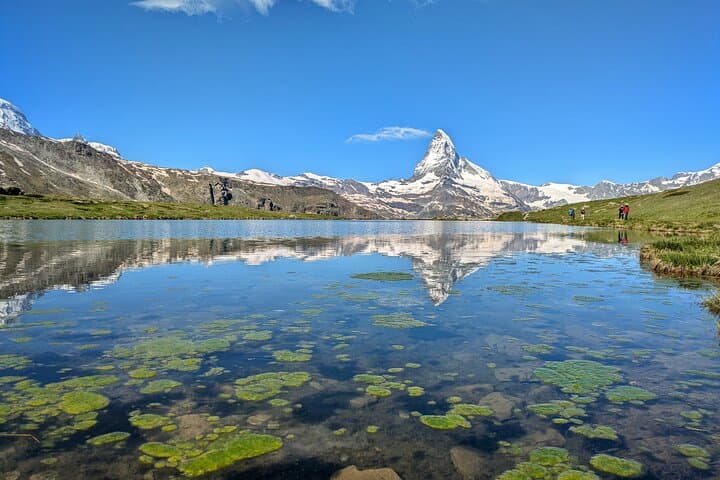
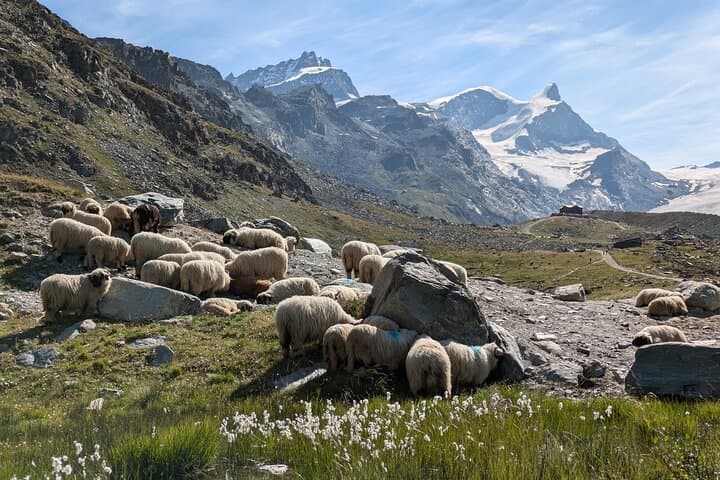
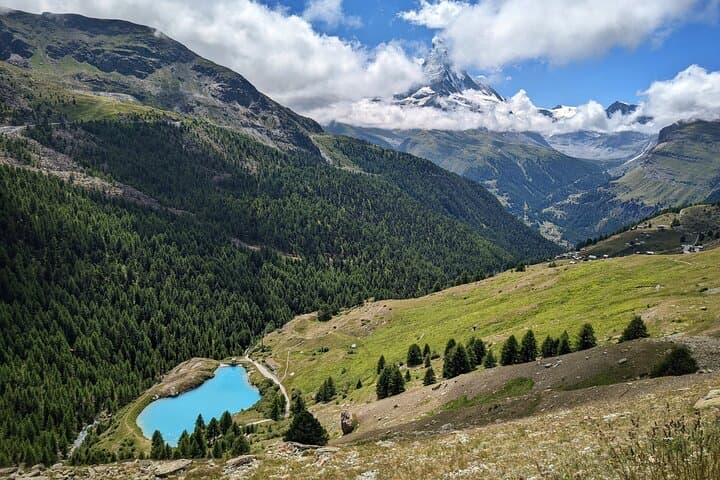
History and geology are written into those pauses. The lakes are glacial leftovers, basins scoured and filled during the last Ice Age; their colors record mineral content and light more than anything else. Stellisee, the most photographed, doubles the Matterhorn on its face on calm mornings. Elsewhere, green-hued basins collect runoff filtered through stone pines; turquoise pockets gather suspended glacial flour. Culturally, the route threads through pastures where alpine herders still move cattle in summer, and the nearby huts follow a long Swiss tradition of simple, hearty mountain food.
On a practical level, expect 9–11 km of trail and roughly 300–400 meters of cumulative ascent and descent depending on your loop. Terrain ranges from crushed-granite walking paths to short rocky sections and boardwalks around wetlands. The privately guided full-day format expands the usual 2–4 hour walk into a customizable 4–6 hour exploration: more photo stops, a relaxed lunch at a mountain restaurant, or a picnic beside a turquoise pool.
Timing is everything. Early starts reward you with glassy reflections and fewer day-trippers; afternoon clouds can thicken quickly so always plan for a weather buffer. Food at the mountain restaurants is reliably good — raclette and rosti are available without pretense — but cash or contactless payment is handy since small huts can be selective about cards. The guide will point out alpine flora and help you interpret tracks; this stretch is also kinder to less experienced hikers because the funicular reduces vertical grind.
Safety and conservation go hand in hand. Wear sturdy footwear with good grip, carry layers (a windproof shell and warm midlayer), and bring at least 1–1.5 liters of water per person for a full-day outing. Stick to marked paths: alpine plants recover slowly and stray routes can disturb grazing patterns. With a guide, the Five Lake Trail becomes both a photographic mainstage and a quiet classroom — a day where geography, culture, and simple mountain logistics align to make the Matterhorn feel close enough to reach.
moderate.
4–6 hours.
Suitable for hikers with a basic level of fitness who can handle several hours of walking and uneven terrain.
The guided full-day option covers roughly 9–11 km depending on the exact route, and takes about 4–6 hours including stops.
Yes—because the Sunnegga funicular reduces vertical gain, the trail is often suitable for families and active older hikers; discuss abilities when booking.
Stellisee offers the most reliable reflections on calm mornings, but wind and cloud can affect visibility at any time.
Not usually for lunch on weekdays, but for larger groups or peak season it's wise to reserve or plan a picnic alternative.
The tour is private and customizable; guides monitor forecasts and can alter the route or shorten the day. Cancellation policies apply if you cancel 24+ hours ahead for a full refund.
No special permits are required, but funicular tickets and public transport to/from Zermatt are separate from the tour price.
The lakes are glacial features shaped during the last Ice Age; summer alpine pastures nearby have been used by local herders for centuries.
Stick to marked trails and pack out all waste—alpine ecosystems recover slowly and local guides emphasize low-impact practices.
Evolution Ski School Zermatt operates guided outdoor trips and adventures with an emphasis on safety, stewardship, and memorable experiences.
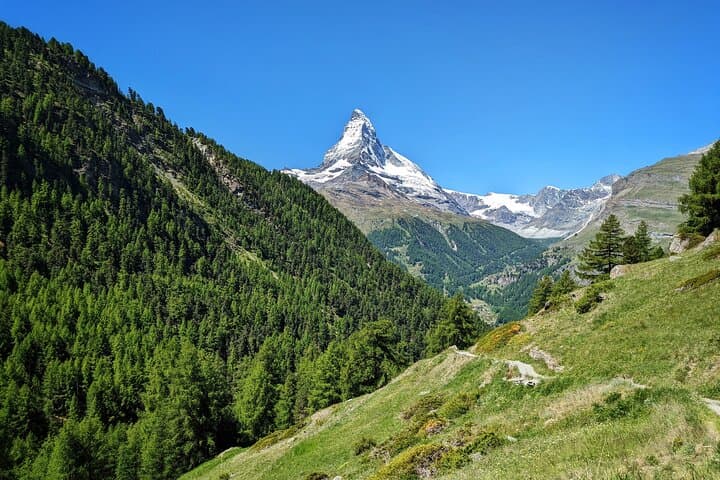
The day begins at the old stone throat of Zermatt station, where the guide waits by the ticket office and the Matterhorn sits like a blunt promise on the horizon. A short clip up the Sunnegga funicular deposits you into an alpine world that changes by the meter: waist-high alpenroses, stone pines bristling against wind, and a path that alternates between meadows and blunt, mineral scree. The Five Lake Trail moves with a purposeful ease — lakes appearing like pauses in a long conversation with the mountain.
The day begins at the old stone throat of Zermatt station, where the guide waits by the ticket office and the Matterhorn sits like a blunt promise on the horizon. A short clip up the Sunnegga funicular deposits you into an alpine world that changes by the meter: waist-high alpenroses, stone pines bristling against wind, and a path that alternates between meadows and blunt, mineral scree. The Five Lake Trail moves with a purposeful ease — lakes appearing like pauses in a long conversation with the mountain.
History and geology are written into those pauses. The lakes are glacial leftovers, basins scoured and filled during the last Ice Age; their colors record mineral content and light more than anything else. Stellisee, the most photographed, doubles the Matterhorn on its face on calm mornings. Elsewhere, green-hued basins collect runoff filtered through stone pines; turquoise pockets gather suspended glacial flour. Culturally, the route threads through pastures where alpine herders still move cattle in summer, and the nearby huts follow a long Swiss tradition of simple, hearty mountain food.
On a practical level, expect 9–11 km of trail and roughly 300–400 meters of cumulative ascent and descent depending on your loop. Terrain ranges from crushed-granite walking paths to short rocky sections and boardwalks around wetlands. The privately guided full-day format expands the usual 2–4 hour walk into a customizable 4–6 hour exploration: more photo stops, a relaxed lunch at a mountain restaurant, or a picnic beside a turquoise pool.
Timing is everything. Early starts reward you with glassy reflections and fewer day-trippers; afternoon clouds can thicken quickly so always plan for a weather buffer. Food at the mountain restaurants is reliably good — raclette and rosti are available without pretense — but cash or contactless payment is handy since small huts can be selective about cards. The guide will point out alpine flora and help you interpret tracks; this stretch is also kinder to less experienced hikers because the funicular reduces vertical grind.
Safety and conservation go hand in hand. Wear sturdy footwear with good grip, carry layers (a windproof shell and warm midlayer), and bring at least 1–1.5 liters of water per person for a full-day outing. Stick to marked paths: alpine plants recover slowly and stray routes can disturb grazing patterns. With a guide, the Five Lake Trail becomes both a photographic mainstage and a quiet classroom — a day where geography, culture, and simple mountain logistics align to make the Matterhorn feel close enough to reach.