THE ADVENTURE COLLECTIVE® · Independent discovery and booking for outdoor travel

Climb the rim of Xitle to peer into a fossilized crater, then enter volcanic caves formed by ancient flows that reshaped southern Mexico City. This full-day hike delivers geological intrigue, commanding city views and hands-on cave exploration.
Climb the rim of Xitle to peer into a fossilized crater, then enter volcanic caves formed by ancient flows that reshaped southern Mexico City. This full-day hike delivers geological intrigue, commanding city views and hands-on cave exploration.
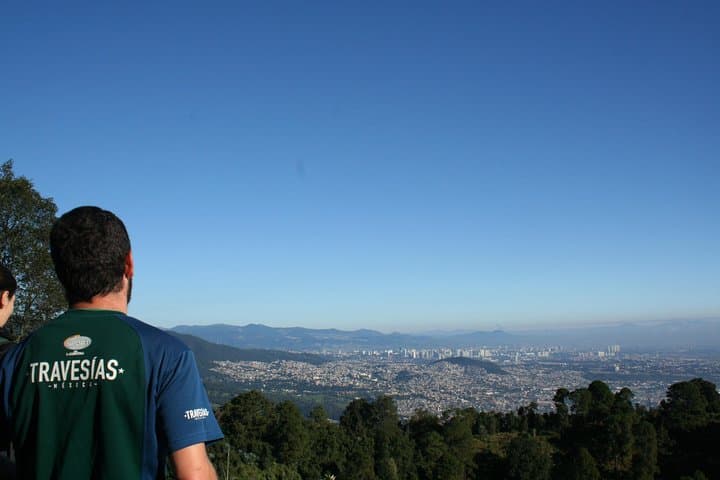
You stand on the rim of Xitle, the extinct cone whose dark lava once pushed into the southern basin of Mexico City, and the city spreads below like a living map—streets, parks and distant peaks framed by a sky that can shift from bright to storm-slate in an hour.
Verified experiences and guided adventures in the surrounding area.
Operated by México Travesías · Mexico City, Ciudad de México
You stand on the rim of Xitle, the extinct cone whose dark lava once pushed into the southern basin of Mexico City, and the city spreads below like a living map—streets, parks and distant peaks framed by a sky that can shift from bright to storm-slate in an hour.
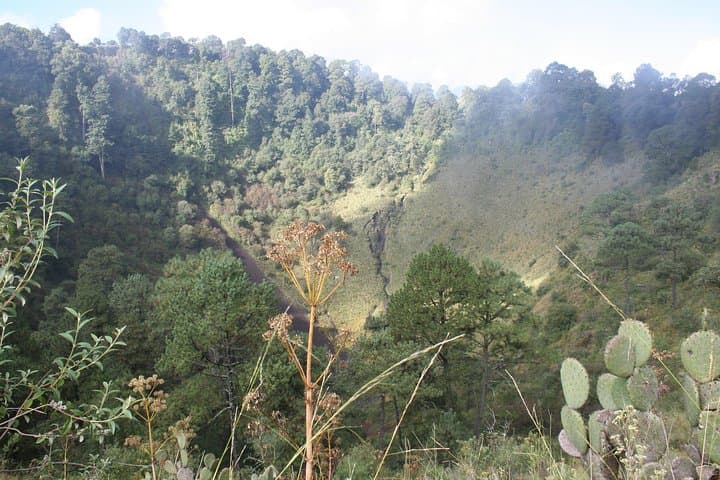
Xitle erupted more than a thousand years ago; its flows reshaped pre-Columbian settlements and created the Pedregal rock fields that define the neighborhood’s geology today. The crater’s interior is compact and raw—scoria, basalt ledges and pockets carved by cooling lava—while one downstream vent opened into walk-in caverns where light and shadow trade places.
Culturally, the lava fields have been a backdrop for modern Mexican art and urban expansion; archaeologists link Xitle’s event to changes in local population patterns centuries ago. Botanically, hardy shrubs and xeric plants cling to fissures, and birds of prey use the rim to hunt thermals over the city.
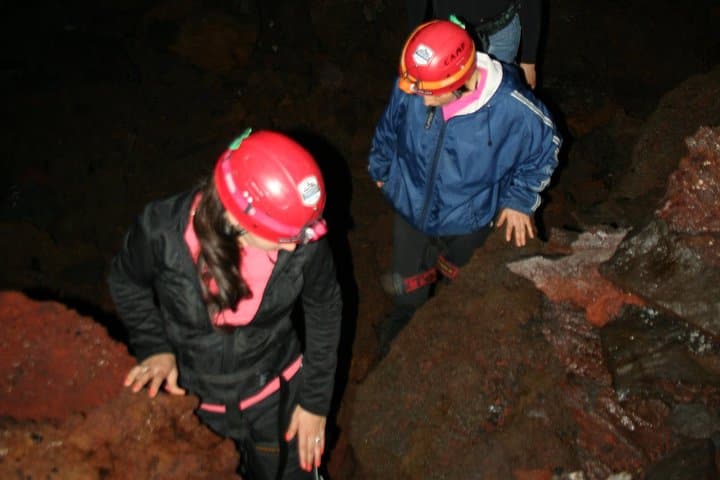
On the trail you’ll switch between steady climbs, short scrambles and a descent into a low volcanic cave that requires ducking and a steady headlamp. Expect uneven rock, loose scree and confined passages.
Practical guidance: bring a reliable headlamp, layered clothing for rapid temperature changes, and at least 2 liters of water. Helmets may be provided; if not, carry one. Start early to avoid afternoon storms and city heat; follow marked trails and stay off fragile lava crusts. With moderate fitness and basic scrambling ability, this full-day outing delivers geological theater and an intimate, earthen encounter with an eruption that once reshaped a metropolis.
moderate.
8–10 hours (full-day).
Moderate fitness — able to hike uphill, scramble short sections and navigate confined cave passages.
The route is moderate — steady uphill sections and short scrambles; cave entry is low and may require bending, but no technical climbing gear is needed.
Tours often provide helmets and sometimes basic lights, but confirm with the operator and bring your own headlamp and spare batteries if possible.
Children can participate but must be able to walk several hours and navigate confined cave passages; infants should sit on laps per provider rules.
Morning hours are best for clear views and cooler temperatures; avoid the rainy season’s afternoon storms and plan a dry-day excursion.
Xitle’s eruption produced extensive lava flows that altered settlement patterns and covered parts of the southern basin, influencing pre-Hispanic site distribution nearby.
Stay on established paths to protect fragile volcanic crust and sparse vegetation; pack out all waste — the Pedregal’s thin soils recover slowly from disturbance.
México Travesías operates guided outdoor trips and adventures with an emphasis on safety, stewardship, and memorable experiences.
You stand on the rim of Xitle, the extinct cone whose dark lava once pushed into the southern basin of Mexico City, and the city spreads below like a living map—streets, parks and distant peaks framed by a sky that can shift from bright to storm-slate in an hour.
You stand on the rim of Xitle, the extinct cone whose dark lava once pushed into the southern basin of Mexico City, and the city spreads below like a living map—streets, parks and distant peaks framed by a sky that can shift from bright to storm-slate in an hour.
Xitle erupted more than a thousand years ago; its flows reshaped pre-Columbian settlements and created the Pedregal rock fields that define the neighborhood’s geology today. The crater’s interior is compact and raw—scoria, basalt ledges and pockets carved by cooling lava—while one downstream vent opened into walk-in caverns where light and shadow trade places.
Culturally, the lava fields have been a backdrop for modern Mexican art and urban expansion; archaeologists link Xitle’s event to changes in local population patterns centuries ago. Botanically, hardy shrubs and xeric plants cling to fissures, and birds of prey use the rim to hunt thermals over the city.
On the trail you’ll switch between steady climbs, short scrambles and a descent into a low volcanic cave that requires ducking and a steady headlamp. Expect uneven rock, loose scree and confined passages.
Practical guidance: bring a reliable headlamp, layered clothing for rapid temperature changes, and at least 2 liters of water. Helmets may be provided; if not, carry one. Start early to avoid afternoon storms and city heat; follow marked trails and stay off fragile lava crusts. With moderate fitness and basic scrambling ability, this full-day outing delivers geological theater and an intimate, earthen encounter with an eruption that once reshaped a metropolis.