THE ADVENTURE COLLECTIVE® · Independent discovery and booking for outdoor travel

Hike to Peru’s Vinicunca (Mountain of Colors) and the nearby Red Valley on a full-day trip from Cusco. This high-altitude walk combines vivid mineral stripes, Andean culture, and a brisk climb that rewards preparation and acclimatization.
Hike to Peru’s Vinicunca (Mountain of Colors) and the nearby Red Valley on a full-day trip from Cusco. This high-altitude walk combines vivid mineral stripes, Andean culture, and a brisk climb that rewards preparation and acclimatization.
A dawn bus eases out of Cusco and the Andes step forward like a living map: ridgelines cut the sky, livestock graze on wind-scoured slopes, and a thin air begins to pull at your breath. By midmorning you stand at the high plateau, the trail ahead a ribbon of talus and compacted earth that climbs toward the striated crest known as Vinicunca — the Mountain of Colors — while the Red Valley waits like an embered flank nearby.
Verified experiences and guided adventures in the surrounding area.
Operated by Inka Explorer Viajes · Cusco, Cusco Region
A dawn bus eases out of Cusco and the Andes step forward like a living map: ridgelines cut the sky, livestock graze on wind-scoured slopes, and a thin air begins to pull at your breath. By midmorning you stand at the high plateau, the trail ahead a ribbon of talus and compacted earth that climbs toward the striated crest known as Vinicunca — the Mountain of Colors — while the Red Valley waits like an embered flank nearby.
Geology here is readable: iron, copper and other minerals oxidized over millennia layer the mountain in ochres, rose, teal and rust. The whole area sits in the shadow of Ausangate, an Andean peak long revered by local Quechua communities who still herd llamas and alpacas across the puna. Cultural traces — small stone cairns and woven textiles for sale at the parking area — remind you this landscape is lived in as much as admired.
Expect a high-altitude hike that rewards straightforward stamina more than technical skill. The walk from the parking area to the viewpoint is roughly 3 km one-way with up to 600 m of elevation gain, topping out near 5,200 m (17,060 ft). Trails alternate between flattened dirt and loose scree; weather turns fast — wind and sun can share the same minute.
Practical guide: acclimatize in Cusco for 24–48 hours, carry at least 2 liters of water, use layered clothing and sun protection, and ascend steadily. Many operators include breakfast, guide, transport and walking sticks; tipping for local guides is customary. Move with respect: stay on marked approaches, pack out trash, and give space to grazing animals. With clear skies the colors read like a map; in cloud they soften into a quiet, elemental place that still challenges the lungs and rewards the eyes.
challenging.
6–8 hours (tour duration ~8 hours).
Good cardiovascular fitness and prior light-to-moderate hiking experience; must be acclimatized to high altitude
Vinicunca’s summit area is around 5,200 m (17,060 ft); altitude can affect anyone — acclimatize in Cusco, ascend slowly, and stop if you get severe headaches or nausea.
From the common parking/starting point the walk is roughly 3 km one-way with up to ~600 m elevation gain; pace depends on fitness and acclimatization.
The tour is physically demanding at altitude and not recommended for people over 60 or those with heart or serious back conditions; children who tolerate altitude can do it with caution.
The dry season (June–August) offers the most reliable conditions and clearest colors, while the wet months can make trails muddy and visibility poor.
The area sits within traditional Quechua territory and is linked culturally to Ausangate, a sacred mountain where herding and ritual practices continue.
High‑altitude grasslands are fragile; stick to trails, avoid disturbing livestock, and carry out all trash to minimize impact.
Inka Explorer Viajes operates guided outdoor trips and adventures with an emphasis on safety, stewardship, and memorable experiences.
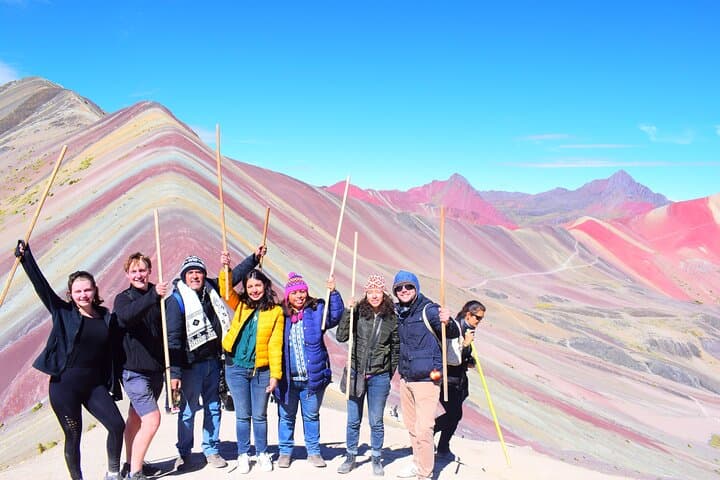

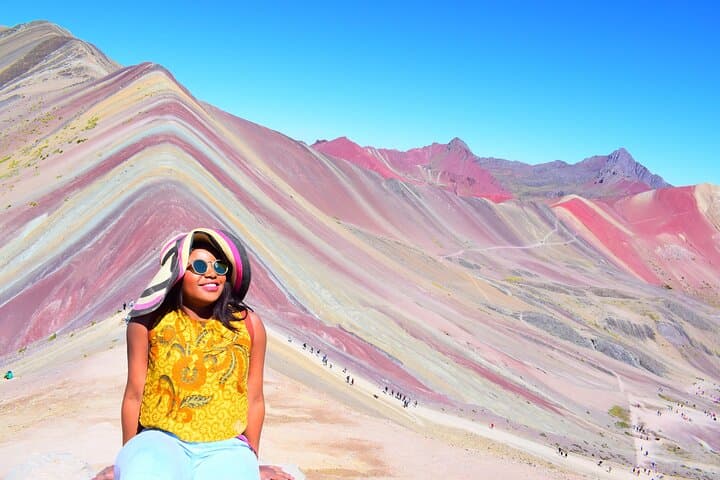

A dawn bus eases out of Cusco and the Andes step forward like a living map: ridgelines cut the sky, livestock graze on wind-scoured slopes, and a thin air begins to pull at your breath. By midmorning you stand at the high plateau, the trail ahead a ribbon of talus and compacted earth that climbs toward the striated crest known as Vinicunca — the Mountain of Colors — while the Red Valley waits like an embered flank nearby.
A dawn bus eases out of Cusco and the Andes step forward like a living map: ridgelines cut the sky, livestock graze on wind-scoured slopes, and a thin air begins to pull at your breath. By midmorning you stand at the high plateau, the trail ahead a ribbon of talus and compacted earth that climbs toward the striated crest known as Vinicunca — the Mountain of Colors — while the Red Valley waits like an embered flank nearby.
Geology here is readable: iron, copper and other minerals oxidized over millennia layer the mountain in ochres, rose, teal and rust. The whole area sits in the shadow of Ausangate, an Andean peak long revered by local Quechua communities who still herd llamas and alpacas across the puna. Cultural traces — small stone cairns and woven textiles for sale at the parking area — remind you this landscape is lived in as much as admired.
Expect a high-altitude hike that rewards straightforward stamina more than technical skill. The walk from the parking area to the viewpoint is roughly 3 km one-way with up to 600 m of elevation gain, topping out near 5,200 m (17,060 ft). Trails alternate between flattened dirt and loose scree; weather turns fast — wind and sun can share the same minute.
Practical guide: acclimatize in Cusco for 24–48 hours, carry at least 2 liters of water, use layered clothing and sun protection, and ascend steadily. Many operators include breakfast, guide, transport and walking sticks; tipping for local guides is customary. Move with respect: stay on marked approaches, pack out trash, and give space to grazing animals. With clear skies the colors read like a map; in cloud they soften into a quiet, elemental place that still challenges the lungs and rewards the eyes.