THE ADVENTURE COLLECTIVE® · Independent discovery and booking for outdoor travel

Combine a short, dramatic hike to Mount Vesuvius’ crater with independent exploration of the buried city of Pompeii. This day trip pairs volcanic panoramas with Roman streets for an efficient, hands-on history lesson.
Combine a short, dramatic hike to Mount Vesuvius’ crater with independent exploration of the buried city of Pompeii. This day trip pairs volcanic panoramas with Roman streets for an efficient, hands-on history lesson.
You start on a narrow road that climbs away from the Gulf of Naples; the bus eases past vineyards and scrub until the air thins and the silhouette of Vesuvius fills the window. At 1,000 metres the vehicle stops and a volcanic trail opens—stony switchbacks, occasional fumaroles and a panorama that throws Naples, Sorrento and Capri into one sweeping view.
Verified experiences and guided adventures in the surrounding area.
Operated by Around Vesuvio · Pompeii, Campania
You start on a narrow road that climbs away from the Gulf of Naples; the bus eases past vineyards and scrub until the air thins and the silhouette of Vesuvius fills the window. At 1,000 metres the vehicle stops and a volcanic trail opens—stony switchbacks, occasional fumaroles and a panorama that throws Naples, Sorrento and Capri into one sweeping view.
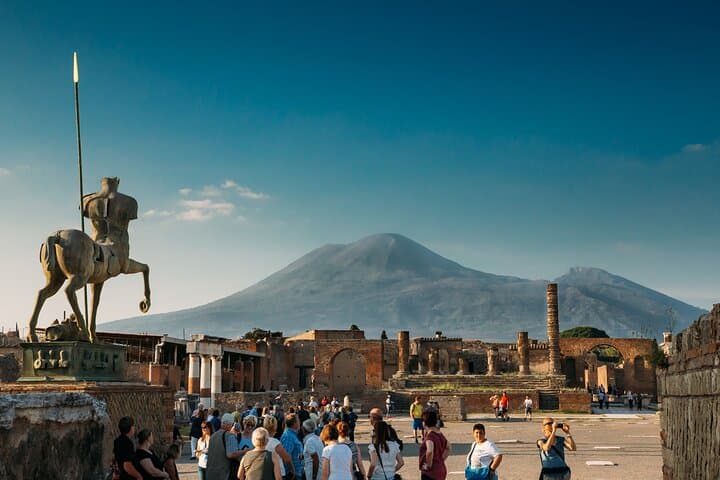
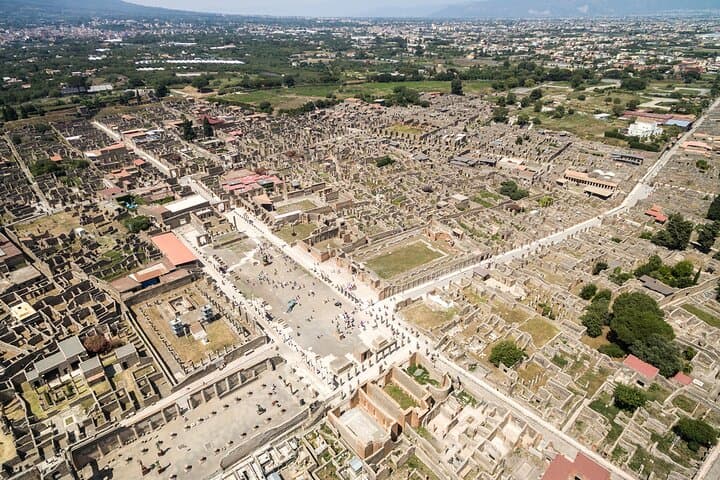
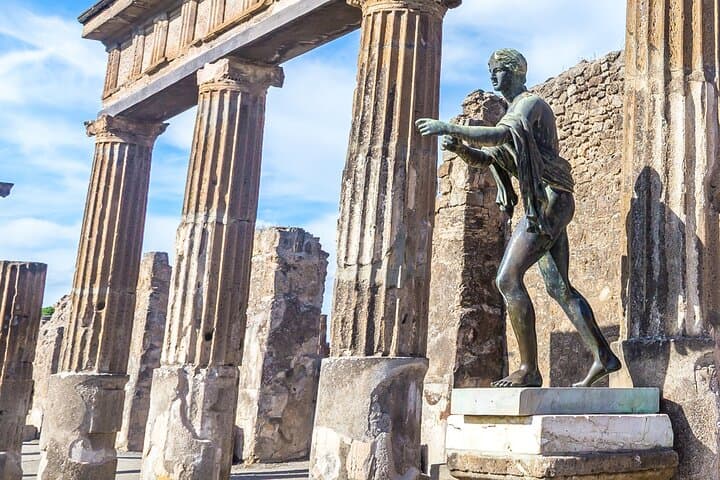
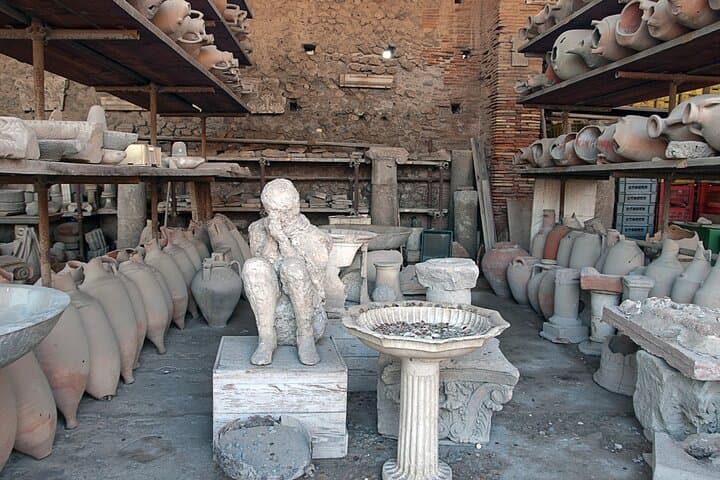
Pompeii and Vesuvius are chapters of the same story. In 79 AD Vesuvius erupted, burying towns and preserving daily life beneath ash. The volcanic cone you hike is the upper rim of a restless stratovolcano whose layered lava and pumice tell a geological history of explosive eruptions and slower lava flows. Pompeii’s streets, villas and plaster casts offer a blunt, human counterpoint to that raw geology.
Culturally, the area sits at the crossroads of Mediterranean trade—Roman mosaics, bakeries’ ovens and small-town devotion to local food remain visible. Local guides and audio guides help orient you through the archaeology while park rangers manage access to fragile crater edges.
Practical guidance: the Vesuvius hike from the 1,000 m parking is short but steep—plan about 45–90 minutes round trip depending on pace and pauses for photos. Wear sturdy shoes, carry 1–2 L water, sun protection and a light wind layer; fumaroles can smell strongly near the crater. Allow 2–4 hours extra for Pompeii self-guided exploration using the provided audioguide and map. Respect marked paths, stay with the group for transfers, and bring ID to rent audio equipment. Timing your visit for morning or late afternoon reduces heat and crowds and gives cleaner light across the crater.
moderate.
4–5 hours.
Moderate fitness; able to walk 25–45 minutes on an uneven, rocky incline and several hours standing in Pompeii.
Yes—this tour includes round-trip transfer by air-conditioned minibus when booked from Naples or Pompeii meeting points.
Yes—entry tickets to both the Vesuvius National Park crater access and the Pompeii Archaeological Park are included in the price.
The walk from the 1,000 m drop-off to the crater rim takes roughly 25 minutes uphill on loose volcanic scree—moderate effort but short in duration.
This tour is not recommended for those with significant mobility, spinal or cardiovascular problems; the trail has uneven surfaces and some steep sections.
Mount Vesuvius’ 79 AD eruption buried Pompeii under ash and pumice, preserving buildings and everyday objects that provide rare snapshots of Roman life; Pompeii is a UNESCO World Heritage Site.
Both the Vesuvius National Park and the archaeological authorities work to limit erosion and tourist impact—stay on trails, avoid touching frescoes, and dispose of waste properly.
Around Vesuvio operates guided outdoor trips and adventures with an emphasis on safety, stewardship, and memorable experiences.
You start on a narrow road that climbs away from the Gulf of Naples; the bus eases past vineyards and scrub until the air thins and the silhouette of Vesuvius fills the window. At 1,000 metres the vehicle stops and a volcanic trail opens—stony switchbacks, occasional fumaroles and a panorama that throws Naples, Sorrento and Capri into one sweeping view.
You start on a narrow road that climbs away from the Gulf of Naples; the bus eases past vineyards and scrub until the air thins and the silhouette of Vesuvius fills the window. At 1,000 metres the vehicle stops and a volcanic trail opens—stony switchbacks, occasional fumaroles and a panorama that throws Naples, Sorrento and Capri into one sweeping view.
Pompeii and Vesuvius are chapters of the same story. In 79 AD Vesuvius erupted, burying towns and preserving daily life beneath ash. The volcanic cone you hike is the upper rim of a restless stratovolcano whose layered lava and pumice tell a geological history of explosive eruptions and slower lava flows. Pompeii’s streets, villas and plaster casts offer a blunt, human counterpoint to that raw geology.
Culturally, the area sits at the crossroads of Mediterranean trade—Roman mosaics, bakeries’ ovens and small-town devotion to local food remain visible. Local guides and audio guides help orient you through the archaeology while park rangers manage access to fragile crater edges.
Practical guidance: the Vesuvius hike from the 1,000 m parking is short but steep—plan about 45–90 minutes round trip depending on pace and pauses for photos. Wear sturdy shoes, carry 1–2 L water, sun protection and a light wind layer; fumaroles can smell strongly near the crater. Allow 2–4 hours extra for Pompeii self-guided exploration using the provided audioguide and map. Respect marked paths, stay with the group for transfers, and bring ID to rent audio equipment. Timing your visit for morning or late afternoon reduces heat and crowds and gives cleaner light across the crater.