THE ADVENTURE COLLECTIVE® · Independent discovery and booking for outdoor travel

A one-day journey from Cusco to seven high Andean lagoons beneath Ausangate. Expect glacial basins, Quechua highland culture and an easy but high-altitude hike with hot springs at the finish.
A one-day journey from Cusco to seven high Andean lagoons beneath Ausangate. Expect glacial basins, Quechua highland culture and an easy but high-altitude hike with hot springs at the finish.
Dawn on the Altiplano arrives pale and cold: you step off the van at Pacchanta with waking mountains around you and a line of silver lagoons waiting like pools of sky.
Verified experiences and guided adventures in the surrounding area.
Operated by Machu Picchu · Pacchanta, Cusco Region
Dawn on the Altiplano arrives pale and cold: you step off the van at Pacchanta with waking mountains around you and a line of silver lagoons waiting like pools of sky.
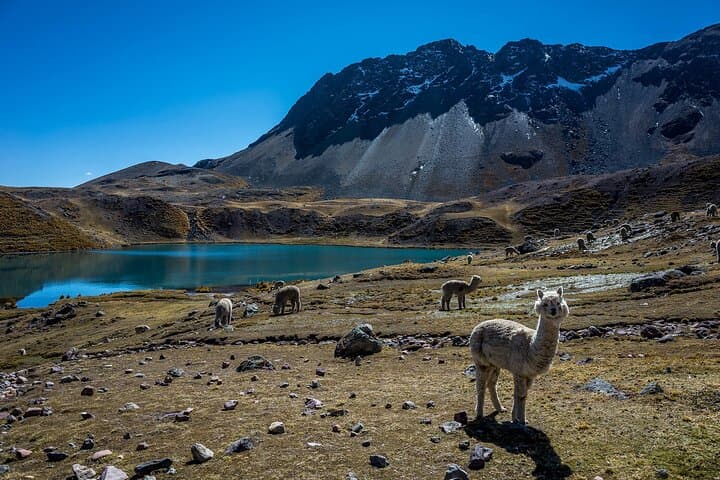
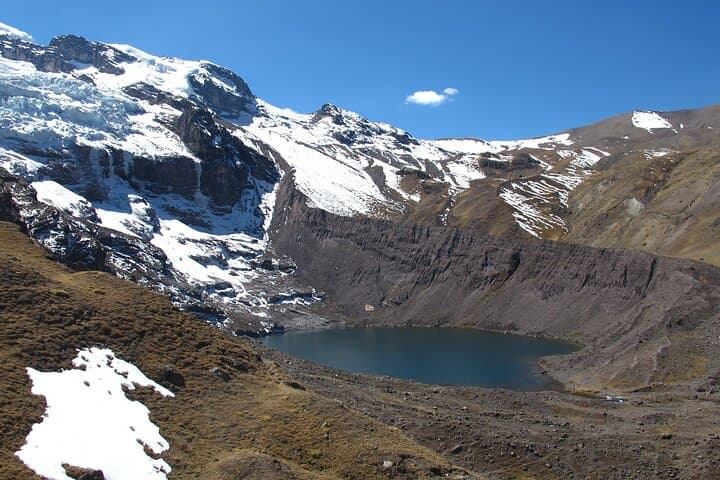
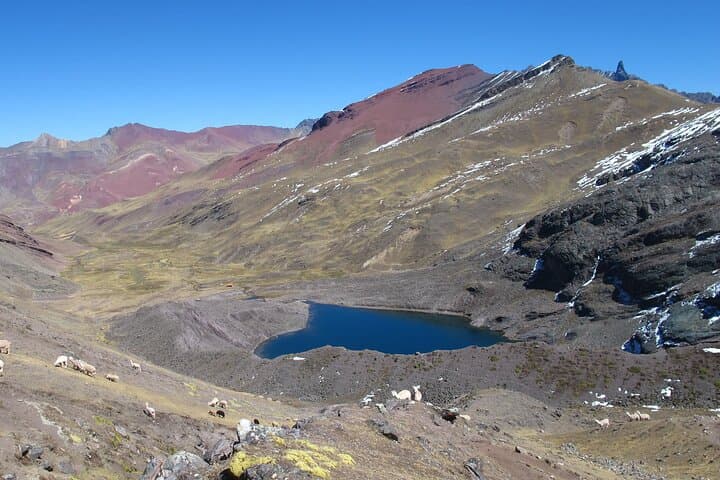
This full-day hike threads seven high Andean lakes—Pukaqocha, Pataqocha, Alqa Qocha, Q'ome Qocha, Orq'o Otorongo, China Otorongo and Azul Qocha—under the shadow of Ausangate, one of the cordillera’s great snow-capped domes. Geological forces raised this region into a checkerboard of moraine basins and glacial cirques; the lagoons occupy hollows carved by ice and fed by seasonal snowmelt. Culturally the route passes through pastoral Quechua territory; alpaca herds, stone corrals and small adobe settlements speak to centuries of mountain husbandry rather than Incan imperial centers.
Expect a steady, scenic hike of roughly three hours on trails that alternate between rocky tundra and grassy benchland, at altitudes typically between 4,200–4,800 meters. The tour includes breakfast in Pacchanta, a boxed lunch, walking sticks and return transport to Cusco—plus time to soak in Pacchanta’s hot springs after the walk. Guides offer local context about traditional salt harvesting in nearby Maras and the spiritual significance of Ausangate for Andean communities.
Practical edge: acclimatize in Cusco for 24–48 hours beforehand, carry layers for sudden wind and sun, and allow a slower pace uphill. Hydrate often; the thin air shortens strides and lengthens rest stops. Aim for early departures to maximize sunlight on the lagoons and return to Cusco by evening.
moderate.
13 hours.
Moderate fitness: able to hike 3–5 hours at high altitude; prior acclimatization recommended
The walking itself is non-technical and lasts about three hours round-trip, but high altitude makes it moderately strenuous—go slowly and rest often.
Yes. Spend at least one night in Cusco (preferably 24–48 hours) before joining to reduce altitude sickness risk.
Time to visit the Pacchanta hot springs is included after the hike, but entrance may be basic and towels/swimwear are recommended.
Layered clothing, a windproof jacket, sunscreen, sunglasses, water (1–2 L), snacks, and sturdy hiking boots; walking sticks are usually provided.
The Ausangate massif holds long-standing significance for Quechua communities and sits near pre-Inca and Inca movement corridors used for trade and pastoralism.
This fragile highland ecosystem is sensitive to overuse—stay on trails, pack out waste, and respect grazing lands to limit erosion and disturbance.
Machu Picchu operates guided outdoor trips and adventures with an emphasis on safety, stewardship, and memorable experiences.
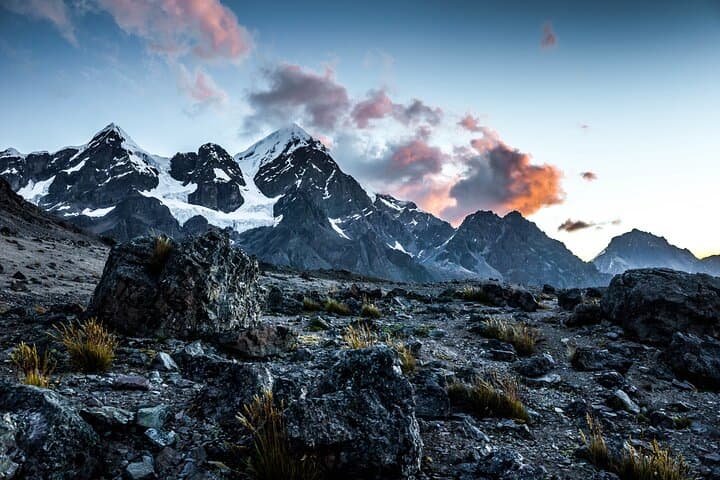
Dawn on the Altiplano arrives pale and cold: you step off the van at Pacchanta with waking mountains around you and a line of silver lagoons waiting like pools of sky.
Dawn on the Altiplano arrives pale and cold: you step off the van at Pacchanta with waking mountains around you and a line of silver lagoons waiting like pools of sky.
This full-day hike threads seven high Andean lakes—Pukaqocha, Pataqocha, Alqa Qocha, Q'ome Qocha, Orq'o Otorongo, China Otorongo and Azul Qocha—under the shadow of Ausangate, one of the cordillera’s great snow-capped domes. Geological forces raised this region into a checkerboard of moraine basins and glacial cirques; the lagoons occupy hollows carved by ice and fed by seasonal snowmelt. Culturally the route passes through pastoral Quechua territory; alpaca herds, stone corrals and small adobe settlements speak to centuries of mountain husbandry rather than Incan imperial centers.
Expect a steady, scenic hike of roughly three hours on trails that alternate between rocky tundra and grassy benchland, at altitudes typically between 4,200–4,800 meters. The tour includes breakfast in Pacchanta, a boxed lunch, walking sticks and return transport to Cusco—plus time to soak in Pacchanta’s hot springs after the walk. Guides offer local context about traditional salt harvesting in nearby Maras and the spiritual significance of Ausangate for Andean communities.
Practical edge: acclimatize in Cusco for 24–48 hours beforehand, carry layers for sudden wind and sun, and allow a slower pace uphill. Hydrate often; the thin air shortens strides and lengthens rest stops. Aim for early departures to maximize sunlight on the lagoons and return to Cusco by evening.