THE ADVENTURE COLLECTIVE® · Independent discovery and booking for outdoor travel

A short, culturally rich hike from Thamel to the UNESCO-listed Swayambhunath Stupa. Expect stone steps, bold macaques, valley panoramas and active temple rituals—ideal as a cooler, half-day urban escape.
A short, culturally rich hike from Thamel to the UNESCO-listed Swayambhunath Stupa. Expect stone steps, bold macaques, valley panoramas and active temple rituals—ideal as a cooler, half-day urban escape.
You push through Thamel’s narrow alleys and the city’s rhythm thins; prayer flags begin to stitch the sky as you climb. The trail alternates between paved lanes and stone stairways, the air suddenly cooler under fig and pine. Monkeys patrol the terraces, curious and bold, and the Stupa’s painted eyes watch the valley below as the sun loosens morning mist into long, clear light.
Verified experiences and guided adventures in the surrounding area.
Operated by Couch Adventure Nepal (CAN) · Kathmandu, Bagmati Province
You push through Thamel’s narrow alleys and the city’s rhythm thins; prayer flags begin to stitch the sky as you climb. The trail alternates between paved lanes and stone stairways, the air suddenly cooler under fig and pine. Monkeys patrol the terraces, curious and bold, and the Stupa’s painted eyes watch the valley below as the sun loosens morning mist into long, clear light.
Swayambhunath sits on a wooded hill that predates Kathmandu’s modern sprawl and is part of the Kathmandu Valley World Heritage area. The complex blends Buddhist and Hindu elements—shrines, chaityas, and gilded domes—reflecting centuries of devotion. Geologically, the hill is a prominent outcrop above the valley floor, giving uninterrupted views of the basin and the distant Himalayan silhouette on clear days.
Locals spin brass prayer wheels and leave small offerings; vendors sell butter tea and incense along the approach. The climb commonly involves roughly 300–400 vertical meters from central Thamel, and about 365 stone steps to the main stupa if you take the traditional eastern staircase—routes vary in length and surface.
Practical note: start at sunrise for cooler air, smaller crowds, and softer light for photos. Expect uneven steps, occasional loose stones, and bold macaques—secure your belongings. Bring water, small change for temples and snacks, and wear sturdy shoes with grip. The hike is short but culturally dense: move respectfully, observe photography rules at shrines, and leave no trace. With a calm pace, the route is an accessible half-day outing that pairs urban exploration with clear, rewarding panoramas of Kathmandu.
easy.
4–5 hours.
Light-moderate walking fitness; comfortable on stairs and short uphill sections
From central Thamel to the main stupa the visit typically takes 2–3 hours round trip on foot, with extra time to explore the complex; total outing listed at 4–5 hours to include guide-led stops.
Yes—while there are many steps and some steep sections, the pace can be adjusted and there are multiple resting terraces; people with mobility issues should consider a short taxi ride partway.
There is a small entry fee for foreign visitors to access the core heritage complex; modest donations at shrines are customary but not mandatory.
Macaques are habituated to people; avoid feeding or leaving visible food, keep cameras and phones secure, and step back if they approach.
Swayambhunath is an ancient religious site within the Kathmandu Valley UNESCO zone, with layers of Buddhist and Hindu practice built up over many centuries and maintained as a living pilgrimage center.
Visitor pressure and litter affect the hill; support local stewards by using marked paths, avoiding plastic, and following temple etiquette to minimize impact.
Couch Adventure Nepal (CAN) operates guided outdoor trips and adventures with an emphasis on safety, stewardship, and memorable experiences.

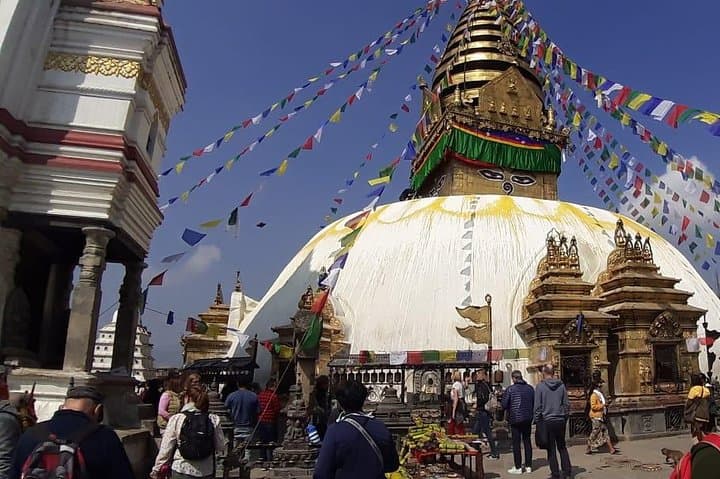

You push through Thamel’s narrow alleys and the city’s rhythm thins; prayer flags begin to stitch the sky as you climb. The trail alternates between paved lanes and stone stairways, the air suddenly cooler under fig and pine. Monkeys patrol the terraces, curious and bold, and the Stupa’s painted eyes watch the valley below as the sun loosens morning mist into long, clear light.
You push through Thamel’s narrow alleys and the city’s rhythm thins; prayer flags begin to stitch the sky as you climb. The trail alternates between paved lanes and stone stairways, the air suddenly cooler under fig and pine. Monkeys patrol the terraces, curious and bold, and the Stupa’s painted eyes watch the valley below as the sun loosens morning mist into long, clear light.
Swayambhunath sits on a wooded hill that predates Kathmandu’s modern sprawl and is part of the Kathmandu Valley World Heritage area. The complex blends Buddhist and Hindu elements—shrines, chaityas, and gilded domes—reflecting centuries of devotion. Geologically, the hill is a prominent outcrop above the valley floor, giving uninterrupted views of the basin and the distant Himalayan silhouette on clear days.
Locals spin brass prayer wheels and leave small offerings; vendors sell butter tea and incense along the approach. The climb commonly involves roughly 300–400 vertical meters from central Thamel, and about 365 stone steps to the main stupa if you take the traditional eastern staircase—routes vary in length and surface.
Practical note: start at sunrise for cooler air, smaller crowds, and softer light for photos. Expect uneven steps, occasional loose stones, and bold macaques—secure your belongings. Bring water, small change for temples and snacks, and wear sturdy shoes with grip. The hike is short but culturally dense: move respectfully, observe photography rules at shrines, and leave no trace. With a calm pace, the route is an accessible half-day outing that pairs urban exploration with clear, rewarding panoramas of Kathmandu.