THE ADVENTURE COLLECTIVE® · Independent discovery and booking for outdoor travel

A daytrip from Berat that blends a long 4x4 approach with a 2–5 hour hike to a dramatic karst-fed waterfall on Mount Tomorr. Expect limestone cliffs, old mountain villages and variable trail conditions.
A daytrip from Berat that blends a long 4x4 approach with a 2–5 hour hike to a dramatic karst-fed waterfall on Mount Tomorr. Expect limestone cliffs, old mountain villages and variable trail conditions.
A single-track forest narrows, the engine drops to a low roar and the land opens: limestone cliffs funnel a ribbon of water that erupts from rock itself. Sotira’s broader curtain throws white into the shadow of Tomorri Mountain, while a slimmer, higher cascade threads down the slope — two moods of the same underground spring.
Verified experiences and guided adventures in the surrounding area.
Operated by 1001 Albanian Adventures · Berat, Berat County
A single-track forest narrows, the engine drops to a low roar and the land opens: limestone cliffs funnel a ribbon of water that erupts from rock itself. Sotira’s broader curtain throws white into the shadow of Tomorri Mountain, while a slimmer, higher cascade threads down the slope — two moods of the same underground spring.
The falls sit on the karst slopes fed by Tomorri’s snowmelt; water travels through fissures and resurfaces dramatically at the cliff face. Local villages along the way preserve traditional stone houses and pastoral life unchanged for generations, and Mount Tomorr carries cultural weight as a historic pilgrimage site in the region.
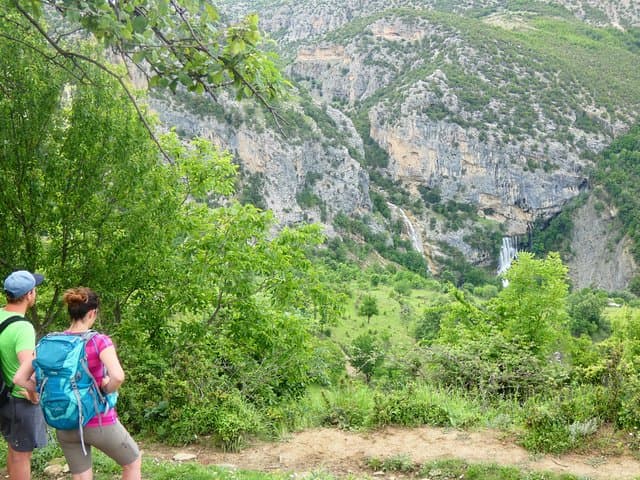
Geologically, expect limestone beds, sinkholes and caves that channel underground currents; botanically, mixed oak and beech give way to subalpine scrub higher up. The approach is equal parts road and trail: a four-hour 4x4 transfer from Berat through country roads, then a 2–5 hour hike depending on how long you linger at overlooks and pools.
Plan for variable footing, muddy streams in spring, and stronger sun in summer. Pack water, grippy footwear, and a layered shell; the guide handles route-finding but trails can be steep and uneven. Aim to arrive early for the soft light and reduced crowds, and leave no trace—this spring-fed spectacle depends on clean upstream water and quiet passage through fragile karst terrain.
The outing suits hikers comfortable with moderate climbs and unmarked sections: it’s as much a cultural route through old villages as it is a natural showpiece backed by Tomorri’s raw geology.
moderate.
6–9 hours.
Good cardiovascular fitness for several hours of hiking with short steep sections; able to handle uneven terrain.
The transfer is roughly four hours by 4x4 along rural roads and dirt tracks; timing varies with road conditions and exact pickup point.
Late spring—after snowmelt on Mount Tomorr—typically yields highest flows; early summer still offers strong runoff but lower than peak spring.
Older children used to hiking can do the route with supervision, but expect steep or slippery sections; infants should remain in a carrier rather than a stroller.
A local guide is recommended for navigation, local access permissions, and to respect village routes; some sections are unmarked and the guide enhances safety.
Mount Tomorr has long cultural importance in the region and hosts traditional pilgrimages; villages below retain Ottoman-era and earlier rural architecture.
The waterfall depends on clean karst aquifers—avoid soaps and dispose of waste in town. Stick to established paths to protect fragile limestone flora and prevent soil erosion.
1001 Albanian Adventures operates guided outdoor trips and adventures with an emphasis on safety, stewardship, and memorable experiences.
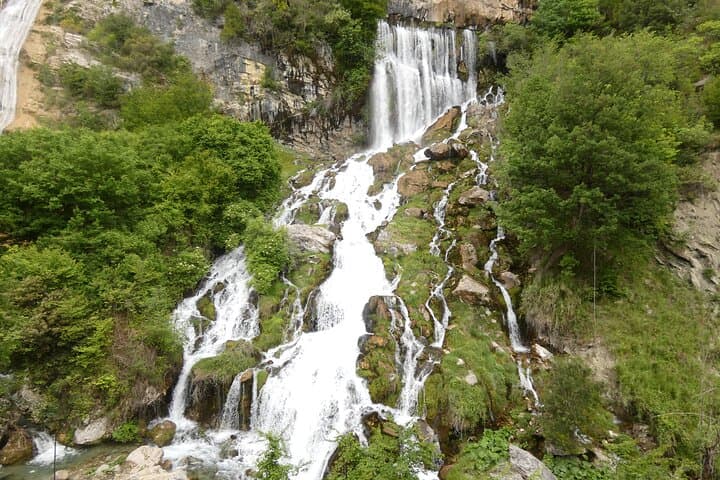
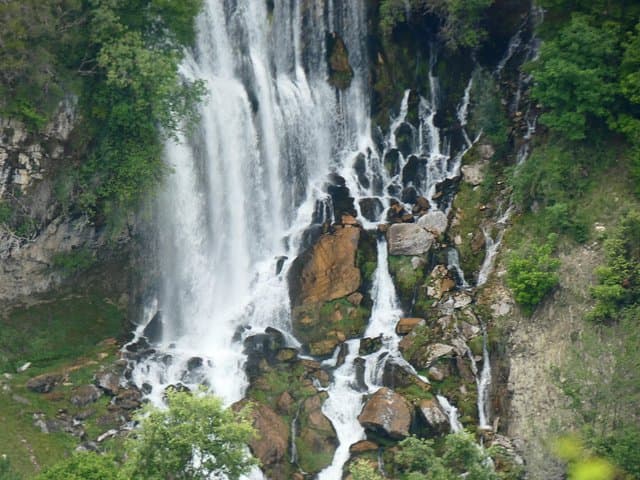
A single-track forest narrows, the engine drops to a low roar and the land opens: limestone cliffs funnel a ribbon of water that erupts from rock itself. Sotira’s broader curtain throws white into the shadow of Tomorri Mountain, while a slimmer, higher cascade threads down the slope — two moods of the same underground spring.
A single-track forest narrows, the engine drops to a low roar and the land opens: limestone cliffs funnel a ribbon of water that erupts from rock itself. Sotira’s broader curtain throws white into the shadow of Tomorri Mountain, while a slimmer, higher cascade threads down the slope — two moods of the same underground spring.
The falls sit on the karst slopes fed by Tomorri’s snowmelt; water travels through fissures and resurfaces dramatically at the cliff face. Local villages along the way preserve traditional stone houses and pastoral life unchanged for generations, and Mount Tomorr carries cultural weight as a historic pilgrimage site in the region.
Geologically, expect limestone beds, sinkholes and caves that channel underground currents; botanically, mixed oak and beech give way to subalpine scrub higher up. The approach is equal parts road and trail: a four-hour 4x4 transfer from Berat through country roads, then a 2–5 hour hike depending on how long you linger at overlooks and pools.
Plan for variable footing, muddy streams in spring, and stronger sun in summer. Pack water, grippy footwear, and a layered shell; the guide handles route-finding but trails can be steep and uneven. Aim to arrive early for the soft light and reduced crowds, and leave no trace—this spring-fed spectacle depends on clean upstream water and quiet passage through fragile karst terrain.
The outing suits hikers comfortable with moderate climbs and unmarked sections: it’s as much a cultural route through old villages as it is a natural showpiece backed by Tomorri’s raw geology.