THE ADVENTURE COLLECTIVE® · Independent discovery and booking for outdoor travel

Stand beneath one of Europe’s highest man-made waterfalls and follow carved paths, tunnels and overlooks on a day hike from Rome. This guided trip blends Roman engineering, Umbrian landscapes and dramatic viewpoints in a single, accessible outing.
Stand beneath one of Europe’s highest man-made waterfalls and follow carved paths, tunnels and overlooks on a day hike from Rome. This guided trip blends Roman engineering, Umbrian landscapes and dramatic viewpoints in a single, accessible outing.
The cliff announces itself before you see it: a white sheet of water splitting the valley, thunder rolling down through rock and green. You arrive by road, pass Lake Piediluco’s still mirror and step onto trails where spray mists the air and the river dares you closer.
Verified experiences and guided adventures in the surrounding area.
Operated by Cris Co · Terni, Umbria
The cliff announces itself before you see it: a white sheet of water splitting the valley, thunder rolling down through rock and green. You arrive by road, pass Lake Piediluco’s still mirror and step onto trails where spray mists the air and the river dares you closer.
Marmore Falls (Cascata delle Marmore) is an artificial fall engineered by the Romans in 271 BC to drain the Nera basin — a civil-engineering decision that shaped this geology and local livelihoods for centuries. The falls cascade in three drops, cutting through limestone and travertine carved by millennia of water flow. Nearby towns like Rieti and Terni carry medieval and Roman layers: hilltop fortresses, terraced olive groves and small artisan cafes celebrating Umbrian flavors.
The guided day trip from Rome usually includes a scenic drive along Piediluco, a stop at local springs for fresh water, and two marked trail loops inside the Marmore park. Expect well-maintained paths with stone steps, short tunnels and viewing platforms — including the intimate vantage behind the main 167m jump and the panoramic Belvedere overlooks. The park charges an entrance fee (around €12), and the route can get wet and slippery close to the falls.
Practical edge: wear grippy footwear and a light waterproof layer, bring a refillable bottle (there are spring taps), and time your visit for morning or late afternoon to avoid peak crowds and catch better light. The hike is accessible to fit beginners and rewarding for seasoned hikers who want dramatic viewpoints without technical climbing. Finish at Terni station or return to Rome — it’s an achievable, high-impact day of geology, history and raw, moving water.
moderate.
7 hours.
Suitable for people in regular fitness — several hours of walking with short steep sections and stairways
The guided day trip typically includes about a one-hour drive each way, with around 5–6 hours at the site and on trails — total duration roughly 7 hours.
Most tours do not include the Marmore park entrance fee (approximately €12), which is usually paid on arrival.
Yes — the tour follows well-established, non-technical paths suitable for beginners, though you should be comfortable walking several hours and managing stairs.
There are designated viewing areas and short tunnels that allow close access; follow signage and guide instructions as surfaces are wet and can be slippery.
The Marmore Falls were created by Roman engineers in 271 BC to drain marshes and control the Nera River, shaping local agriculture and settlement patterns.
Visitor management and scheduled water releases aim to balance tourism with riverine habitat protection; stick to marked trails and avoid disturbing vegetation.
Cris Co operates guided outdoor trips and adventures with an emphasis on safety, stewardship, and memorable experiences.
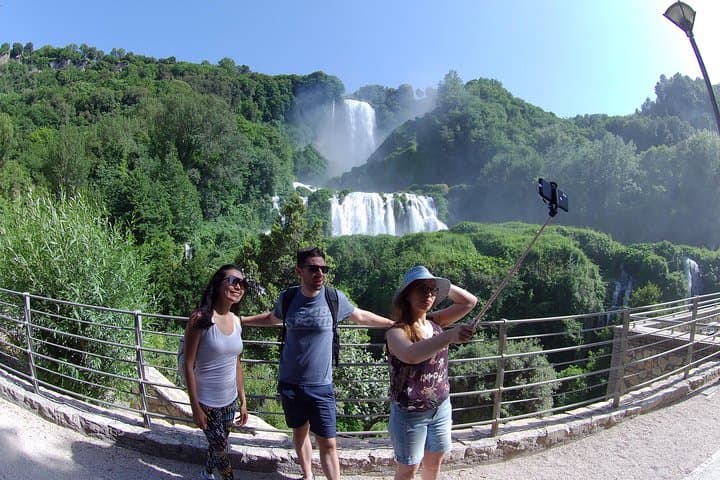


The cliff announces itself before you see it: a white sheet of water splitting the valley, thunder rolling down through rock and green. You arrive by road, pass Lake Piediluco’s still mirror and step onto trails where spray mists the air and the river dares you closer.
The cliff announces itself before you see it: a white sheet of water splitting the valley, thunder rolling down through rock and green. You arrive by road, pass Lake Piediluco’s still mirror and step onto trails where spray mists the air and the river dares you closer.
Marmore Falls (Cascata delle Marmore) is an artificial fall engineered by the Romans in 271 BC to drain the Nera basin — a civil-engineering decision that shaped this geology and local livelihoods for centuries. The falls cascade in three drops, cutting through limestone and travertine carved by millennia of water flow. Nearby towns like Rieti and Terni carry medieval and Roman layers: hilltop fortresses, terraced olive groves and small artisan cafes celebrating Umbrian flavors.
The guided day trip from Rome usually includes a scenic drive along Piediluco, a stop at local springs for fresh water, and two marked trail loops inside the Marmore park. Expect well-maintained paths with stone steps, short tunnels and viewing platforms — including the intimate vantage behind the main 167m jump and the panoramic Belvedere overlooks. The park charges an entrance fee (around €12), and the route can get wet and slippery close to the falls.
Practical edge: wear grippy footwear and a light waterproof layer, bring a refillable bottle (there are spring taps), and time your visit for morning or late afternoon to avoid peak crowds and catch better light. The hike is accessible to fit beginners and rewarding for seasoned hikers who want dramatic viewpoints without technical climbing. Finish at Terni station or return to Rome — it’s an achievable, high-impact day of geology, history and raw, moving water.