THE ADVENTURE COLLECTIVE® · Independent discovery and booking for outdoor travel

A demanding 17 km day hike from Salta into Quebrada de Toro to reach Incahuasi, a 15th-century Inca site. Expect steep climbs, high-altitude air, vivid canyon geology and a bilingual guide with picnic lunch included.
A demanding 17 km day hike from Salta into Quebrada de Toro to reach Incahuasi, a 15th-century Inca site. Expect steep climbs, high-altitude air, vivid canyon geology and a bilingual guide with picnic lunch included.
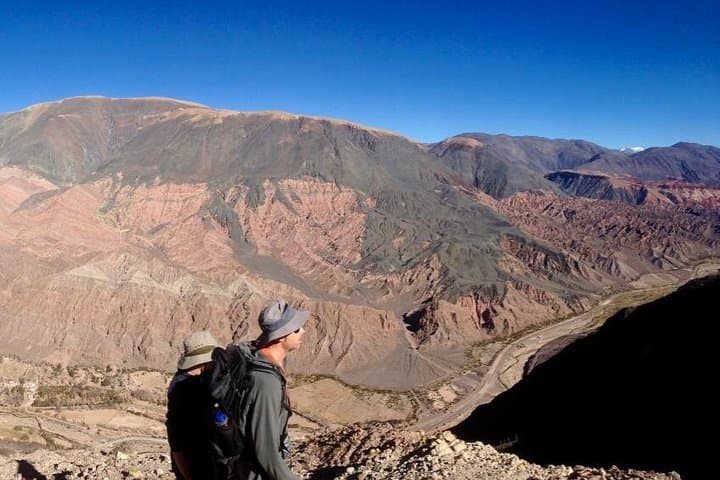
A shuttle winds out of Salta before dawn, road cutting through scrub and red rock until Campo Quijano appears — a low town with iron rails and an old steam engine that keeps the railway’s history alive. From here the road climbs into Quebrada de Toro, where the canyon walls flare in bands of rust, ochre and clay; the guide points to layers worn by wind and water as if the valley itself is reading a slow history.
Verified experiences and guided adventures in the surrounding area.
Operated by Poncho Tours · Campo Quijano, Salta
A shuttle winds out of Salta before dawn, road cutting through scrub and red rock until Campo Quijano appears — a low town with iron rails and an old steam engine that keeps the railway’s history alive. From here the road climbs into Quebrada de Toro, where the canyon walls flare in bands of rust, ochre and clay; the guide points to layers worn by wind and water as if the valley itself is reading a slow history.
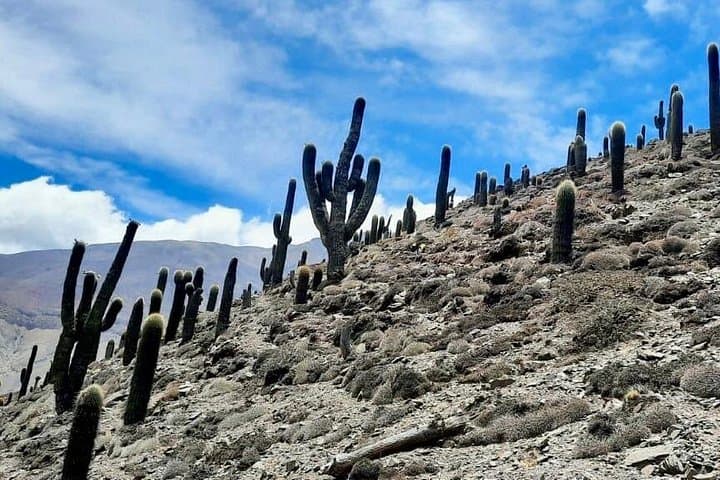
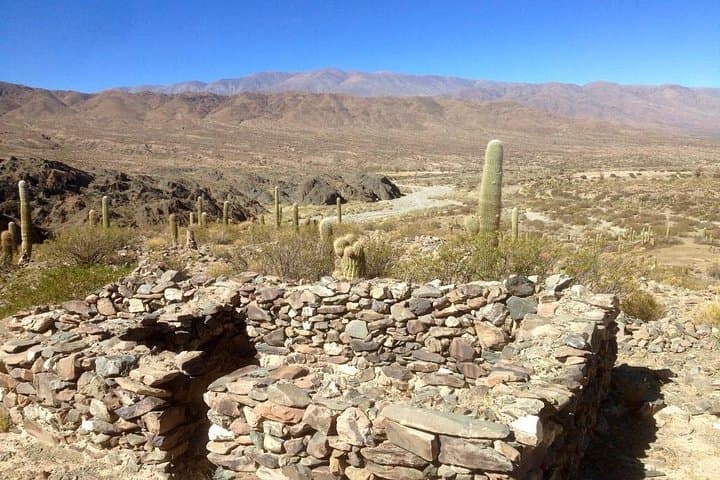
The trail begins at Ingeniero Maury and rises hard: nearly 1,000 meters of gain across the first 3.75 km, reaching about 3,265 m at the high point. The geology is visible and immediate — tilted sedimentary strata and eroded spires that speak to tectonic lift and arid weathering. By mid-afternoon the ridge eases and a descent leads to Incahuasi, a modest 15th-century Inca site where stone terraces and foundations recall pre-Hispanic presence on these high slopes.
Culturally, the hike threads colonial-era railway lore — the mausoleum of engineer Richard Maury lies below — with Andean agrarian history; shepherds and their guanaco-like herds are occasional companions. Expect thin air; the mountain pushes back with altitude. The guide provides bottled water, snacks and a picnic; pickups and drop-offs run from Salta, roughly a 90-minute drive each way.
Practical notes: this is a 17 km, 7–8 hour trek for fit hikers. Wear stiff-soled boots, layer for sun and wind, and pace the climb to manage breathing. Bring passport, cash for small purchases in Campo Quijano, and be ready for sudden weather shifts — the canyon can be bright one hour, gusting the next.
challenging.
7–8 hours.
Requires high aerobic fitness and leg strength; previous long-hike experience at altitude recommended
The route is roughly 17 km round trip with nearly 1,000 m of ascent over the first 3.75 km, reaching about 3,265 m at the high point.
Not strictly required, but this is a challenging high-altitude trek; participants should be in very good physical condition and acclimatize beforehand.
Facilities are limited to Campo Quijano and trailheads; expect natural breaks and carry a small trowel or waste bag for sanitation etiquette.
Yes — the trip includes hotel pickup and drop-off from Salta with a 90-minute drive each way to the trailhead.
Incahuasi is a late pre-Hispanic site (15th century) connected to Andean networks; nearby railroad history centers on US engineer Richard Maury and the Train to the Clouds project.
High-altitude puna is fragile — stay on trails, pack out waste, and avoid disturbing archaeological features or grazing areas.
Poncho Tours operates guided outdoor trips and adventures with an emphasis on safety, stewardship, and memorable experiences.
A shuttle winds out of Salta before dawn, road cutting through scrub and red rock until Campo Quijano appears — a low town with iron rails and an old steam engine that keeps the railway’s history alive. From here the road climbs into Quebrada de Toro, where the canyon walls flare in bands of rust, ochre and clay; the guide points to layers worn by wind and water as if the valley itself is reading a slow history.
A shuttle winds out of Salta before dawn, road cutting through scrub and red rock until Campo Quijano appears — a low town with iron rails and an old steam engine that keeps the railway’s history alive. From here the road climbs into Quebrada de Toro, where the canyon walls flare in bands of rust, ochre and clay; the guide points to layers worn by wind and water as if the valley itself is reading a slow history.
The trail begins at Ingeniero Maury and rises hard: nearly 1,000 meters of gain across the first 3.75 km, reaching about 3,265 m at the high point. The geology is visible and immediate — tilted sedimentary strata and eroded spires that speak to tectonic lift and arid weathering. By mid-afternoon the ridge eases and a descent leads to Incahuasi, a modest 15th-century Inca site where stone terraces and foundations recall pre-Hispanic presence on these high slopes.
Culturally, the hike threads colonial-era railway lore — the mausoleum of engineer Richard Maury lies below — with Andean agrarian history; shepherds and their guanaco-like herds are occasional companions. Expect thin air; the mountain pushes back with altitude. The guide provides bottled water, snacks and a picnic; pickups and drop-offs run from Salta, roughly a 90-minute drive each way.
Practical notes: this is a 17 km, 7–8 hour trek for fit hikers. Wear stiff-soled boots, layer for sun and wind, and pace the climb to manage breathing. Bring passport, cash for small purchases in Campo Quijano, and be ready for sudden weather shifts — the canyon can be bright one hour, gusting the next.