THE ADVENTURE COLLECTIVE® · Independent discovery and booking for outdoor travel

Walk the UNESCO-listed Semmeringbahn corridor from Vienna on a private guided hike that pairs engineering history with alpine scenery. Expect rolling forest trails, dramatic viaduct views, and a tavern stop before a scenic train return.
Walk the UNESCO-listed Semmeringbahn corridor from Vienna on a private guided hike that pairs engineering history with alpine scenery. Expect rolling forest trails, dramatic viaduct views, and a tavern stop before a scenic train return.
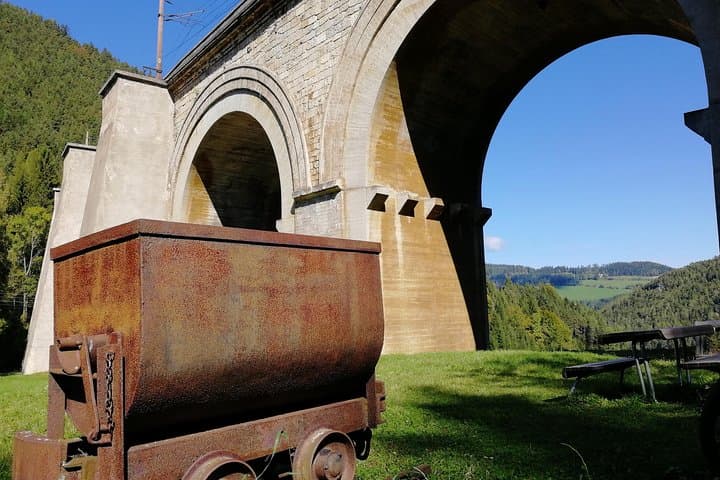
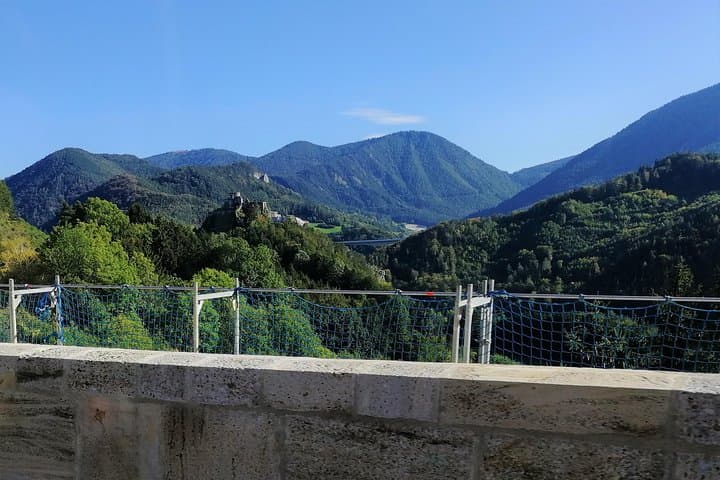
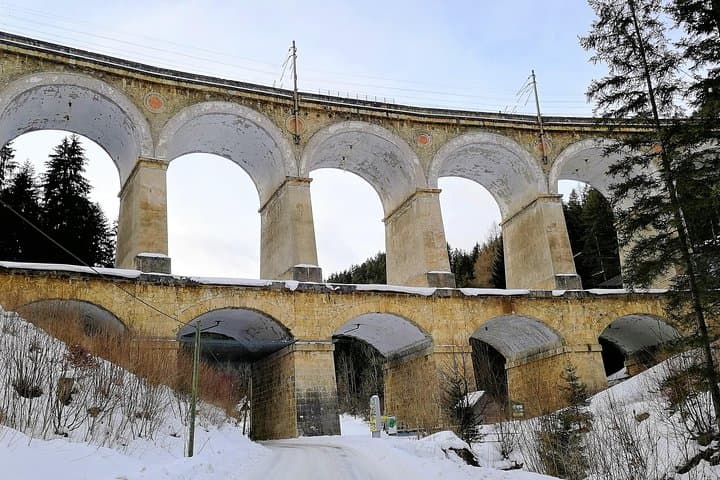
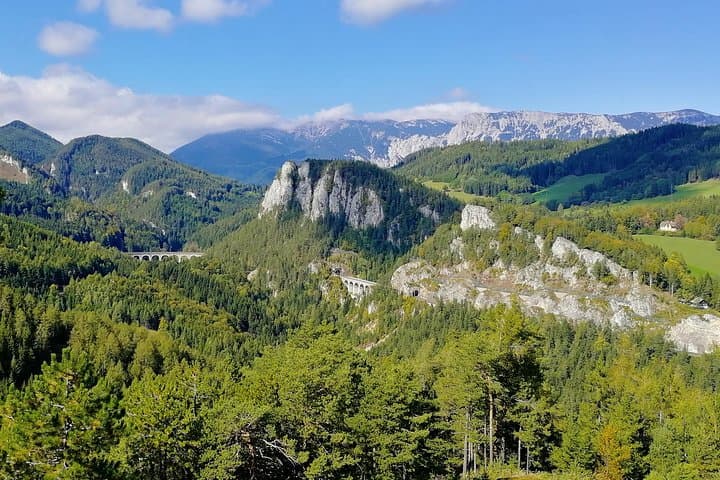
You step off the train into thin, cool air and the Semmering landscape unfolds: slate-gray viaducts curve into spruce-dark hills, and the tracks run like a steady pulse through the slopes. The smell of damp earth and spruce follows you as the guide points out the railway arcs that solved a 19th-century engineering puzzle; this is walking history with an alpine soundtrack.
Verified experiences and guided adventures in the surrounding area.
Operated by Venture Vienna - Outdoor Activities & Tours · Semmering, Lower Austria
You step off the train into thin, cool air and the Semmering landscape unfolds: slate-gray viaducts curve into spruce-dark hills, and the tracks run like a steady pulse through the slopes. The smell of damp earth and spruce follows you as the guide points out the railway arcs that solved a 19th-century engineering puzzle; this is walking history with an alpine soundtrack.
The Semmeringbahn, completed in 1854 and now UNESCO-listed, was the world's first true mountain railway and remains a study in stonework and inclined grades. Geologically the area sits where crystalline rock meets sedimentary foothills, producing short, sharp ridges, boggy meadows, and fast-draining scree—terrain that influenced the railway's bridges and tunnels. Local culture still orients around mountain inns and railway heritage; expect traditional tavern fare and a regional pride in the viaducts by Carl von Ghega.
On the trail you'll encounter mostly clear, rolling forest tracks with sections of gravel and occasional rock; plan for roughly 8–12 km of walking with 200–400 m cumulative ascent spread over a full-day route. The guide provides context, safety, and return train tickets, so your focus stays on views and photography. Practical tips: wear sturdy hiking shoes for wet patches, bring layered clothing for alpine sun and wind, and carry water and snacks—refreshments are available at a mountain tavern en route. Timing-wise, an early departure from Vienna gives the best light on the Kalte Rinne viaduct and a relaxed return to the city by late afternoon.
moderate.
8–8.5 hours.
Moderate fitness: accustomed to full-day walks of 8–12 km with intermittent climbs and uneven footing.
The full-day itinerary runs about 8–8.5 hours including train travel; expect 8–12 km of walking with roughly 200–400 m total ascent spread across moderate terrain.
No technical experience is needed—moderate fitness and the ability to walk several hours on forest and gravel paths are sufficient.
Yes, regional train travel to and from the Semmering region is included as part of the tour package.
Service animals are allowed; check with the guide in advance about any specific needs or rules for animals on trains.
The Semmeringbahn (opened 1854) was the first mountain railway built with standard gauge and is celebrated for its innovative viaducts and tunnels designed by Carl von Ghega.
Trails here are managed to protect fragile alpine meadows—stay on marked paths, pack out rubbish, and be mindful of nesting birds and grazing areas.
Venture Vienna - Outdoor Activities & Tours operates guided outdoor trips and adventures with an emphasis on safety, stewardship, and memorable experiences.
You step off the train into thin, cool air and the Semmering landscape unfolds: slate-gray viaducts curve into spruce-dark hills, and the tracks run like a steady pulse through the slopes. The smell of damp earth and spruce follows you as the guide points out the railway arcs that solved a 19th-century engineering puzzle; this is walking history with an alpine soundtrack.
You step off the train into thin, cool air and the Semmering landscape unfolds: slate-gray viaducts curve into spruce-dark hills, and the tracks run like a steady pulse through the slopes. The smell of damp earth and spruce follows you as the guide points out the railway arcs that solved a 19th-century engineering puzzle; this is walking history with an alpine soundtrack.
The Semmeringbahn, completed in 1854 and now UNESCO-listed, was the world's first true mountain railway and remains a study in stonework and inclined grades. Geologically the area sits where crystalline rock meets sedimentary foothills, producing short, sharp ridges, boggy meadows, and fast-draining scree—terrain that influenced the railway's bridges and tunnels. Local culture still orients around mountain inns and railway heritage; expect traditional tavern fare and a regional pride in the viaducts by Carl von Ghega.
On the trail you'll encounter mostly clear, rolling forest tracks with sections of gravel and occasional rock; plan for roughly 8–12 km of walking with 200–400 m cumulative ascent spread over a full-day route. The guide provides context, safety, and return train tickets, so your focus stays on views and photography. Practical tips: wear sturdy hiking shoes for wet patches, bring layered clothing for alpine sun and wind, and carry water and snacks—refreshments are available at a mountain tavern en route. Timing-wise, an early departure from Vienna gives the best light on the Kalte Rinne viaduct and a relaxed return to the city by late afternoon.