THE ADVENTURE COLLECTIVE® · Independent discovery and booking for outdoor travel

A full-day hike from Brunate to Torno that threads beech woods, balanced boulders and panoramic lake views. Learn the geology, local history and practical tips to tackle the 15 km Sentiero degli Avelli route.
A full-day hike from Brunate to Torno that threads beech woods, balanced boulders and panoramic lake views. Learn the geology, local history and practical tips to tackle the 15 km Sentiero degli Avelli route.
You step out of the Brunate funicular into cool air and a panorama that commands attention: Lake Como unfurls like a deep blue mirror while the ridge trail threads into mixed beech and chestnut woods.
Verified experiences and guided adventures in the surrounding area.
Operated by Cristina Maria Rita Rovelli · Como, Lombardy
You step out of the Brunate funicular into cool air and a panorama that commands attention: Lake Como unfurls like a deep blue mirror while the ridge trail threads into mixed beech and chestnut woods.
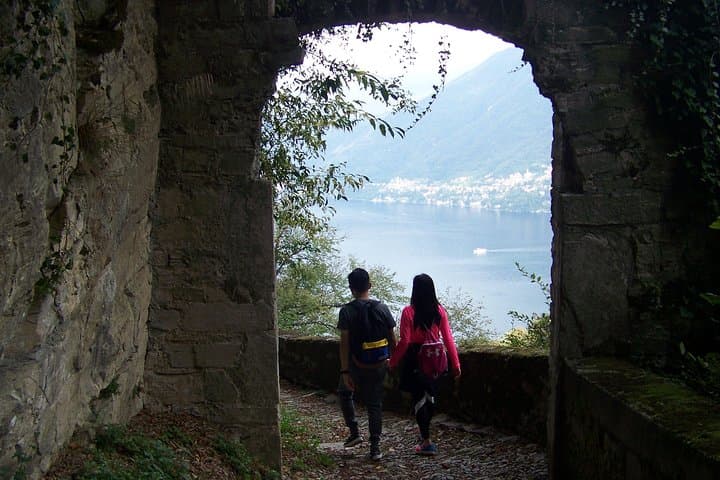
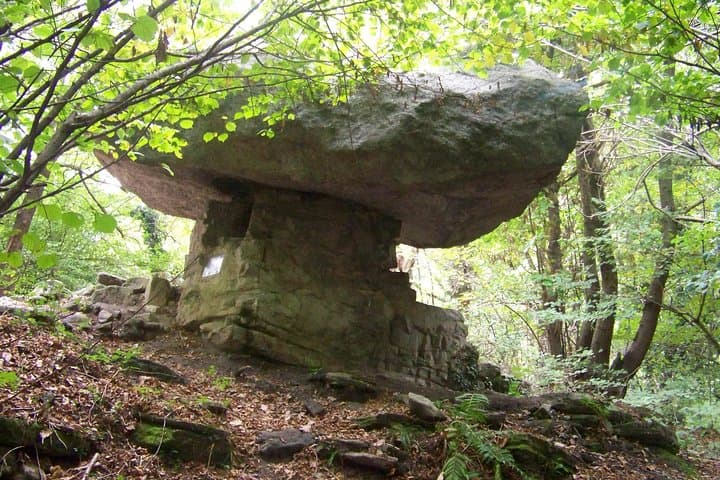
The route follows old footpaths that miners, shepherds and villagers used for centuries. Geologically the area is shaped by glacial carving and repeated rockfalls — here the Pietra Pendula (a balanced erratic) and the Sasso del Lupo stand as readable pages of that history. Villages you pass keep a quiet, lived-in medieval character, with small chapels and dry-stone walls showing how people have readapted the steep slopes.
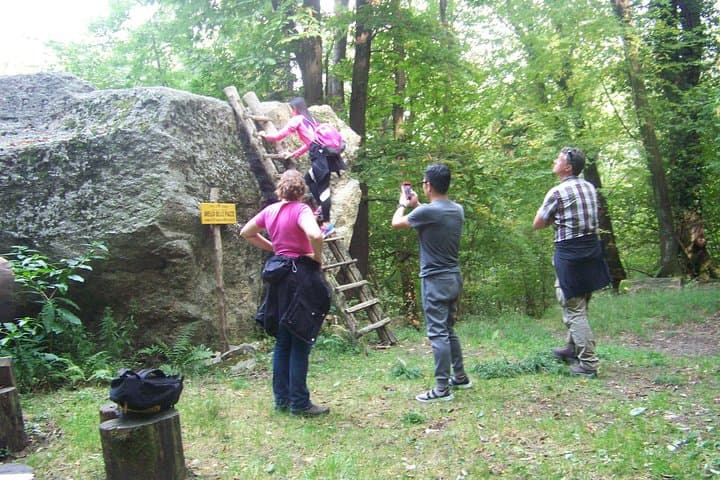
Forest and stone have personality here: the woods absorb sound and seem to guide you, while granite boulders sit like patient witnesses to the elements. The Sentiero degli Avelli delivers a sustained descent—about 500 vertical meters—into the lakeside village of Torno, where the ferry waits to carry you back under the cliffs.
Expect roughly 15 km of walking over 6–8 hours on a mostly singletrack route with some sustained ups-and-downs. Terrain ranges from packed earth and roots to rocky steps and short scree stretches; trekking shoes and poles make the day smoother. Start in the morning to avoid afternoon ferries that are crowded and check the funicular and ferry timetables. Bring layered clothing, sun protection, at least 1.5–2 L water and a small first-aid kit. Respect waymarkers, stay on the path to prevent erosion, and leave no trace: these woodlands and boulder fields are as much a local resource as they are a scenic highlight.
moderate.
6–8 hours.
Moderate fitness: comfortable walking on uneven terrain for several hours and handling a 500 m net descent.
The loop is about 15 km with roughly 500 meters of net descent from the ridge to Torno; allow 6–8 hours including breaks.
Take the Como–Brunate funicular from Como city center; it’s frequent and is the most direct access to the ridge trails.
Dogs should be fit for long walks on uneven terrain and kept on a leash; the route is suitable for older children used to long hikes but not for very young kids.
Operators may cancel in heavy rain or storms; trail surfaces become slippery and visibility drops—reschedule if forecasts are severe.
Paths here follow historic transhumance and local trade routes; the area bears traces of medieval villages and ties to Como’s industrial and cultural past, including landmarks honoring Alessandro Volta.
Trails are susceptible to erosion—stick to marked routes, avoid widening paths, and pack out all waste to protect chestnut groves and understory habitats.
Cristina Maria Rita Rovelli operates guided outdoor trips and adventures with an emphasis on safety, stewardship, and memorable experiences.
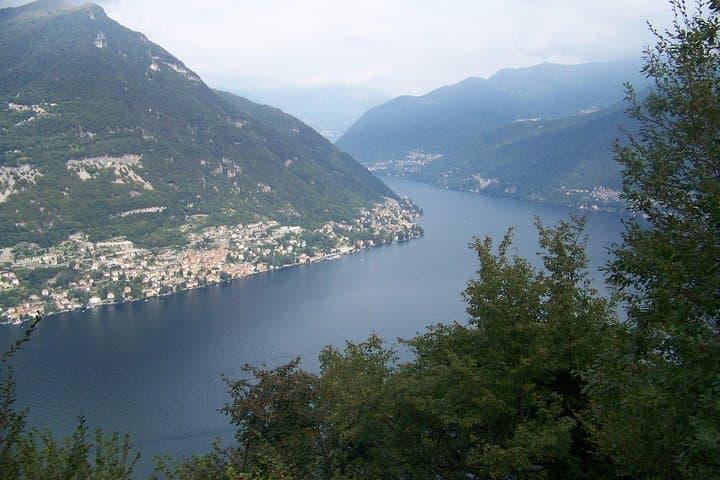
You step out of the Brunate funicular into cool air and a panorama that commands attention: Lake Como unfurls like a deep blue mirror while the ridge trail threads into mixed beech and chestnut woods.
You step out of the Brunate funicular into cool air and a panorama that commands attention: Lake Como unfurls like a deep blue mirror while the ridge trail threads into mixed beech and chestnut woods.
The route follows old footpaths that miners, shepherds and villagers used for centuries. Geologically the area is shaped by glacial carving and repeated rockfalls — here the Pietra Pendula (a balanced erratic) and the Sasso del Lupo stand as readable pages of that history. Villages you pass keep a quiet, lived-in medieval character, with small chapels and dry-stone walls showing how people have readapted the steep slopes.
Forest and stone have personality here: the woods absorb sound and seem to guide you, while granite boulders sit like patient witnesses to the elements. The Sentiero degli Avelli delivers a sustained descent—about 500 vertical meters—into the lakeside village of Torno, where the ferry waits to carry you back under the cliffs.
Expect roughly 15 km of walking over 6–8 hours on a mostly singletrack route with some sustained ups-and-downs. Terrain ranges from packed earth and roots to rocky steps and short scree stretches; trekking shoes and poles make the day smoother. Start in the morning to avoid afternoon ferries that are crowded and check the funicular and ferry timetables. Bring layered clothing, sun protection, at least 1.5–2 L water and a small first-aid kit. Respect waymarkers, stay on the path to prevent erosion, and leave no trace: these woodlands and boulder fields are as much a local resource as they are a scenic highlight.