THE ADVENTURE COLLECTIVE® · Independent discovery and booking for outdoor travel

Skip the cable-car crowds and climb a raw, exposed line up Table Mountain. Kloof Corner Ridge delivers chain-assisted scrambles, a tight chimney, and sweeping views of Cape Town and the Atlantic.
Skip the cable-car crowds and climb a raw, exposed line up Table Mountain. Kloof Corner Ridge delivers chain-assisted scrambles, a tight chimney, and sweeping views of Cape Town and the Atlantic.
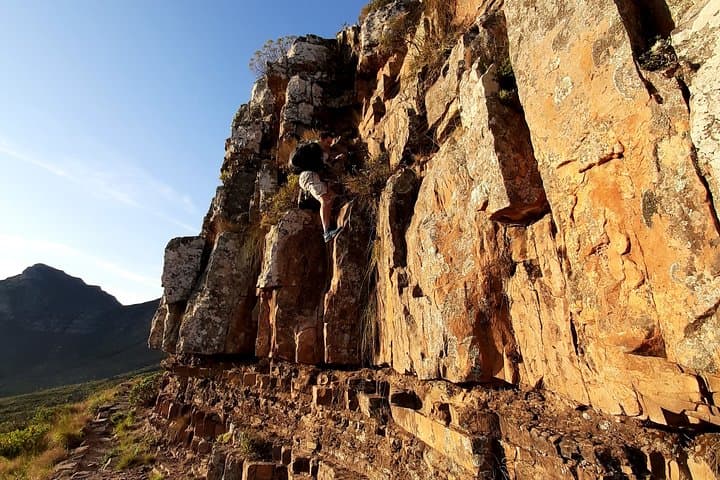
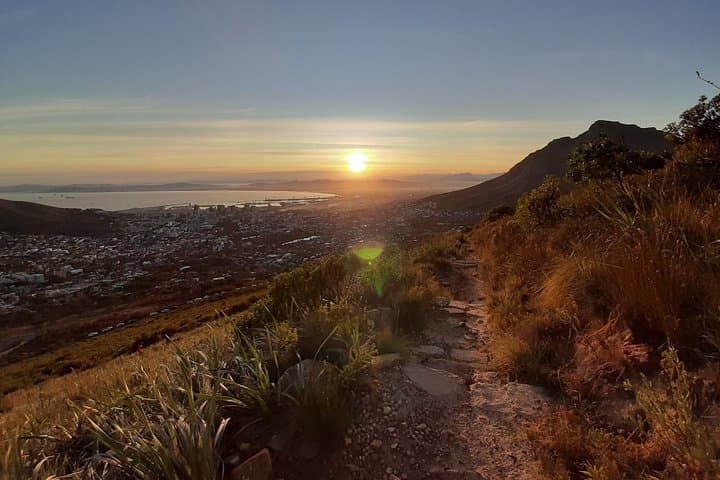
You meet at the lower cable car café before dawn, the city lights thinning as the wind begins to rattle the pines. The ridge rises above you like a wall of ochre, and the first steps are soft with grit—Table Mountain's quartzitic sandstone crunches underfoot. The line up Kloof Corner Ridge is narrow and unapologetic: long zigzags give way to exposed ledges, three chain-assisted pitches, and an 11‑inch chimney that asks you to think with your shoulders as much as your feet.
Verified experiences and guided adventures in the surrounding area.
Operated by Table Mountain hiking tours · Cape Town, Western Cape
You meet at the lower cable car café before dawn, the city lights thinning as the wind begins to rattle the pines. The ridge rises above you like a wall of ochre, and the first steps are soft with grit—Table Mountain's quartzitic sandstone crunches underfoot. The line up Kloof Corner Ridge is narrow and unapologetic: long zigzags give way to exposed ledges, three chain-assisted pitches, and an 11‑inch chimney that asks you to think with your shoulders as much as your feet.
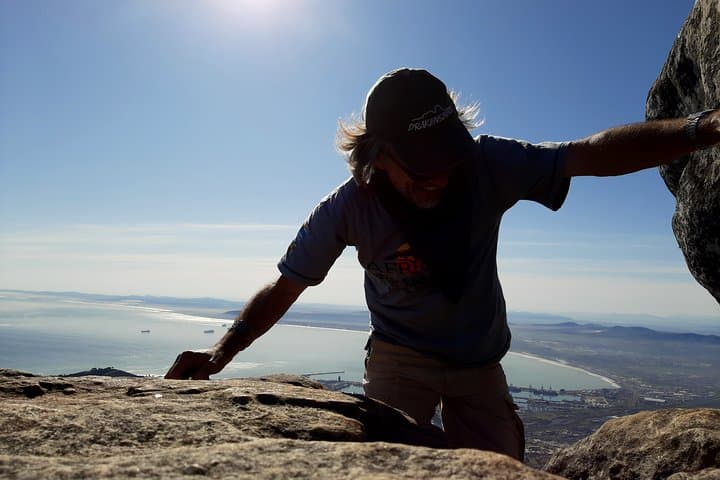
The route slices along the right-hand edge of Table Mountain's western escarpment, offering a rotating postcard of Cape Town: Lion’s Head tucked to the north, Camps Bay and the Atlantic to the west, and the city spreading like a map beneath. Geologically the mountain is dominated by Table Mountain Sandstone — dense, weathered quartzite that keeps cliffs sharp and handholds honest. Historically this massif was a landmark for sailors and a crossroads for indigenous Khoi and San peoples; today it is a rare alpine spine inside a city, part wilderness and part urban ritual.
Kloof Corner Ridge is not a tourist stroll. The climb includes three chain sections of roughly 6–10 meters, a narrow chimney that requires upper‑body work, and stretches where exposure will feel immediate. The route is unmarked in places and requires following cairns and the guide's lead. That difficulty is the trade-off: fewer people, more line-of-sight panoramas, and stretches of ridge where the wind plays with your balance and the Atlantic dares you to look away.
Practically, aim for a morning start to avoid the afternoon Cape Doctor winds and to catch softer daylight on the slabs. Bring a compact harness if you prefer added security for the chimney, but most groups manage with gloves, sticky-soled boots, and a steady partner. The cable car can be used to descend when running, but note scheduled closures (mid‑July to end of August has had maintenance windows) may force a hike down. Guides provide route-finding, rope-free support on the chains, and a patient cadence for less experienced scramblers.
Expect four hours of moving time on this private morning hike, with short pauses at ledges to photograph the Atlantic light and to listen to the city inhale below. This is a route for someone fit, confident on exposed ground, and curious about a harder line on one of the world's most visited mesas. Respect the mountain: check the weather, keep to cairned paths, pack for wind, and leave no trace—here, above the city, the landscape keeps its rules and rewards those who follow them.
difficult.
4 hours.
You should have strong aerobic fitness, confidence with hands-on scrambling and the ability to ascend/descend uneven terrain for several hours.
The 11‑inch chimney requires good balance and some upper‑body work; it’s not technical climbing but demands body tension and confidence in tight moves.
No ropes are required for the standard guided route, but climbers may bring a personal harness or short sling for peace of mind.
Yes when the Table Mountain Aerial Cableway is operating; scheduled maintenance (e.g., mid‑July to end‑August windows) can close it, so be prepared to hike down.
Not recommended for young children or anyone uncomfortable with exposure—the route includes steep, chain‑assisted sections and a narrow chimney.
The guide will abort in high winds or storms; bring a windproof layer and confirm weather within 24 hours of departure as the hike is weather dependent.
This listing is for a private tour—group size is limited and the guide adapts pacing and technique to the party’s ability.
Table Mountain’s plateau is formed of ancient Table Mountain Sandstone and long served as a navigational landmark for seafarers; local Khoi and San peoples used its slopes for seasonal grazing and shelter.
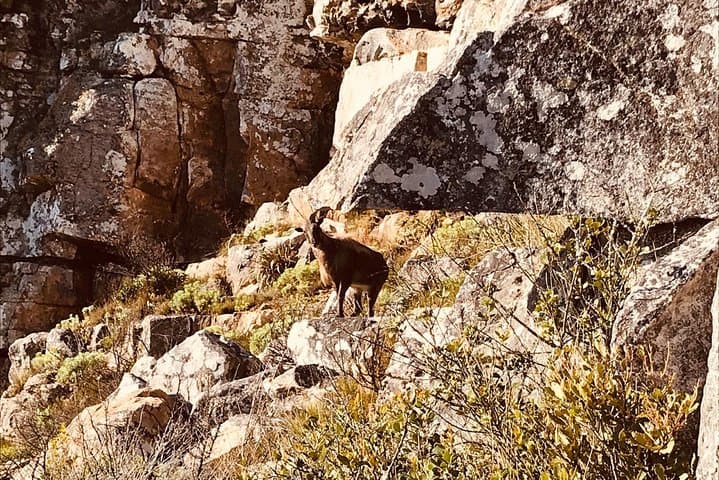
This is a protected fynbos ecosystem—stick to cairned lines, avoid trampling vegetation, and carry out all waste to protect endemic plants and water catchments.
Table Mountain hiking tours operates guided outdoor trips and adventures with an emphasis on safety, stewardship, and memorable experiences.
You meet at the lower cable car café before dawn, the city lights thinning as the wind begins to rattle the pines. The ridge rises above you like a wall of ochre, and the first steps are soft with grit—Table Mountain's quartzitic sandstone crunches underfoot. The line up Kloof Corner Ridge is narrow and unapologetic: long zigzags give way to exposed ledges, three chain-assisted pitches, and an 11‑inch chimney that asks you to think with your shoulders as much as your feet.
You meet at the lower cable car café before dawn, the city lights thinning as the wind begins to rattle the pines. The ridge rises above you like a wall of ochre, and the first steps are soft with grit—Table Mountain's quartzitic sandstone crunches underfoot. The line up Kloof Corner Ridge is narrow and unapologetic: long zigzags give way to exposed ledges, three chain-assisted pitches, and an 11‑inch chimney that asks you to think with your shoulders as much as your feet.
The route slices along the right-hand edge of Table Mountain's western escarpment, offering a rotating postcard of Cape Town: Lion’s Head tucked to the north, Camps Bay and the Atlantic to the west, and the city spreading like a map beneath. Geologically the mountain is dominated by Table Mountain Sandstone — dense, weathered quartzite that keeps cliffs sharp and handholds honest. Historically this massif was a landmark for sailors and a crossroads for indigenous Khoi and San peoples; today it is a rare alpine spine inside a city, part wilderness and part urban ritual.
Kloof Corner Ridge is not a tourist stroll. The climb includes three chain sections of roughly 6–10 meters, a narrow chimney that requires upper‑body work, and stretches where exposure will feel immediate. The route is unmarked in places and requires following cairns and the guide's lead. That difficulty is the trade-off: fewer people, more line-of-sight panoramas, and stretches of ridge where the wind plays with your balance and the Atlantic dares you to look away.
Practically, aim for a morning start to avoid the afternoon Cape Doctor winds and to catch softer daylight on the slabs. Bring a compact harness if you prefer added security for the chimney, but most groups manage with gloves, sticky-soled boots, and a steady partner. The cable car can be used to descend when running, but note scheduled closures (mid‑July to end of August has had maintenance windows) may force a hike down. Guides provide route-finding, rope-free support on the chains, and a patient cadence for less experienced scramblers.
Expect four hours of moving time on this private morning hike, with short pauses at ledges to photograph the Atlantic light and to listen to the city inhale below. This is a route for someone fit, confident on exposed ground, and curious about a harder line on one of the world's most visited mesas. Respect the mountain: check the weather, keep to cairned paths, pack for wind, and leave no trace—here, above the city, the landscape keeps its rules and rewards those who follow them.