THE ADVENTURE COLLECTIVE® · Independent discovery and booking for outdoor travel

Walk a rarely restored stretch of the Great Wall where Beijing, Hebei and Tianjin converge. This private day hike combines ancient stonework, ridge-top views and a village lunch over a 3–4 hour wall traverse.
Walk a rarely restored stretch of the Great Wall where Beijing, Hebei and Tianjin converge. This private day hike combines ancient stonework, ridge-top views and a village lunch over a 3–4 hour wall traverse.
You leave Beijing before breakfast, the city shrinking behind glass as roads unfurl toward Jinhai Lake and the Yangzhuang Reservoir. After a lively drive through low ridges and orchard slopes, the wall first appears: a low, stone backbone cutting across terraced hills. The wind tugs at your jacket, and the stone underfoot seems to remember human hands and battles long past.
Verified experiences and guided adventures in the surrounding area.
Operated by Greatwall Trekclub · Beijing, Beijing
You leave Beijing before breakfast, the city shrinking behind glass as roads unfurl toward Jinhai Lake and the Yangzhuang Reservoir. After a lively drive through low ridges and orchard slopes, the wall first appears: a low, stone backbone cutting across terraced hills. The wind tugs at your jacket, and the stone underfoot seems to remember human hands and battles long past.
This route traces remnants of the North Qi Great Wall (origins ~550 AD) that later informed Ming-era rebuilding. The section known as San Jie Bei — “three boundary north” — is unique: here provincial lines of Beijing, Hebei and Tianjin meet, and the masonry changes subtly where administrations once shifted. Geologically the wall rides a mix of granitic outcrops and weathered colluvium, so expect uneven stones and narrow paths where vegetation has crept close.
Culturally you’ll pass small mountain hamlets where farmers still prepare simple lunches; the tour’s included meal offers a direct taste of countryside hospitality. The route is favored by hikers who want authenticity rather than touristized parapets: you’ll walk along a path beside original wall skin, touch pocks and repairs, and summit San Jie Bei for panoramic lines of ridge and valley.
Practical guidance: plan on roughly 6–8 km of walking (3–4 hours on the wall) with about 250–400 m of total ascent on uneven terrain. Bottled water and lunch are provided; wear sturdy hiking shoes and layered clothing for variable wind and sun exposure. Respect fragile masonry and local farmland — stick to the path and pack out any trash.
moderate.
5–6 hours.
Moderate fitness: comfortable walking on uneven terrain for 3–4 hours and able to handle short steep sections.
Expect about 3–4 hours of walking on the wall itself, roughly 6–8 km depending on exact route, plus drive time to and from Beijing.
Not recommended for very young children or pregnant travelers due to uneven terrain and steep sections; the operator notes infants must sit on laps during transport.
Yes — entrance fees for this tour are included in the booking price, and lunch and bottled water are provided.
For a full refund cancel at least 24 hours before departure; cancellations within 24 hours are not refundable per the tour policy.
This stretch follows the North Qi Great Wall (circa 550 AD) whose stones later informed Ming repairs; San Jie Bei marks the meeting point of three administrative regions.
The wall in this section is fragile and unrestored; stay on the designated path, avoid touching fragile masonry where signs request, and carry out all trash to limit erosion and human impact.
Greatwall Trekclub operates guided outdoor trips and adventures with an emphasis on safety, stewardship, and memorable experiences.
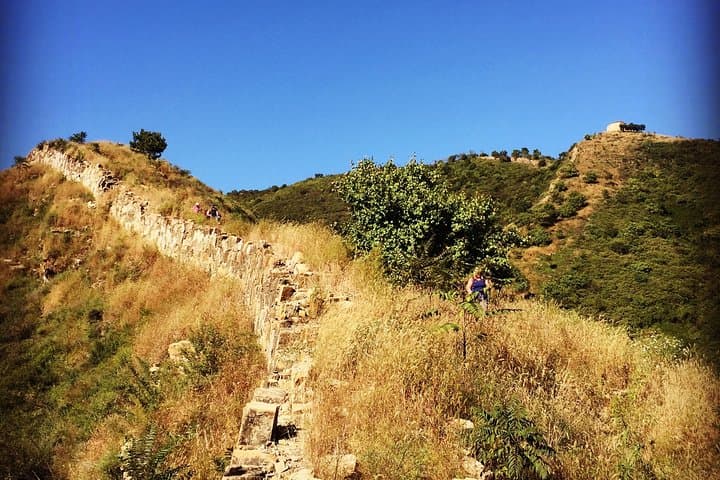

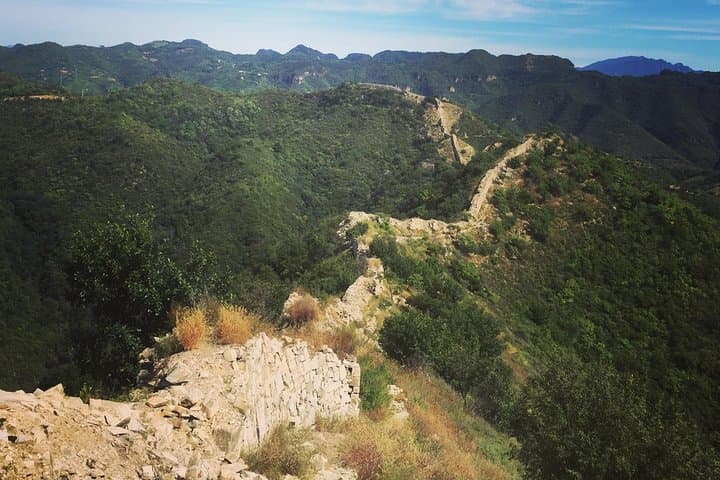
You leave Beijing before breakfast, the city shrinking behind glass as roads unfurl toward Jinhai Lake and the Yangzhuang Reservoir. After a lively drive through low ridges and orchard slopes, the wall first appears: a low, stone backbone cutting across terraced hills. The wind tugs at your jacket, and the stone underfoot seems to remember human hands and battles long past.
You leave Beijing before breakfast, the city shrinking behind glass as roads unfurl toward Jinhai Lake and the Yangzhuang Reservoir. After a lively drive through low ridges and orchard slopes, the wall first appears: a low, stone backbone cutting across terraced hills. The wind tugs at your jacket, and the stone underfoot seems to remember human hands and battles long past.
This route traces remnants of the North Qi Great Wall (origins ~550 AD) that later informed Ming-era rebuilding. The section known as San Jie Bei — “three boundary north” — is unique: here provincial lines of Beijing, Hebei and Tianjin meet, and the masonry changes subtly where administrations once shifted. Geologically the wall rides a mix of granitic outcrops and weathered colluvium, so expect uneven stones and narrow paths where vegetation has crept close.
Culturally you’ll pass small mountain hamlets where farmers still prepare simple lunches; the tour’s included meal offers a direct taste of countryside hospitality. The route is favored by hikers who want authenticity rather than touristized parapets: you’ll walk along a path beside original wall skin, touch pocks and repairs, and summit San Jie Bei for panoramic lines of ridge and valley.
Practical guidance: plan on roughly 6–8 km of walking (3–4 hours on the wall) with about 250–400 m of total ascent on uneven terrain. Bottled water and lunch are provided; wear sturdy hiking shoes and layered clothing for variable wind and sun exposure. Respect fragile masonry and local farmland — stick to the path and pack out any trash.