THE ADVENTURE COLLECTIVE® · Independent discovery and booking for outdoor travel

Follow a historic trail up to the Rax plateau—an 861 m climb through karst limestone, alpine meadows and rocky ridgelines once walked by Sigmund Freud. This full-day hike combines steep, exposed sections with rewarding summit-plateau views and a rustic mountain hut stop.
Follow a historic trail up to the Rax plateau—an 861 m climb through karst limestone, alpine meadows and rocky ridgelines once walked by Sigmund Freud. This full-day hike combines steep, exposed sections with rewarding summit-plateau views and a rustic mountain hut stop.
A cool morning lifts mist from the valley as a narrow forest road unspools toward Rax. Pines lean like old listeners; the trail takes a hard shoulder, then a steep, shady throat where the wind seems to push hikers forward. By mid-ascent the valley opens and the Schneeberg massif cuts the horizon—rock and grass sharpening into a high, windswept plateau.
Verified experiences and guided adventures in the surrounding area.
Operated by Das Leben spueren - Embrace Life · Reichenau an der Rax, Lower Austria
A cool morning lifts mist from the valley as a narrow forest road unspools toward Rax. Pines lean like old listeners; the trail takes a hard shoulder, then a steep, shady throat where the wind seems to push hikers forward. By mid-ascent the valley opens and the Schneeberg massif cuts the horizon—rock and grass sharpening into a high, windswept plateau.
The route follows one of the oldest approaches to the Rax plateau, favored in the fin de siècle by summer visitors and intellectuals—Sigmund Freud among them—who came for clean air and difficult walking. Geologically the Rax is Dachstein limestone: karst plateaus, rocky steps and alpine meadows hosting rare high-altitude flora. Local culture still bears the imprint of Habsburg-era resorts; rustic huts serve simple fares and cash is often preferred.
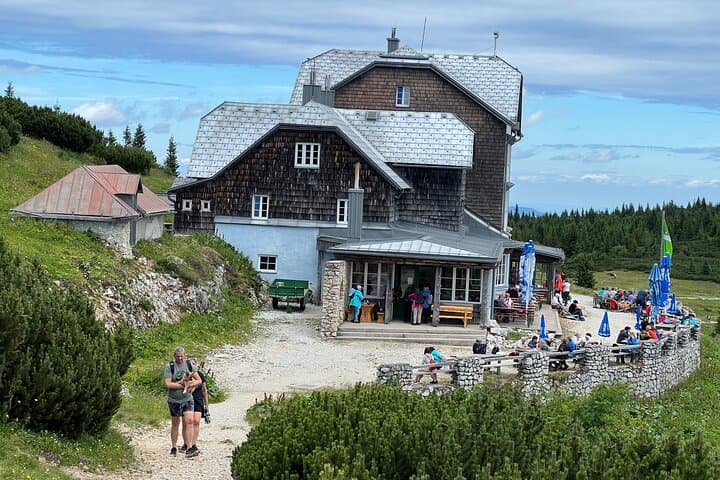
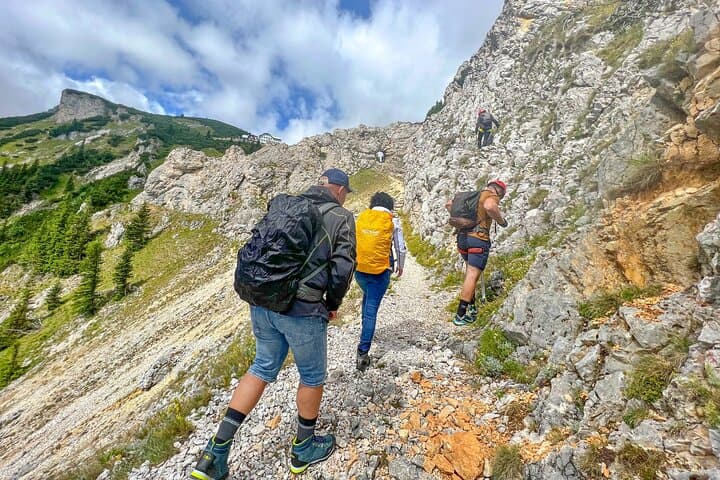
Practically, the hike gains about 861 metres to a plateau around 1,640 m where a mountain hut and an alpine garden await. Expect rocky higher sections and narrow, exposed stretches; the itinerary lists roughly 3.5 hours of walking time (excl. breaks) and around 1.5 hours travel one-way, with a full-day outing commonly taking 8–9 hours door-to-door.
Prepare with stiff leather or modern hiking boots, layered clothing and 1–2 litres of water, and plan for sudden weather shifts—thunderstorms close this terrain fast. The trail rewards effort with sweeping valley views, a chance to study alpine plants up close, and the peculiar satisfaction of following routes once walked by the region’s early summer visitors.
challenging.
8–9 hours.
Requires high cardiovascular fitness and leg strength for sustained elevation gain; must be sure-footed and free from vertigo.
Walking time is about 3.5 hours one-way excluding breaks, with approximately 861 metres of elevation gain to the plateau; expect a full-day outing with travel time (8–9 hours total).
No — the hike is challenging and requires good fitness, sure-footedness, and freedom from vertigo; beginners should prepare with shorter alpine hikes first.
Yes—there is a mountain hut at roughly 1,640 m serving food and drinks, but many huts prefer cash so bring euros.
Organizers may cancel in heavy rain or thunderstorms; conditions on karst plateaus can become hazardous quickly, so always check forecasts and follow guide advice.
The Rax area became a popular Habsburg-era summer resort in the late 19th century; intellectuals and artists frequented these trails, and Freud is recorded to have climbed here.
The plateau supports fragile alpine flora on thin limestone soils—stay on marked trails, pack out waste, and avoid picking plants to protect sensitive habitats.
Das Leben spueren - Embrace Life operates guided outdoor trips and adventures with an emphasis on safety, stewardship, and memorable experiences.
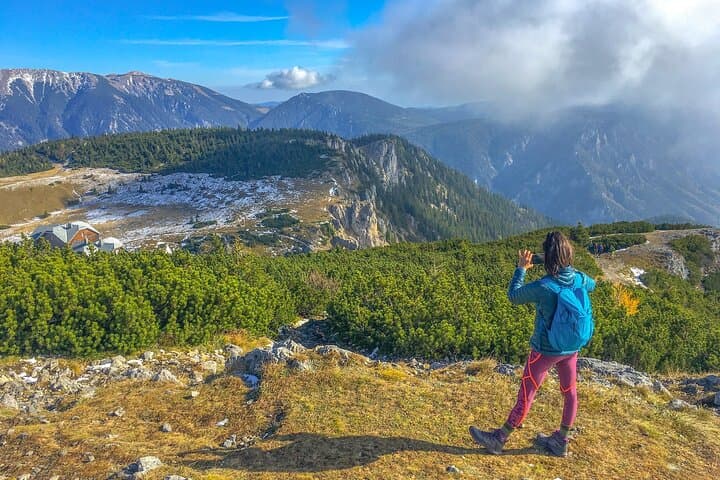

A cool morning lifts mist from the valley as a narrow forest road unspools toward Rax. Pines lean like old listeners; the trail takes a hard shoulder, then a steep, shady throat where the wind seems to push hikers forward. By mid-ascent the valley opens and the Schneeberg massif cuts the horizon—rock and grass sharpening into a high, windswept plateau.
A cool morning lifts mist from the valley as a narrow forest road unspools toward Rax. Pines lean like old listeners; the trail takes a hard shoulder, then a steep, shady throat where the wind seems to push hikers forward. By mid-ascent the valley opens and the Schneeberg massif cuts the horizon—rock and grass sharpening into a high, windswept plateau.
The route follows one of the oldest approaches to the Rax plateau, favored in the fin de siècle by summer visitors and intellectuals—Sigmund Freud among them—who came for clean air and difficult walking. Geologically the Rax is Dachstein limestone: karst plateaus, rocky steps and alpine meadows hosting rare high-altitude flora. Local culture still bears the imprint of Habsburg-era resorts; rustic huts serve simple fares and cash is often preferred.
Practically, the hike gains about 861 metres to a plateau around 1,640 m where a mountain hut and an alpine garden await. Expect rocky higher sections and narrow, exposed stretches; the itinerary lists roughly 3.5 hours of walking time (excl. breaks) and around 1.5 hours travel one-way, with a full-day outing commonly taking 8–9 hours door-to-door.
Prepare with stiff leather or modern hiking boots, layered clothing and 1–2 litres of water, and plan for sudden weather shifts—thunderstorms close this terrain fast. The trail rewards effort with sweeping valley views, a chance to study alpine plants up close, and the peculiar satisfaction of following routes once walked by the region’s early summer visitors.