THE ADVENTURE COLLECTIVE® · Independent discovery and booking for outdoor travel

An intense high-altitude day hike from Cusco to Vinicunca (Rainbow Mountain). Expect steep uphill sections, mineral-striped panoramas, and an immersive introduction to Andean landscapes and Quechua highland culture.
An intense high-altitude day hike from Cusco to Vinicunca (Rainbow Mountain). Expect steep uphill sections, mineral-striped panoramas, and an immersive introduction to Andean landscapes and Quechua highland culture.
A pre-dawn van eases out of Cusco and the light thins as the road climbs through puna grasslands.
Verified experiences and guided adventures in the surrounding area.
Operated by Peru Top Experience · Cusco, Cusco
A pre-dawn van eases out of Cusco and the light thins as the road climbs through puna grasslands.
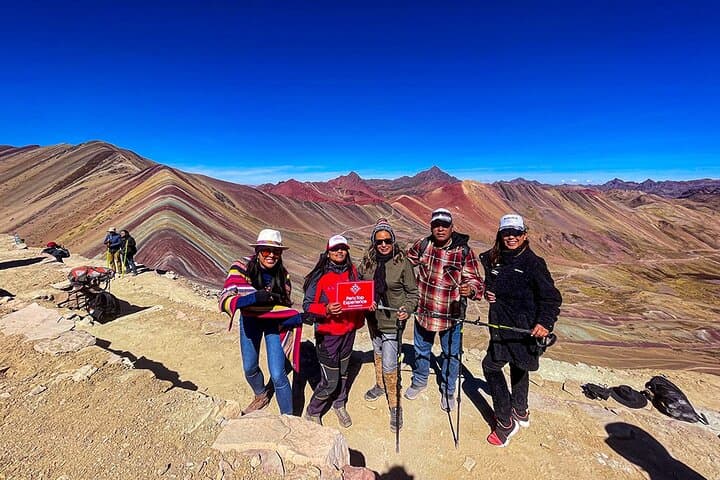
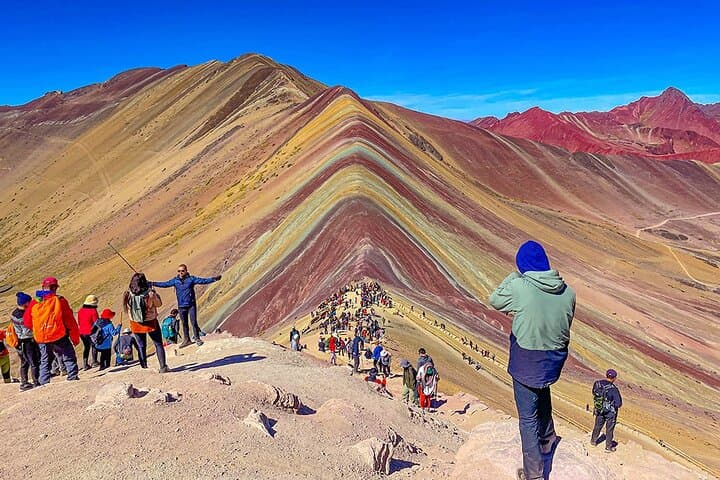
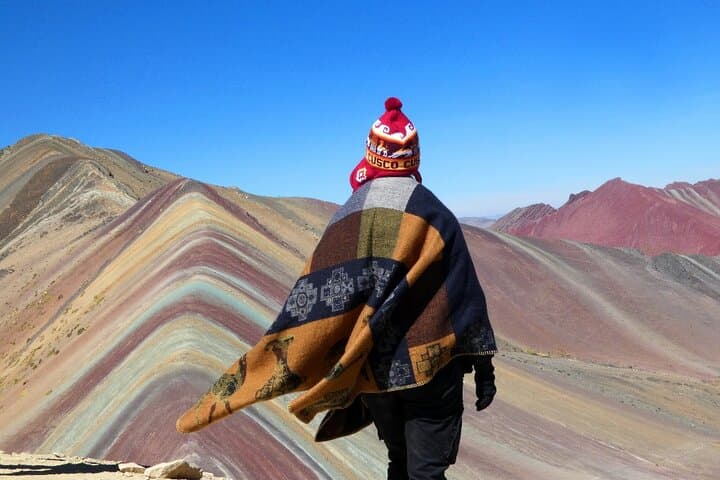
By the time hikers step onto the trail at Phulawasipata, the air is thin and the Andes loom close; the mountain ahead wears bands of iron-rich mineral, clay and oxidized metals like a weathered painting. Guides point out terraces and herds of alpaca that graze the high meadows while stories of Quechua communities and colonial routes frame the landscape.
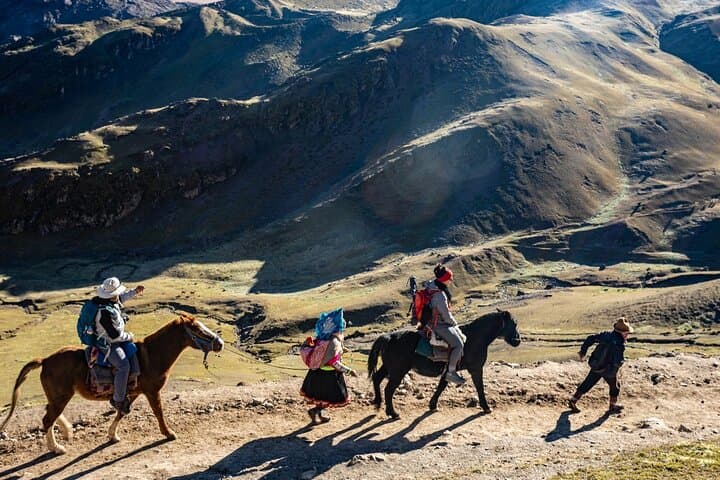
Geologically, Vinicunca’s colors come from sedimentary mineral layers—red from iron oxide, green from chlorite, and yellow from iron sulfide—lifted and exposed by glaciation and erosion. Culturally, the route runs through pastureland tended by local families who sell snacks and textiles at trailheads; recent tourism has reshaped the economy and prompted infrastructure such as the Phulawasipata access point.
Expect a 3 km ascent from the high pasture to the viewpoint, with steep switchbacks and loose scree near the summit; the tour’s full-day schedule includes early pickup, a buffet breakfast in Cusipata, the uphill trek to roughly 5,036 m (16,522 ft), 30–40 minutes at the viewpoint, then descent and return to Cusco by late afternoon.
Practical guidance: prioritize acclimatization—spend 24–48 hours in Cusco before the hike, hydrate, and carry layers for wind and sun. Footwear with firm ankle support and optional trekking poles will speed the climb and protect knees on the descent. Be prepared for rapid weather shifts and limited shelter; if altitude symptoms worsen, descend immediately and seek aid.
challenging.
8–12 hours.
Good cardiovascular fitness and prior experience with high-elevation hikes; be prepared for thin air and sustained uphill walking.
The ascent from Phulawasipata to the Vinicunca viewpoint is about 3 km and typically takes 1.5–2 hours depending on pace and acclimatization.
Access is generally year-round but conditions vary—heavy rain or snow can make the trail slippery and reduce visibility, so check local reports.
An entrance ticket to Rainbow Mountain is included with many tours; individual hikers should expect to pay a local entrance fee at the access point.
Mild symptoms respond to rest, hydration and descending; serious symptoms require immediate descent and medical attention—tour operators often carry oxygen and first aid.
The area sits on ancient Andean routes used by Quechua-speaking communities; mineral-rich strata exposed by uplift and glacial retreat created the striped slopes now popular with visitors.
Increased foot traffic has accelerated erosion and pressured local services; support community-run stalls and follow marked paths to limit impact.
Peru Top Experience operates guided outdoor trips and adventures with an emphasis on safety, stewardship, and memorable experiences.
A pre-dawn van eases out of Cusco and the light thins as the road climbs through puna grasslands.
A pre-dawn van eases out of Cusco and the light thins as the road climbs through puna grasslands.
By the time hikers step onto the trail at Phulawasipata, the air is thin and the Andes loom close; the mountain ahead wears bands of iron-rich mineral, clay and oxidized metals like a weathered painting. Guides point out terraces and herds of alpaca that graze the high meadows while stories of Quechua communities and colonial routes frame the landscape.
Geologically, Vinicunca’s colors come from sedimentary mineral layers—red from iron oxide, green from chlorite, and yellow from iron sulfide—lifted and exposed by glaciation and erosion. Culturally, the route runs through pastureland tended by local families who sell snacks and textiles at trailheads; recent tourism has reshaped the economy and prompted infrastructure such as the Phulawasipata access point.
Expect a 3 km ascent from the high pasture to the viewpoint, with steep switchbacks and loose scree near the summit; the tour’s full-day schedule includes early pickup, a buffet breakfast in Cusipata, the uphill trek to roughly 5,036 m (16,522 ft), 30–40 minutes at the viewpoint, then descent and return to Cusco by late afternoon.
Practical guidance: prioritize acclimatization—spend 24–48 hours in Cusco before the hike, hydrate, and carry layers for wind and sun. Footwear with firm ankle support and optional trekking poles will speed the climb and protect knees on the descent. Be prepared for rapid weather shifts and limited shelter; if altitude symptoms worsen, descend immediately and seek aid.