THE ADVENTURE COLLECTIVE® · Independent discovery and booking for outdoor travel

Trade the beaches of Rio for the cool shade of Tijuca Forest and a steep climb to Pico da Tijuca. This guided half-day hike delivers rainforest ecology, a waterfall stop and panoramic city views.
Trade the beaches of Rio for the cool shade of Tijuca Forest and a steep climb to Pico da Tijuca. This guided half-day hike delivers rainforest ecology, a waterfall stop and panoramic city views.
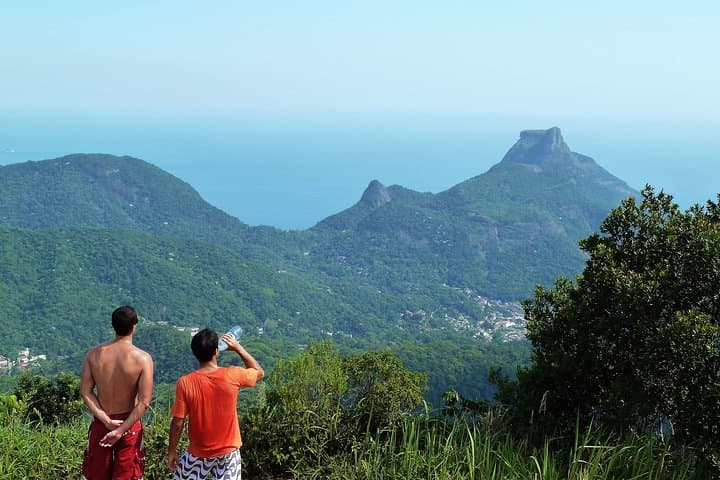
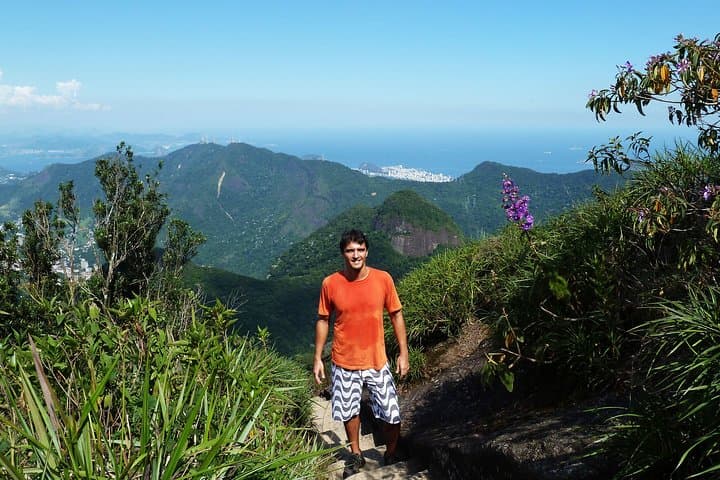
A humid breeze moves through the canopy as the group sets off from Bom Retiro, the city shrinking behind them and the forest rising in layered green. The trail threads between granite outcrops and strangler figs, and every switchback brings a new angle on Rio — rooftops, stadiums and the sweep of Guanabara Bay laid out below.
Verified experiences and guided adventures in the surrounding area.
Operated by Gray Line Brazil · Rio de Janeiro, Rio de Janeiro
A humid breeze moves through the canopy as the group sets off from Bom Retiro, the city shrinking behind them and the forest rising in layered green. The trail threads between granite outcrops and strangler figs, and every switchback brings a new angle on Rio — rooftops, stadiums and the sweep of Guanabara Bay laid out below.
Tijuca was replanted in the 19th century to secure Rio’s water supply and later became a national park in the 1960s; the range itself is volcanic and sculpted by erosion, leaving dramatic cliffs and small waterfalls that punctuate the route. Local guides point out surviving Atlantic Forest species and tell stories of early conservation work and urban expansion pressing up against the park’s boundary.
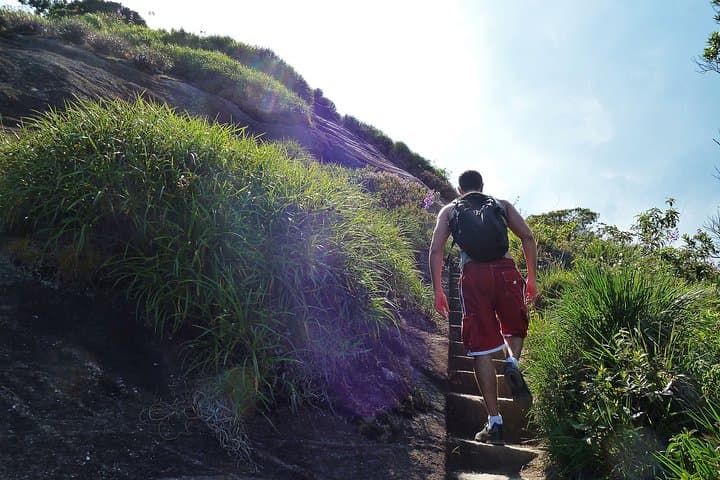
Practically speaking, this is a moderate hike to Pico da Tijuca (about 1.5 hours of steady climbing to the summit at roughly 1,022 m/3,353 ft). Expect mixed terrain: packed dirt, exposed roots and short stair-like rock sections. The guide-led tour typically includes hotel pickup and a visit to a waterfall at the park entrance before the ascent.
Start early to avoid midday heat and city smog; bring 1–2 liters of water, sun protection and snacks for periodic breaks. Good, grippy hiking shoes make the steeper sections easier, and a light rain shell can save the day in a sudden tropical shower. From the summit the city feels both within reach and small — an instructive view of how urban life and wild forest press up against one another.
moderate.
4–6 hours (tour duration).
Moderate cardiovascular fitness and comfort on uneven terrain; able to climb stairs and navigate rocky steps for up to 90 minutes.
The hiking portion to Pico da Tijuca’s summit is about 1.5 hours of steady climbing; the full guided tour runs around 4–6 hours including pickup, a waterfall stop and return transfer.
The tour recommends participants be 12 or older; younger children may struggle with the steeper sections and uneven terrain.
Professional guides on these tours often speak English and Portuguese—confirm language needs when booking or during confirmation call.
For general day hikes with an organized operator, entrance is included by the tour; independent hikers should check current park fees and opening hours.
Tijuca Forest is largely a reforestation project started in the 19th century to protect Rio’s water supplies; it later gained national park status in the 1960s as urban pressures increased.
Tijuca is managed for both recreation and watershed protection—stick to trails, avoid feeding wildlife and pack out trash to help preserve fragile Atlantic Forest habitats.
Gray Line Brazil operates guided outdoor trips and adventures with an emphasis on safety, stewardship, and memorable experiences.

A humid breeze moves through the canopy as the group sets off from Bom Retiro, the city shrinking behind them and the forest rising in layered green. The trail threads between granite outcrops and strangler figs, and every switchback brings a new angle on Rio — rooftops, stadiums and the sweep of Guanabara Bay laid out below.
A humid breeze moves through the canopy as the group sets off from Bom Retiro, the city shrinking behind them and the forest rising in layered green. The trail threads between granite outcrops and strangler figs, and every switchback brings a new angle on Rio — rooftops, stadiums and the sweep of Guanabara Bay laid out below.
Tijuca was replanted in the 19th century to secure Rio’s water supply and later became a national park in the 1960s; the range itself is volcanic and sculpted by erosion, leaving dramatic cliffs and small waterfalls that punctuate the route. Local guides point out surviving Atlantic Forest species and tell stories of early conservation work and urban expansion pressing up against the park’s boundary.
Practically speaking, this is a moderate hike to Pico da Tijuca (about 1.5 hours of steady climbing to the summit at roughly 1,022 m/3,353 ft). Expect mixed terrain: packed dirt, exposed roots and short stair-like rock sections. The guide-led tour typically includes hotel pickup and a visit to a waterfall at the park entrance before the ascent.
Start early to avoid midday heat and city smog; bring 1–2 liters of water, sun protection and snacks for periodic breaks. Good, grippy hiking shoes make the steeper sections easier, and a light rain shell can save the day in a sudden tropical shower. From the summit the city feels both within reach and small — an instructive view of how urban life and wild forest press up against one another.