THE ADVENTURE COLLECTIVE® · Independent discovery and booking for outdoor travel

Experience Vinicunca’s surreal stripes on a full-day trek from Cusco. This practical guide outlines the geology, local culture, and what to expect on the 10–11 hour high‑altitude outing.
Experience Vinicunca’s surreal stripes on a full-day trek from Cusco. This practical guide outlines the geology, local culture, and what to expect on the 10–11 hour high‑altitude outing.
A thin morning light slices across the Andean ridgeline as a small convoy of buses winds away from Cusco, heading toward the high puna where Vinicunca reveals its colors. By the time walkers unload at Pampachiri, the air tastes sharp and each step lifts a cloud of red dust. The trail climbs through wind-scoured grasslands, skirting glacial outwash and terraces until the rainbow banded slopes appear—earth layers stripped and painted by mineral salts.
Verified experiences and guided adventures in the surrounding area.
Operated by Travel And Living Peru · Cusco, Cusco Region
A thin morning light slices across the Andean ridgeline as a small convoy of buses winds away from Cusco, heading toward the high puna where Vinicunca reveals its colors. By the time walkers unload at Pampachiri, the air tastes sharp and each step lifts a cloud of red dust. The trail climbs through wind-scoured grasslands, skirting glacial outwash and terraces until the rainbow banded slopes appear—earth layers stripped and painted by mineral salts.
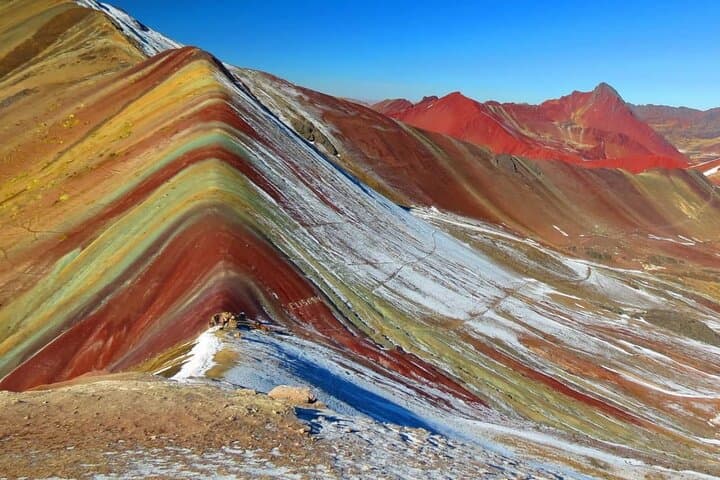
Geologically the stripes are exposed sedimentary and mineral layers uplifted by tectonic forces and later weathered by wind and ice. Locally, communities of Quechua shepherds still graze llamas and maintain ancestral footpaths; the mountain has become a modern pilgrimage for photographers and trekkers alike, compressing centuries of highland life into a single dramatic view.
Expect roughly 10–11 hours door-to-door: an early drive of about 3.5 hours, a 3-hour round-trip hike at high elevation (over 5,000 m/16,400 ft), then the return drive. Terrain is a mix of packed dirt, scree, and exposed slopes; weather can flip from bright sun to sleet within an hour. Guides manage pacing and altitude, but acclimatization is the traveler’s responsibility.
Practical tips: start hydrated, eat a light breakfast provided, wear stiff-soled boots and layered clothing, and budget time for photo stops. Bring cash for local vendors and allow a slow descent—the mountain demands respect but rewards persistence with an almost unreal palette and wide Andean sky.
challenging.
10–11 hours.
Good cardiovascular fitness and prior exposure to high altitude recommended; able to hike 3 hours round-trip on uneven terrain.
The walking portion is about 3 hours round-trip from the trailhead near Pampachiri; total door-to-door time with transport is 10–11 hours.
Yes—Vinicunca sits above 5,000 m/16,400 ft; spending 48–72 hours in Cusco or a similar elevation beforehand reduces altitude risks.
The path is non-technical but can be steep and loose in places; good boots and trekking poles are helpful.
The dry season (May–September) offers clearer skies and firmer trails; afternoons can still produce snow or wind at elevation.
The area is part of the Ausangate traditional landscape and has long been traversed by Quechua herders; its colorful exposure is geological, not cultural.
Increased visitation stresses fragile puna soils and local water sources; follow marked paths, pack out waste, and respect community rules.
Travel And Living Peru operates guided outdoor trips and adventures with an emphasis on safety, stewardship, and memorable experiences.
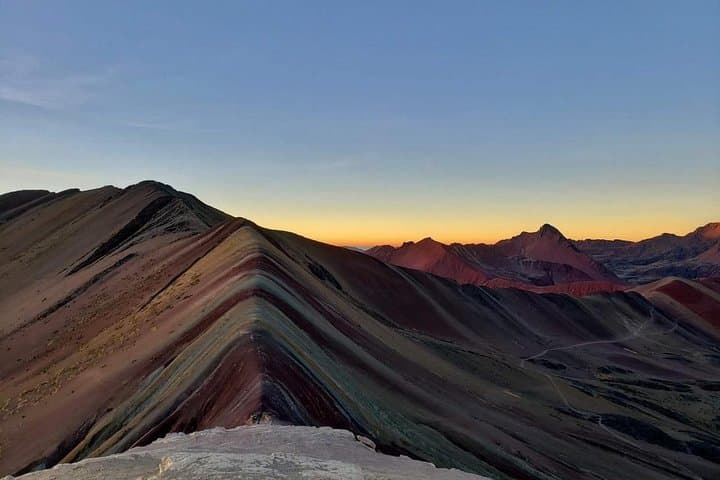
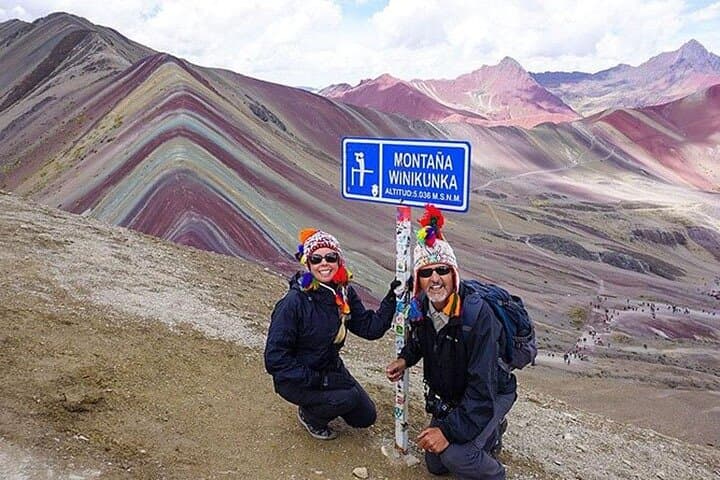
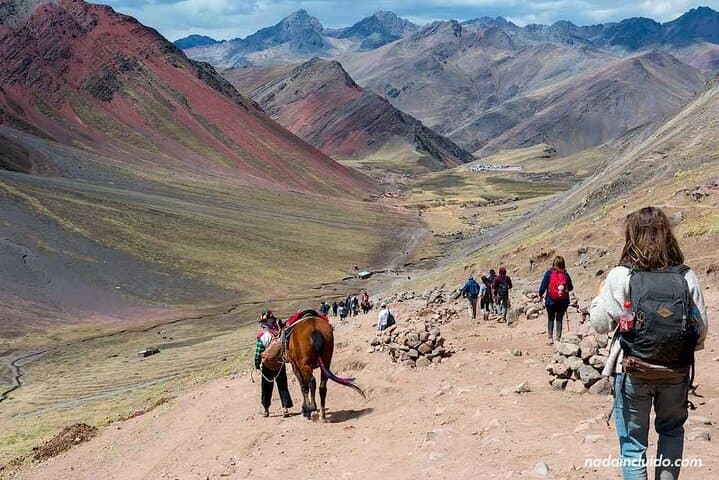
A thin morning light slices across the Andean ridgeline as a small convoy of buses winds away from Cusco, heading toward the high puna where Vinicunca reveals its colors. By the time walkers unload at Pampachiri, the air tastes sharp and each step lifts a cloud of red dust. The trail climbs through wind-scoured grasslands, skirting glacial outwash and terraces until the rainbow banded slopes appear—earth layers stripped and painted by mineral salts.
A thin morning light slices across the Andean ridgeline as a small convoy of buses winds away from Cusco, heading toward the high puna where Vinicunca reveals its colors. By the time walkers unload at Pampachiri, the air tastes sharp and each step lifts a cloud of red dust. The trail climbs through wind-scoured grasslands, skirting glacial outwash and terraces until the rainbow banded slopes appear—earth layers stripped and painted by mineral salts.
Geologically the stripes are exposed sedimentary and mineral layers uplifted by tectonic forces and later weathered by wind and ice. Locally, communities of Quechua shepherds still graze llamas and maintain ancestral footpaths; the mountain has become a modern pilgrimage for photographers and trekkers alike, compressing centuries of highland life into a single dramatic view.
Expect roughly 10–11 hours door-to-door: an early drive of about 3.5 hours, a 3-hour round-trip hike at high elevation (over 5,000 m/16,400 ft), then the return drive. Terrain is a mix of packed dirt, scree, and exposed slopes; weather can flip from bright sun to sleet within an hour. Guides manage pacing and altitude, but acclimatization is the traveler’s responsibility.
Practical tips: start hydrated, eat a light breakfast provided, wear stiff-soled boots and layered clothing, and budget time for photo stops. Bring cash for local vendors and allow a slow descent—the mountain demands respect but rewards persistence with an almost unreal palette and wide Andean sky.