THE ADVENTURE COLLECTIVE® · Independent discovery and booking for outdoor travel

Follow a 14 km circular route to Peña Cortada’s Roman aqueduct, walking through rock-carved tunnels and across an impressive stone bridge. This half-day hike pairs limestone scenery, shady springs and historic Chelva neighborhoods for a compact cultural-nature outing.
Follow a 14 km circular route to Peña Cortada’s Roman aqueduct, walking through rock-carved tunnels and across an impressive stone bridge. This half-day hike pairs limestone scenery, shady springs and historic Chelva neighborhoods for a compact cultural-nature outing.
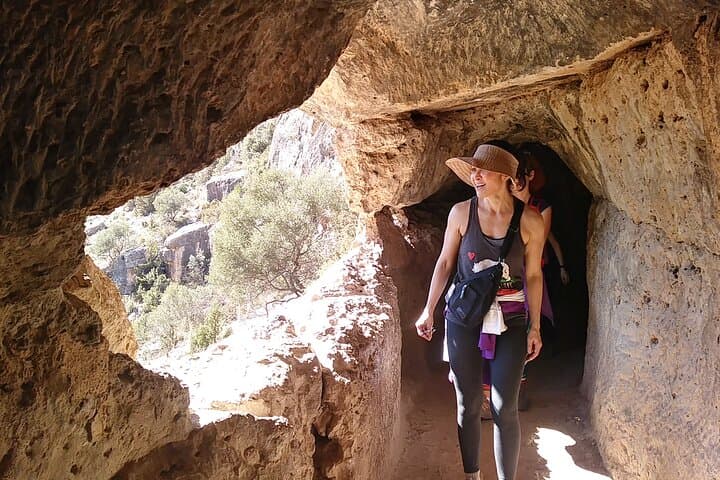
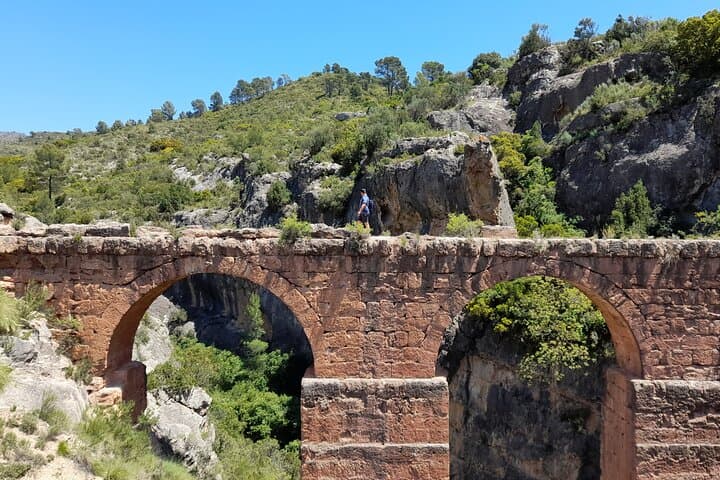
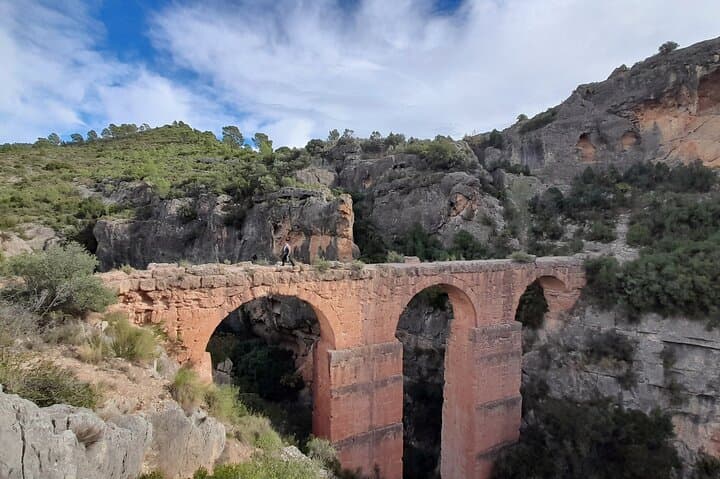
You step out of the van into a dry, aromatic breeze and the trail immediately threads into open scrub and limestone slabs. The first kilometers roll gently uphill through low pines and rosemary until the path narrows and the aqueduct announces itself: tunnels hewn into living rock, a stone bridge arcing across a sharp cut in the ridge, and the constant murmur of the Tuéjar/Chelva water below.
Verified experiences and guided adventures in the surrounding area.
Operated by Valencia Mountain Enthusiasts · Chelva, Valencian Community
You step out of the van into a dry, aromatic breeze and the trail immediately threads into open scrub and limestone slabs. The first kilometers roll gently uphill through low pines and rosemary until the path narrows and the aqueduct announces itself: tunnels hewn into living rock, a stone bridge arcing across a sharp cut in the ridge, and the constant murmur of the Tuéjar/Chelva water below.
The Roman aqueduct at Peña Cortada is more than a photo stop — it’s an engineering spine carved by hands and chisels more than 2,000 years ago. Geologically the route follows a karst landscape: limestone cliffs, narrow ravines and springs that fed ancient channels. Chelva itself still shows layers of Moorish, Jewish and Christian urban fabric in its steep streets and whitewashed façades, so the walk alternates archaeological curiosity with living village life.
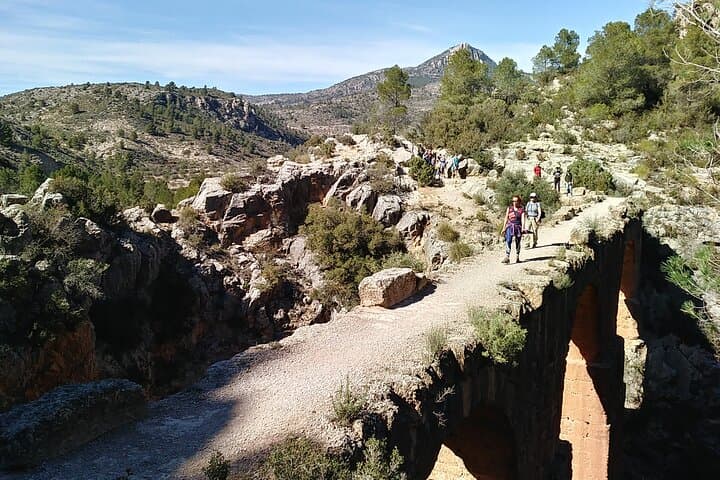
Expect a 14 km circular route, roughly half-day (5–6 hours) with a short steeper singletrack climb to reach the aqueduct. Terrain shifts from packed dirt to rocky trail, stone steps and short tunnel passages—bring a light for low-ceiling sections. The bridge at Peña Cortada is the visual high point; downstream the Ruta del Agua follows springs and canals and offers quieter pockets for a break.
Practical notes: start from Calles or Chelva in the morning to avoid midday sun, carry 2 liters of water, wear grippy footwear and a sun hat, and allow time to explore Chelva’s old quarters after the walk. Stay on marked paths, avoid entering unstable tunnel sections, and pack out all waste—this route balances cultural history with a straightforward, rewarding hike.
moderate.
5–6 hours.
Expect steady walking with one short steeper ascent; good cardiovascular fitness and stable ankles recommended
The route is about 14 km and most groups take 5–6 hours including stops and short explorations around the aqueduct and Chelva.
Parts are family-friendly but the path includes uneven rock, short exposed sections and tunnels; children should be supervised and able to handle 14 km distance.
Service animals are allowed per the tour info, but pets may be restricted depending on land access—check with the operator before booking.
Yes, Peña Cortada is accessible independently from trailheads near Calles and Chelva, but a guided tour adds local history, transport and navigation convenience.
Peña Cortada is a Roman-era aqueduct cut through limestone to channel water for nearby settlements; the route also passes medieval neighborhoods where Arabic and Jewish influences remain visible.
Stick to marked paths, avoid entering unstable or closed tunnel sections, and pack out all waste; local groups work to protect springs and remove graffiti.
Valencia Mountain Enthusiasts operates guided outdoor trips and adventures with an emphasis on safety, stewardship, and memorable experiences.
You step out of the van into a dry, aromatic breeze and the trail immediately threads into open scrub and limestone slabs. The first kilometers roll gently uphill through low pines and rosemary until the path narrows and the aqueduct announces itself: tunnels hewn into living rock, a stone bridge arcing across a sharp cut in the ridge, and the constant murmur of the Tuéjar/Chelva water below.
You step out of the van into a dry, aromatic breeze and the trail immediately threads into open scrub and limestone slabs. The first kilometers roll gently uphill through low pines and rosemary until the path narrows and the aqueduct announces itself: tunnels hewn into living rock, a stone bridge arcing across a sharp cut in the ridge, and the constant murmur of the Tuéjar/Chelva water below.
The Roman aqueduct at Peña Cortada is more than a photo stop — it’s an engineering spine carved by hands and chisels more than 2,000 years ago. Geologically the route follows a karst landscape: limestone cliffs, narrow ravines and springs that fed ancient channels. Chelva itself still shows layers of Moorish, Jewish and Christian urban fabric in its steep streets and whitewashed façades, so the walk alternates archaeological curiosity with living village life.
Expect a 14 km circular route, roughly half-day (5–6 hours) with a short steeper singletrack climb to reach the aqueduct. Terrain shifts from packed dirt to rocky trail, stone steps and short tunnel passages—bring a light for low-ceiling sections. The bridge at Peña Cortada is the visual high point; downstream the Ruta del Agua follows springs and canals and offers quieter pockets for a break.
Practical notes: start from Calles or Chelva in the morning to avoid midday sun, carry 2 liters of water, wear grippy footwear and a sun hat, and allow time to explore Chelva’s old quarters after the walk. Stay on marked paths, avoid entering unstable tunnel sections, and pack out all waste—this route balances cultural history with a straightforward, rewarding hike.