THE ADVENTURE COLLECTIVE® · Independent discovery and booking for outdoor travel

Walk with free-roaming deer from temple-lined Nara Park up Mount Wakakusa for close wildlife encounters and citywide views. This 2-hour guided hike blends culture, short uphill walking, and local rituals like the yamayaki mountain burn.
Walk with free-roaming deer from temple-lined Nara Park up Mount Wakakusa for close wildlife encounters and citywide views. This 2-hour guided hike blends culture, short uphill walking, and local rituals like the yamayaki mountain burn.
Morning light spills across Nara Park and the deer are already on the move—quiet, curious, and oddly ceremonial as they drift through pine-shaded lanes. The guided walk begins at Himuro Shrine, threads past Todaiji’s broad eaves, and climbs the grassy flank of Mount Wakakusa where the city loosens its grip and wildlife takes the lead.
Verified experiences and guided adventures in the surrounding area.
Operated by DeepExperience · Nara, Nara Prefecture
Morning light spills across Nara Park and the deer are already on the move—quiet, curious, and oddly ceremonial as they drift through pine-shaded lanes. The guided walk begins at Himuro Shrine, threads past Todaiji’s broad eaves, and climbs the grassy flank of Mount Wakakusa where the city loosens its grip and wildlife takes the lead.
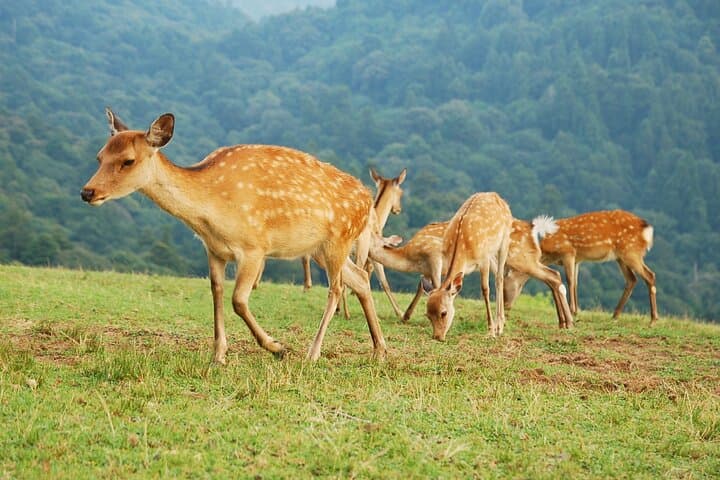
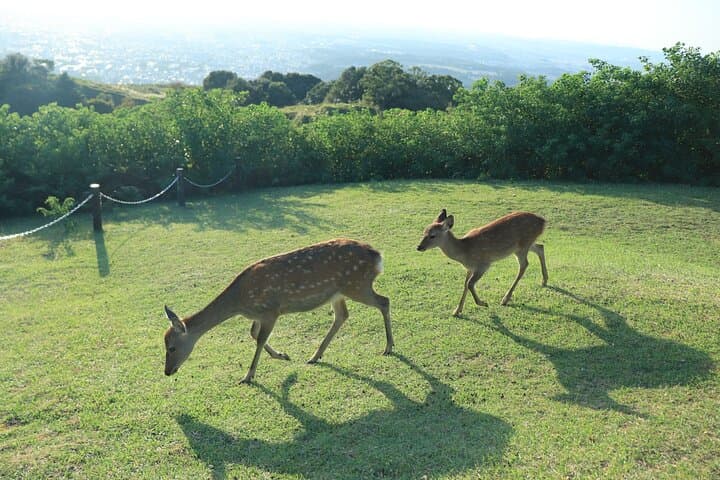
Wakakusa (elevation 342 m) is a modest volcanic ridge on the eastern edge of Nara; its short slopes are kept trimmed by annual yamayaki, the controlled burn that clears old grass and announces the changing season. For more than a millennium the deer here have occupied a dual role: practical members of the landscape and sacred messengers in Shinto belief. As you ascend, listen for bird calls and watch the deer choose their path—nature with its own timetable.
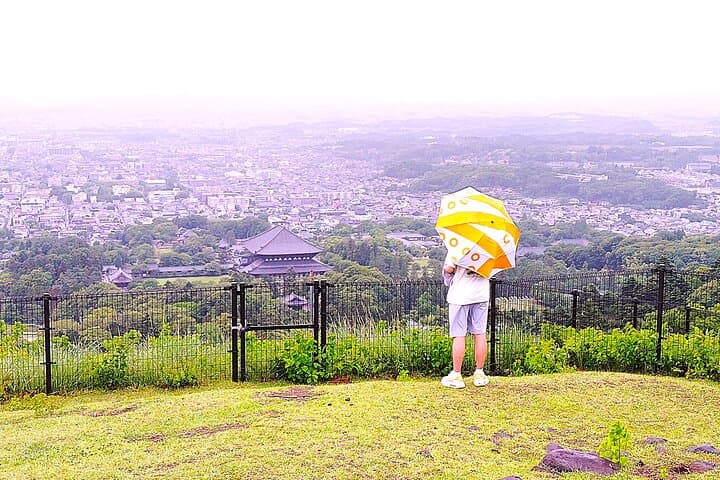
The hike is compact and sensory: soft grass underfoot, open views of temple roofs, and the city unfolding like an old map below. Expect about 1–2 km of walking with roughly 150–250 m of elevation gain, mostly on maintained grassy trails and gentle dirt paths that can be slippery when wet.
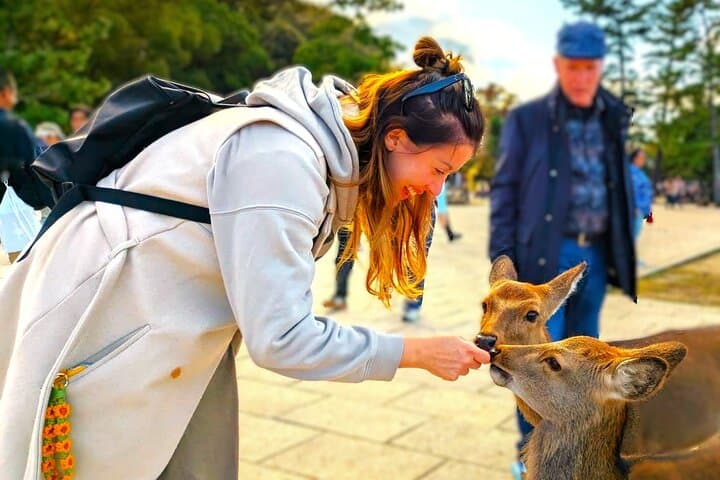
Practical tips: go early to beat crowds and heat, carry water and a light layer, and follow your guide’s rules about feeding—only shika senbei sold locally are appropriate. Photography is generous here; keep a respectful distance from deer, watch your step on slopes, and time your visit for clear skies if you want the summit panorama.
easy.
2 hours.
Suitable for most fitness levels; expect short uphill walking and some uneven grassy terrain
The guided experience lasts about 2 hours total; the walking portion to the summit is short—roughly 1–2 km round-trip with 150–250 m elevation gain.
Yes, but only with shika senbei (deer crackers) sold in the park; other food can be harmful and feeding is regulated by guides and park staff.
Yes; the route is considered easy and family-friendly, though some sections are uphill and require careful footing.
Dogs are generally not allowed in main temple areas and can disturb deer; check local rules and the tour operator’s policy before bringing a pet.
Deer in Nara have been protected for centuries and are linked to Shinto lore; Mount Wakakusa’s yamayaki burn is an annual ritual that shapes the hill’s grassy slopes.
Visitors are encouraged to follow feeding rules, keep distance from wildlife, and use designated paths to reduce trampling and disturbance.
DeepExperience operates guided outdoor trips and adventures with an emphasis on safety, stewardship, and memorable experiences.
Morning light spills across Nara Park and the deer are already on the move—quiet, curious, and oddly ceremonial as they drift through pine-shaded lanes. The guided walk begins at Himuro Shrine, threads past Todaiji’s broad eaves, and climbs the grassy flank of Mount Wakakusa where the city loosens its grip and wildlife takes the lead.
Morning light spills across Nara Park and the deer are already on the move—quiet, curious, and oddly ceremonial as they drift through pine-shaded lanes. The guided walk begins at Himuro Shrine, threads past Todaiji’s broad eaves, and climbs the grassy flank of Mount Wakakusa where the city loosens its grip and wildlife takes the lead.
Wakakusa (elevation 342 m) is a modest volcanic ridge on the eastern edge of Nara; its short slopes are kept trimmed by annual yamayaki, the controlled burn that clears old grass and announces the changing season. For more than a millennium the deer here have occupied a dual role: practical members of the landscape and sacred messengers in Shinto belief. As you ascend, listen for bird calls and watch the deer choose their path—nature with its own timetable.
The hike is compact and sensory: soft grass underfoot, open views of temple roofs, and the city unfolding like an old map below. Expect about 1–2 km of walking with roughly 150–250 m of elevation gain, mostly on maintained grassy trails and gentle dirt paths that can be slippery when wet.
Practical tips: go early to beat crowds and heat, carry water and a light layer, and follow your guide’s rules about feeding—only shika senbei sold locally are appropriate. Photography is generous here; keep a respectful distance from deer, watch your step on slopes, and time your visit for clear skies if you want the summit panorama.