THE ADVENTURE COLLECTIVE® · Independent discovery and booking for outdoor travel

Combine a brisk hike to Vesuvius’s crater rim with a guided walk through the ash-buried streets of Pompeii. This 8-hour tour from Naples pairs volcanic geology with Roman history, plus transport and entrance fees included.
Combine a brisk hike to Vesuvius’s crater rim with a guided walk through the ash-buried streets of Pompeii. This 8-hour tour from Naples pairs volcanic geology with Roman history, plus transport and entrance fees included.
A mid-morning coach peels away from Naples and the city gives way to a patchwork of vineyards and flinty lava slopes. By the time you step out beneath Vesuvius the air smells faintly of sea and sulphur; the path up the volcano grinds underfoot and the crater looms like a raw wound in the earth.
Verified experiences and guided adventures in the surrounding area.
Operated by European Voyages · Pompeii, Campania
A mid-morning coach peels away from Naples and the city gives way to a patchwork of vineyards and flinty lava slopes. By the time you step out beneath Vesuvius the air smells faintly of sea and sulphur; the path up the volcano grinds underfoot and the crater looms like a raw wound in the earth.
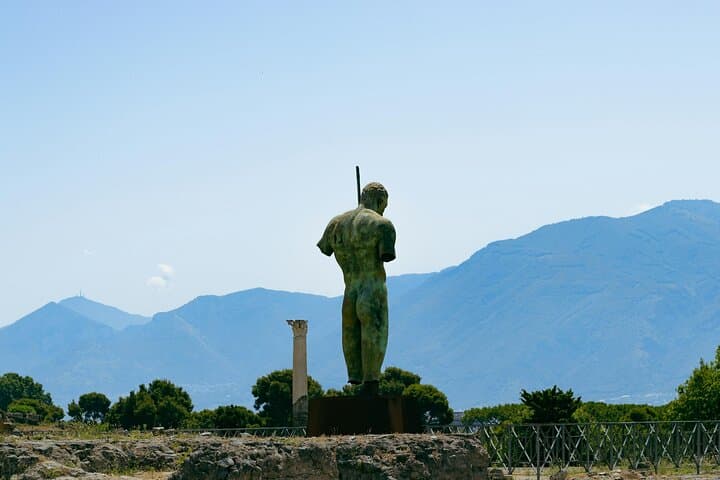
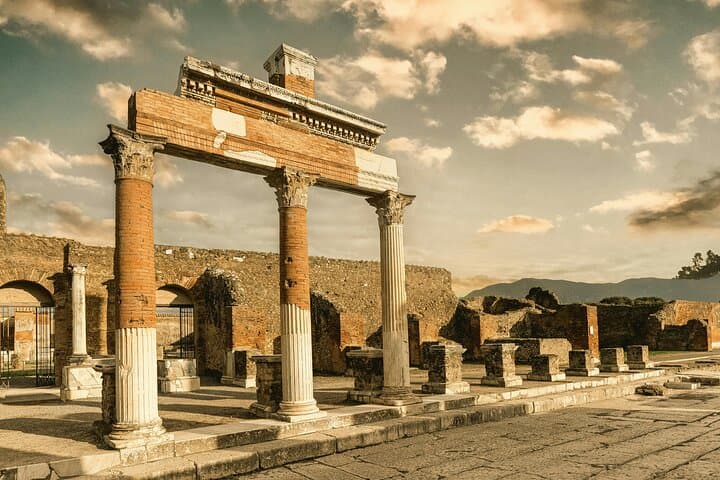
The itinerary pairs two very different classrooms: Vesuvius, a living stratovolcano whose 79 AD eruption froze Pompeii in ash, and the excavated streets of Pompeii itself—forums, mosaics and an amphitheater that still reads like a civic map of an ancient city. Geologically Vesuvius is part of the Campanian volcanic arc; its layered deposits and loose scoria make the summit trail short but unsteady. Culturally, the slopes produce Lacryma Christi wine and villages with food traditions shaped by ash and sun.
Practically, expect about 1–1.5 km of uphill trail to the Vesuvius crater with roughly 200–300 m of elevation gain from the main car park, taking 30–60 minutes depending on pace and wind. Pompeii requires several hours to see key highlights—Forum, House of the Faun, Villa of the Mysteries and the amphitheater—mostly flat walking on ancient stone. The tour typically includes private transport, entrance tickets and a guide; bring sturdy shoes, sun protection, 1–2 liters of water and ID for booking. Aim for morning or late afternoon to avoid peak heat, and keep to marked paths—both for safety on loose volcanic ground and to protect fragile archaeology.
moderate.
8 hours (including transport).
Moderate fitness—able to walk several hours and manage a short steep ascent with loose volcanic material.
The maintained trail from the car park to the crater is roughly 1–1.5 km one way with ~200–300 m elevation gain; expect 30–60 minutes up depending on pace and conditions—short but physically steady on loose volcanic gravel.
This tour typically includes entrance to key Pompeii sites and the Vesuvius area as listed in the booking inclusions, plus transport and a guide.
Pompeii is mostly flat but has uneven ancient paving; the Vesuvius trail is uneven and steep—not recommended for those with serious mobility limitations or very young children without support.
Bring photo ID as required for bookings; passports may be requested for certain ticketing or booking confirmations, particularly for non-EU visitors.
Vesuvius’s 79 AD eruption buried Pompeii and Herculaneum, preserving daily Roman life under ash; the volcano remains an active part of Campania’s landscape and culture.
Pompeii and Somma-Vesuvius Park are managed to balance access with preservation—stay on paths, avoid touching ruins and follow guide instructions to reduce wear on fragile sites.
European Voyages operates guided outdoor trips and adventures with an emphasis on safety, stewardship, and memorable experiences.


A mid-morning coach peels away from Naples and the city gives way to a patchwork of vineyards and flinty lava slopes. By the time you step out beneath Vesuvius the air smells faintly of sea and sulphur; the path up the volcano grinds underfoot and the crater looms like a raw wound in the earth.
A mid-morning coach peels away from Naples and the city gives way to a patchwork of vineyards and flinty lava slopes. By the time you step out beneath Vesuvius the air smells faintly of sea and sulphur; the path up the volcano grinds underfoot and the crater looms like a raw wound in the earth.
The itinerary pairs two very different classrooms: Vesuvius, a living stratovolcano whose 79 AD eruption froze Pompeii in ash, and the excavated streets of Pompeii itself—forums, mosaics and an amphitheater that still reads like a civic map of an ancient city. Geologically Vesuvius is part of the Campanian volcanic arc; its layered deposits and loose scoria make the summit trail short but unsteady. Culturally, the slopes produce Lacryma Christi wine and villages with food traditions shaped by ash and sun.
Practically, expect about 1–1.5 km of uphill trail to the Vesuvius crater with roughly 200–300 m of elevation gain from the main car park, taking 30–60 minutes depending on pace and wind. Pompeii requires several hours to see key highlights—Forum, House of the Faun, Villa of the Mysteries and the amphitheater—mostly flat walking on ancient stone. The tour typically includes private transport, entrance tickets and a guide; bring sturdy shoes, sun protection, 1–2 liters of water and ID for booking. Aim for morning or late afternoon to avoid peak heat, and keep to marked paths—both for safety on loose volcanic ground and to protect fragile archaeology.