THE ADVENTURE COLLECTIVE® · Independent discovery and booking for outdoor travel

Stand on the rim of Mount Vesuvius and peer into a living crater with a guided 3‑hour tour that includes entrance and return bus transport. Learn geology and local history while walking an accessible but rugged volcanic trail.
Stand on the rim of Mount Vesuvius and peer into a living crater with a guided 3‑hour tour that includes entrance and return bus transport. Learn geology and local history while walking an accessible but rugged volcanic trail.
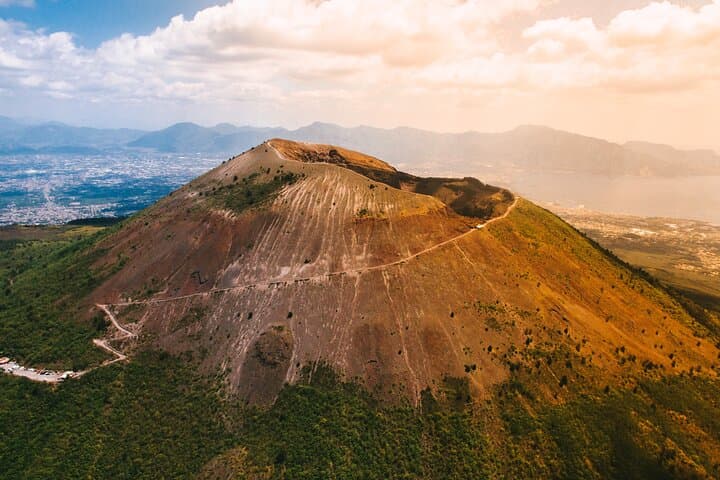
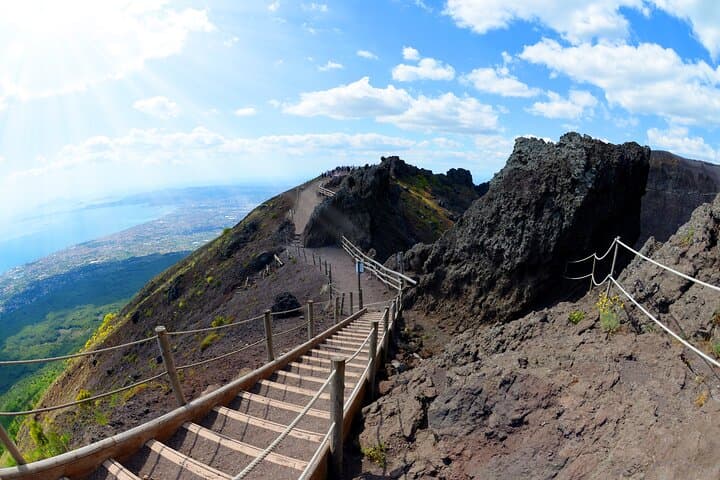
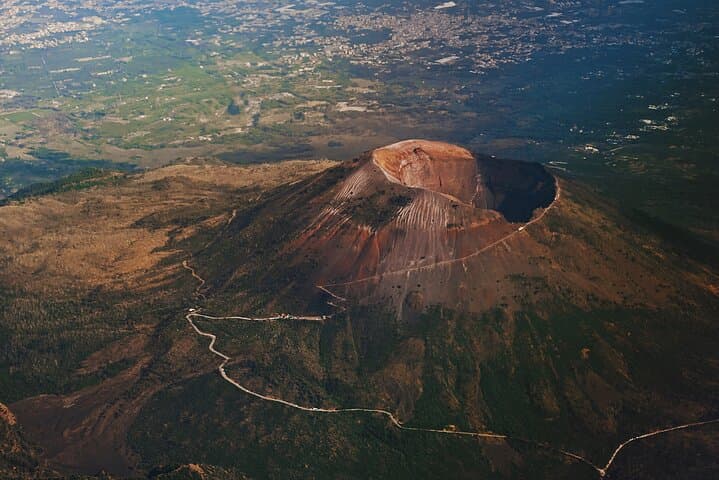
You arrive at a broad parking area beneath a low, smoking rim; the air carries dust and a distant scent of sulfur as the trail climbs toward the crater. Pines give way to volcanic scree, and the path tightens into a ridgeline where the Gulf of Naples opens like a bright, restless mirror. Up here, the volcano feels deliberate—rock, wind and history pushing against each other.
Verified experiences and guided adventures in the surrounding area.
Operated by Max Travel Pompei · Naples, Campania
You arrive at a broad parking area beneath a low, smoking rim; the air carries dust and a distant scent of sulfur as the trail climbs toward the crater. Pines give way to volcanic scree, and the path tightens into a ridgeline where the Gulf of Naples opens like a bright, restless mirror. Up here, the volcano feels deliberate—rock, wind and history pushing against each other.
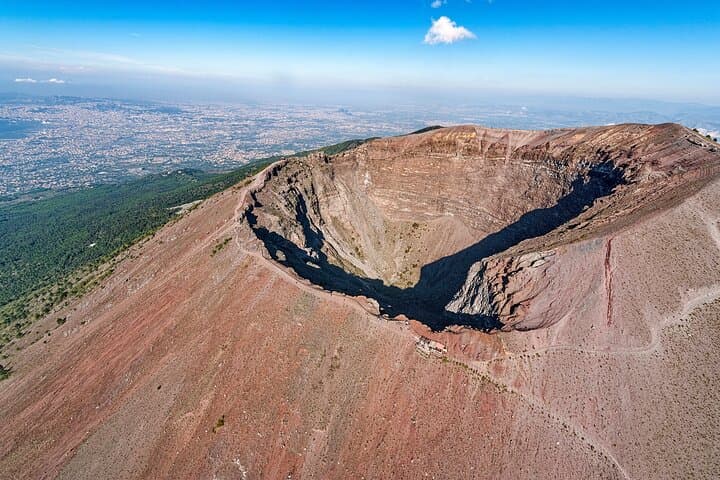
Mount Vesuvius is one of Europe’s most studied active volcanoes, the site of the AD 79 eruption that buried Pompeii and Herculaneum. Geologically, it’s a stratovolcano formed by repeated explosive eruptions; its layers of ash and lava create loose, angular terrain that demands steady footing. Culturally, Vesuvius shaped Campania’s towns, agriculture and myths, and local guides often weave archaeological context with natural history during the ascent.
The guided loop to the crater rim is a focused alpine walk rather than a technical climb: rough trails, intermittent stairs and exposed viewpoints. Expect sharp views of the crater floor and the islands of Capri, Ischia and Procida on clear days, and wind that can turn a warm morning chilly in minutes.
Practical guidance: wear sturdy hiking shoes, sun protection and bring at least 1–2 liters of water. Start early to avoid heat and crowds, and check weather—strong wind or volcanic alerts can close the park. The included return bus simplifies logistics; your guide handles permits and route choice so you can concentrate on the views and the quiet, granular sound of volcanic gravel underfoot.
easy.
3 hours.
Suitable for people who can walk 3–5 miles on uneven terrain and handle short elevation changes; minimal aerobic conditioning required.
Yes—the tour includes the Vesuvius National Park entrance ticket and return bus transport as stated in the booking.
The route is non‑technical and classified easy, but it involves uneven surfaces and a short climb; wear appropriate shoes.
Children can join with supervision; the tour is not recommended for pregnant travelers or those with serious cardiovascular conditions.
Tours may be canceled for safety in high winds or volcanic alerts; check notifications and the operator’s policy before you go.
Vesuvius’s AD 79 eruption reshaped local settlements and preserved Roman life beneath ash—archaeological sites nearby reveal Roman urban planning and everyday objects.
The Vesuvius National Park manages visitor flows to protect fragile soils and endemic plants; stick to marked trails and avoid disturbing vegetation or rock faces.
Max Travel Pompei operates guided outdoor trips and adventures with an emphasis on safety, stewardship, and memorable experiences.
You arrive at a broad parking area beneath a low, smoking rim; the air carries dust and a distant scent of sulfur as the trail climbs toward the crater. Pines give way to volcanic scree, and the path tightens into a ridgeline where the Gulf of Naples opens like a bright, restless mirror. Up here, the volcano feels deliberate—rock, wind and history pushing against each other.
You arrive at a broad parking area beneath a low, smoking rim; the air carries dust and a distant scent of sulfur as the trail climbs toward the crater. Pines give way to volcanic scree, and the path tightens into a ridgeline where the Gulf of Naples opens like a bright, restless mirror. Up here, the volcano feels deliberate—rock, wind and history pushing against each other.
Mount Vesuvius is one of Europe’s most studied active volcanoes, the site of the AD 79 eruption that buried Pompeii and Herculaneum. Geologically, it’s a stratovolcano formed by repeated explosive eruptions; its layers of ash and lava create loose, angular terrain that demands steady footing. Culturally, Vesuvius shaped Campania’s towns, agriculture and myths, and local guides often weave archaeological context with natural history during the ascent.
The guided loop to the crater rim is a focused alpine walk rather than a technical climb: rough trails, intermittent stairs and exposed viewpoints. Expect sharp views of the crater floor and the islands of Capri, Ischia and Procida on clear days, and wind that can turn a warm morning chilly in minutes.
Practical guidance: wear sturdy hiking shoes, sun protection and bring at least 1–2 liters of water. Start early to avoid heat and crowds, and check weather—strong wind or volcanic alerts can close the park. The included return bus simplifies logistics; your guide handles permits and route choice so you can concentrate on the views and the quiet, granular sound of volcanic gravel underfoot.