THE ADVENTURE COLLECTIVE® · Independent discovery and booking for outdoor travel

Ascend from Naples to the rim of Mount Vesuvius on a focused half-day outing that pairs panoramic coastal views with a volcanologist-led walk around the crater. Expect steep, short hikes on loose volcanic rock and a strong dose of geological history.
Ascend from Naples to the rim of Mount Vesuvius on a focused half-day outing that pairs panoramic coastal views with a volcanologist-led walk around the crater. Expect steep, short hikes on loose volcanic rock and a strong dose of geological history.
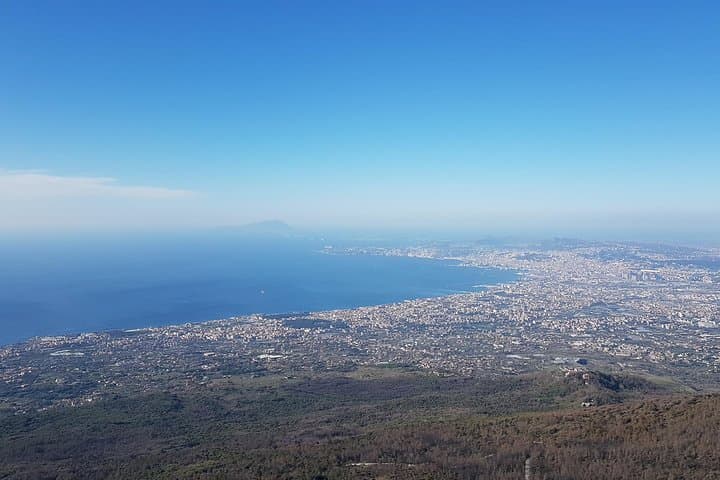
You step off the bus at roughly 1,000 meters and the landscape changes immediately: the sea of Naples shrinks below, gulls wheel over the Bay, and the volcanic slope opens with scrub oak and dark lava rock underfoot.
Verified experiences and guided adventures in the surrounding area.
Operated by Napoli Official Tour · Naples, Campania
You step off the bus at roughly 1,000 meters and the landscape changes immediately: the sea of Naples shrinks below, gulls wheel over the Bay, and the volcanic slope opens with scrub oak and dark lava rock underfoot.
This half-day outing moves quickly from city to summit. The drive through Vesuvius National Park threads old lava flows and terraced vineyards; once at the trailhead a marked walking path leads upward to the crater rim. Geologically, Vesuvius is a stratovolcano whose explosive eruptions have shaped the Bay of Naples—most famously in AD 79 when ash buried Pompeii and Herculaneum. A volcanological guide accompanies the group, pointing out pumice, sulphur-streaked vents and the layered deposits that record repeated eruptions.
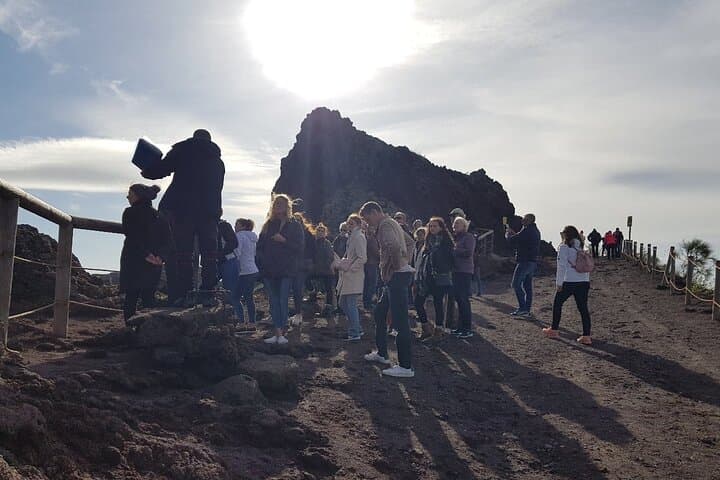
Culturally, the mountain is an icon for Neapolitans—part danger, part livelihood—supporting hillside agriculture and local stories passed through generations. The crater itself is compact but dramatic: walk the rim, feel the heat in places, and take panoramic views toward Capri, Ischia and the city below.
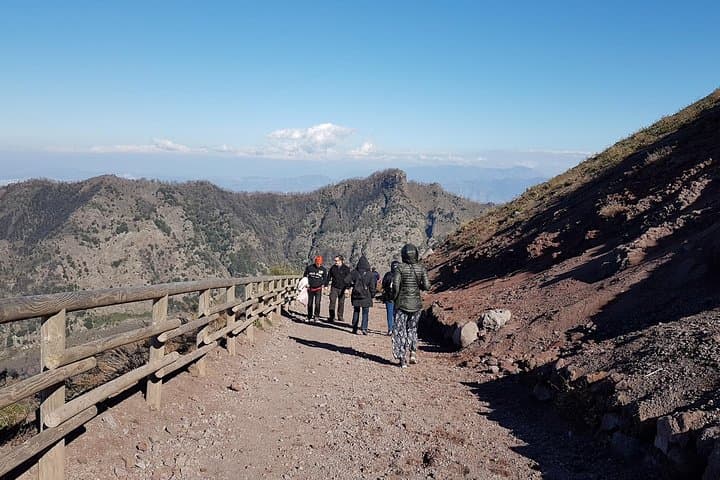
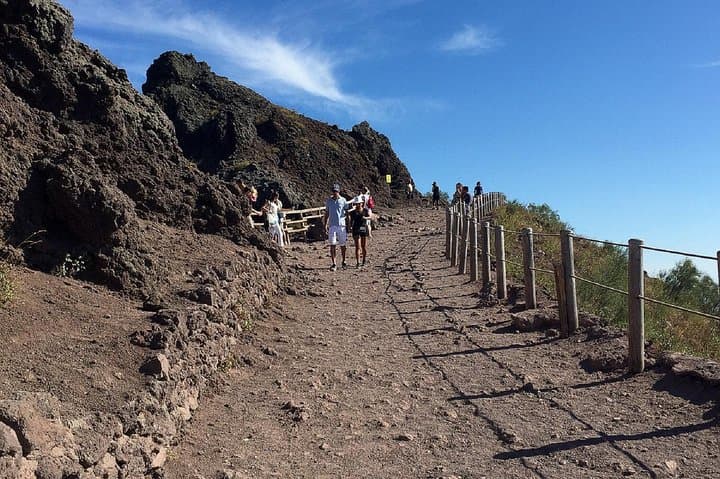
Practical guidance: wear sturdy shoes with good traction for loose volcanic rock; bring sun protection and water—shade is sparse. The ascent from the bus stop to the crater is steep in places but short; allow 1.5–2 hours on foot for views and interpretive stops. Guides typically provide entrance and context, but weather or park rules can change access, so confirm timing and arrival instructions before you go.
This trip is a direct, educational encounter with a living landscape—compact in time but rich in geology and views.
moderate.
3–4 hours.
Moderate fitness—able to handle a steep 20–40 minute uphill walk on uneven, loose rock
The uphill walk from the bus drop is short but steep—plan on roughly 20–40 minutes depending on pace and stops for photos.
Yes; entrance to Vesuvius and an alpine/volcanological guide provided by the national park are included on this tour.
Travelers should have at least a moderate level of fitness; infants must sit on laps and the tour may not be suitable for those with significant mobility limitations.
Tours can be canceled for bad weather or insufficient travelers; confirm cancellation policies when booking and check local conditions before departure.
Mount Vesuvius’ AD 79 eruption buried Roman towns nearby; the volcano has a long history of eruptions that shaped regional settlement and agriculture.
Vesuvius National Park manages visitor access to protect fragile volcanic soils and endemic plant communities; stay on marked trails and carry out all waste.
Napoli Official Tour operates guided outdoor trips and adventures with an emphasis on safety, stewardship, and memorable experiences.
You step off the bus at roughly 1,000 meters and the landscape changes immediately: the sea of Naples shrinks below, gulls wheel over the Bay, and the volcanic slope opens with scrub oak and dark lava rock underfoot.
You step off the bus at roughly 1,000 meters and the landscape changes immediately: the sea of Naples shrinks below, gulls wheel over the Bay, and the volcanic slope opens with scrub oak and dark lava rock underfoot.
This half-day outing moves quickly from city to summit. The drive through Vesuvius National Park threads old lava flows and terraced vineyards; once at the trailhead a marked walking path leads upward to the crater rim. Geologically, Vesuvius is a stratovolcano whose explosive eruptions have shaped the Bay of Naples—most famously in AD 79 when ash buried Pompeii and Herculaneum. A volcanological guide accompanies the group, pointing out pumice, sulphur-streaked vents and the layered deposits that record repeated eruptions.
Culturally, the mountain is an icon for Neapolitans—part danger, part livelihood—supporting hillside agriculture and local stories passed through generations. The crater itself is compact but dramatic: walk the rim, feel the heat in places, and take panoramic views toward Capri, Ischia and the city below.
Practical guidance: wear sturdy shoes with good traction for loose volcanic rock; bring sun protection and water—shade is sparse. The ascent from the bus stop to the crater is steep in places but short; allow 1.5–2 hours on foot for views and interpretive stops. Guides typically provide entrance and context, but weather or park rules can change access, so confirm timing and arrival instructions before you go.
This trip is a direct, educational encounter with a living landscape—compact in time but rich in geology and views.