THE ADVENTURE COLLECTIVE® · Independent discovery and booking for outdoor travel

Climb to Timios Stavros atop Mount Psiloritis, Crete’s highest peak, on a full-day guided trek that mixes rocky ridgelines, alpine herbs and wide island views. This practical guide covers what to expect, terrain details, and how to prepare for the 2,456 m summit.
Climb to Timios Stavros atop Mount Psiloritis, Crete’s highest peak, on a full-day guided trek that mixes rocky ridgelines, alpine herbs and wide island views. This practical guide covers what to expect, terrain details, and how to prepare for the 2,456 m summit.
Sun hits the stony slopes and the trail breathes out a wind that seems to push you higher — this is Psiloritis, Crete’s raw central spine. The route climbs from high pastures and scrub into a limestone bowl, finishing at Timios Stavros (2,456 m) where a small chapel perches and the island unfurls in every direction.
Verified experiences and guided adventures in the surrounding area.
Operated by Your Guide Crete · Anogia, Crete
Sun hits the stony slopes and the trail breathes out a wind that seems to push you higher — this is Psiloritis, Crete’s raw central spine. The route climbs from high pastures and scrub into a limestone bowl, finishing at Timios Stavros (2,456 m) where a small chapel perches and the island unfurls in every direction.
The mountain has long been part of Cretan life: a Minoan-era landmark linked to the mythic cave of Zeus and a traditional grazing ground for shepherds. Geologically the massif is karst limestone; expect fractured rock, pockets of scree and compact ridgelines carved by glaciers and winter storms. Cultural traces appear as shepherd huts, marble-built chapels and seasonal grazing paths. Flora shifts from kermes oak and hardy shrubs to alpine herbs; kestrels and vultures patrol the thermals.
Practically: this is a full-day guided hike (about 6 hours total) with steep, rocky sections and exposed stretches. Typical round-trip distances for summit routes are roughly 8–12 km with 700–1,000 m of ascent depending on the trailhead. You’ll want sturdy boots, sun protection, a windproof layer and at least 1.5–2 L of water; walking poles help on scree. Start early to avoid midday sun and afternoon winds, and allow time to enjoy the summit’s narrow views and the little Timios Stavros church.
Guided departures simplify logistics — you’ll learn about local flora, fauna and the mountain’s role in Cretan culture while keeping a steady pace. Respect marked paths, pack out waste, and be prepared for swift weather swings at altitude.
challenging.
6 hours.
Good cardiovascular fitness and regular hiking experience; comfortable on sustained climbs and rough terrain
Guided day trips are typically about 6 hours total; round-trip distance commonly falls between 8–12 km depending on the starting point, with roughly 700–1,000 m of elevation gain.
No technical climbing is required, but there are exposed ridgelines and steep, rocky sections — good footwear and sure-footedness are important.
Late spring through early autumn offers the most stable conditions; snow can linger into spring at higher elevations and winter routes require alpine experience and equipment.
Guides can adapt pace, but the hike is not recommended for travelers with serious cardiovascular problems, spinal issues or for pregnant travelers; check with the operator before booking.
Psiloritis is woven into Minoan myth as a possible birthplace of Zeus and has been a seasonal grazing landscape and spiritual landmark for generations.
The massif is ecologically sensitive: stay on established trails, carry out waste, and avoid disturbing grazing areas and nesting birds to protect fragile alpine flora and fauna.
Your Guide Crete operates guided outdoor trips and adventures with an emphasis on safety, stewardship, and memorable experiences.
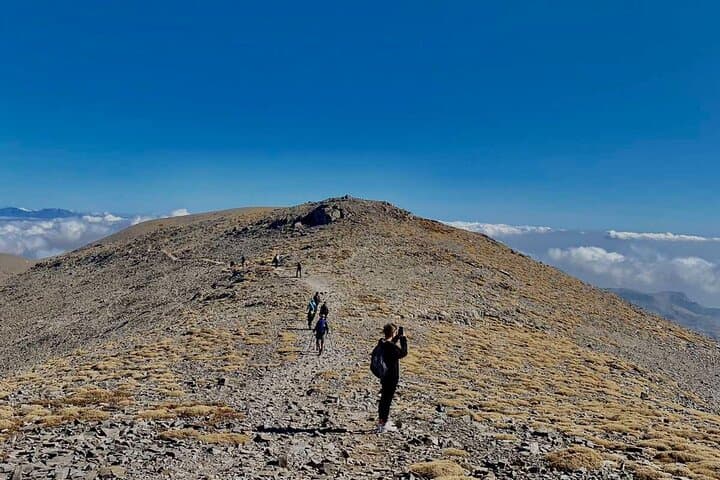
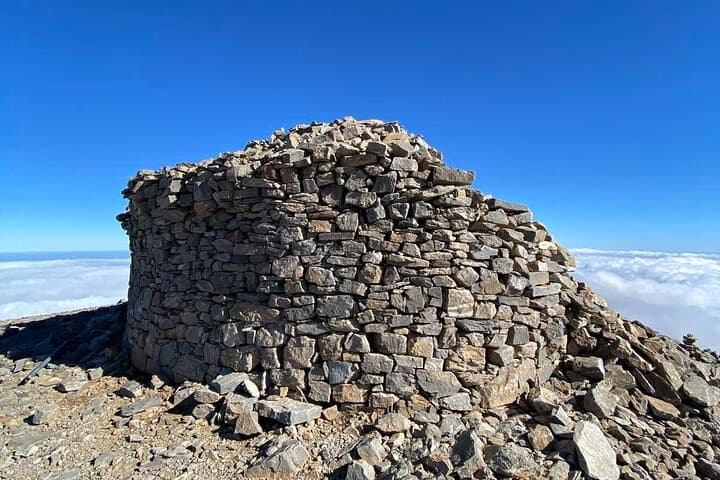
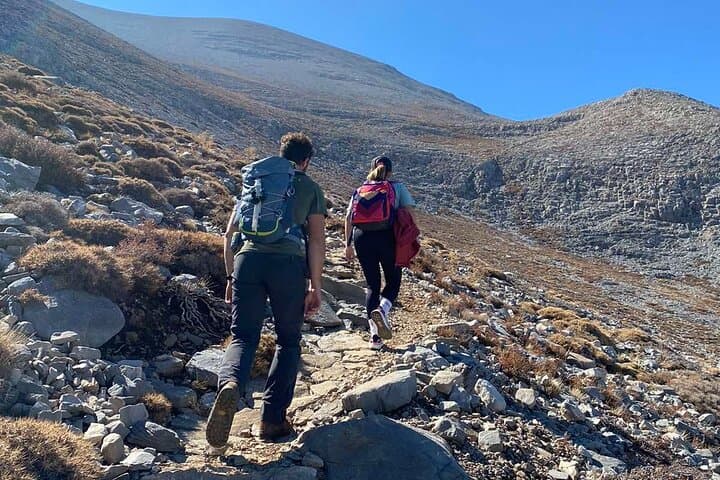
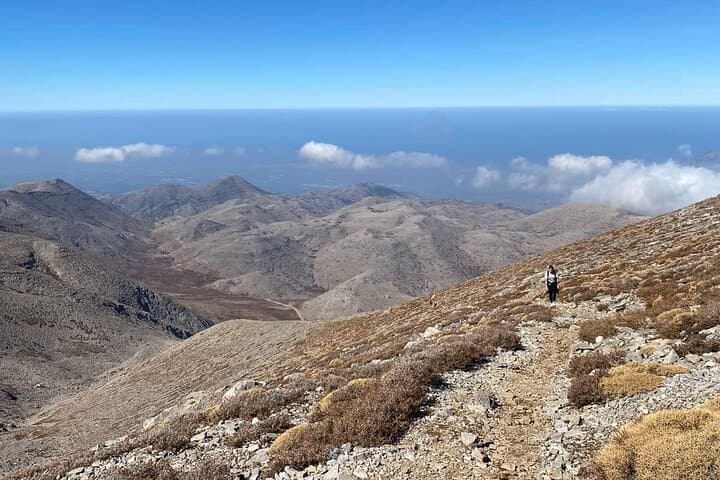
Sun hits the stony slopes and the trail breathes out a wind that seems to push you higher — this is Psiloritis, Crete’s raw central spine. The route climbs from high pastures and scrub into a limestone bowl, finishing at Timios Stavros (2,456 m) where a small chapel perches and the island unfurls in every direction.
Sun hits the stony slopes and the trail breathes out a wind that seems to push you higher — this is Psiloritis, Crete’s raw central spine. The route climbs from high pastures and scrub into a limestone bowl, finishing at Timios Stavros (2,456 m) where a small chapel perches and the island unfurls in every direction.
The mountain has long been part of Cretan life: a Minoan-era landmark linked to the mythic cave of Zeus and a traditional grazing ground for shepherds. Geologically the massif is karst limestone; expect fractured rock, pockets of scree and compact ridgelines carved by glaciers and winter storms. Cultural traces appear as shepherd huts, marble-built chapels and seasonal grazing paths. Flora shifts from kermes oak and hardy shrubs to alpine herbs; kestrels and vultures patrol the thermals.
Practically: this is a full-day guided hike (about 6 hours total) with steep, rocky sections and exposed stretches. Typical round-trip distances for summit routes are roughly 8–12 km with 700–1,000 m of ascent depending on the trailhead. You’ll want sturdy boots, sun protection, a windproof layer and at least 1.5–2 L of water; walking poles help on scree. Start early to avoid midday sun and afternoon winds, and allow time to enjoy the summit’s narrow views and the little Timios Stavros church.
Guided departures simplify logistics — you’ll learn about local flora, fauna and the mountain’s role in Cretan culture while keeping a steady pace. Respect marked paths, pack out waste, and be prepared for swift weather swings at altitude.