THE ADVENTURE COLLECTIVE® · Independent discovery and booking for outdoor travel

Ride the cable car and 4x4, then trek to Etna’s active summit for close views of Bocca Nuova and recent lava flows. This guided ascent combines volcanology, high-altitude hiking and dramatic crater terraces.
Ride the cable car and 4x4, then trek to Etna’s active summit for close views of Bocca Nuova and recent lava flows. This guided ascent combines volcanology, high-altitude hiking and dramatic crater terraces.
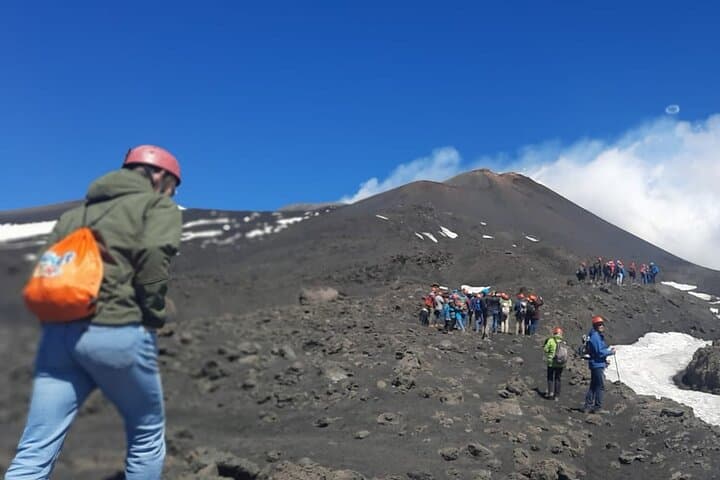
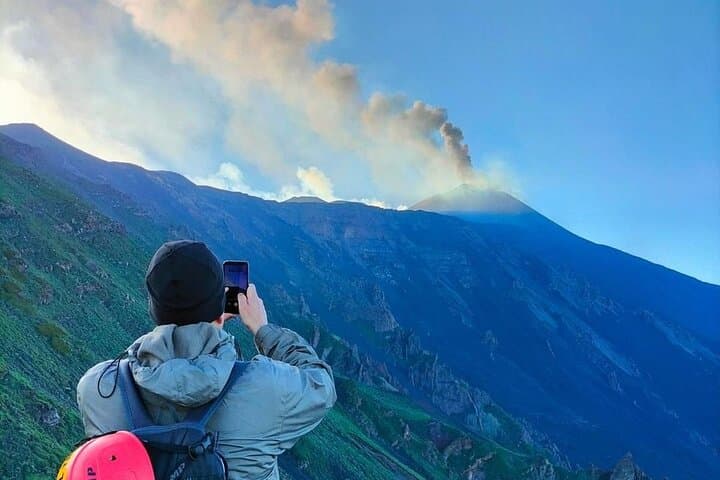
A wind that smells of sulfur meets you at Rifugio Sapienza, and the trail immediately pulls you into a landscape that shifts from pine skirts to black, glassy lava. Guides meet groups at the cable car, and within an hour you’ll ride up to 2,500 m, then transfer by 4x4 to around 2,900 m before the real climb begins.
Verified experiences and guided adventures in the surrounding area.
Operated by Etna Esagonal Trekking Tour · Nicolosi, Sicily
A wind that smells of sulfur meets you at Rifugio Sapienza, and the trail immediately pulls you into a landscape that shifts from pine skirts to black, glassy lava. Guides meet groups at the cable car, and within an hour you’ll ride up to 2,500 m, then transfer by 4x4 to around 2,900 m before the real climb begins.
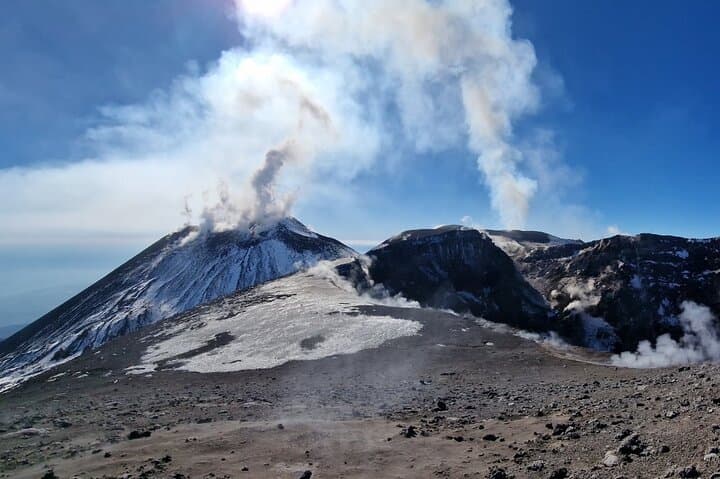
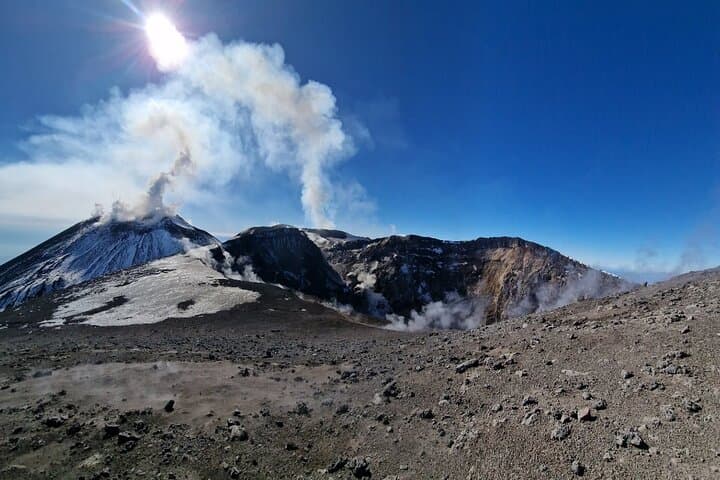
This is Etna: a living classroom of volcanology. Layers of lava and ash reveal eruptions past and recent — winter and spring 2023 flows sit fresh and fragmented beneathfoot, while older cones like remnants of the 1971 activity punctuate the skyline. The route skirts crater terraces to reach central craters such as Bocca Nuova, Voragine and the Northeast and Southeast mouths, allowing close-up views into the active summit complex.
Culturally, Etna has shaped local towns, vineyards and mythology across Sicily; shepherd tracks and centuries-old lava walls appear as you climb. Geologically the mountain is a composite stratovolcano whose frequent eruptions make conditions variable — expect loose scoria, sharp pumice, and steep ramps of volcanic grit.
Practically: the guided ascent gains roughly 500 m from the high-elevation vehicle drop to ~3,400 m and takes about 5–6 hours total with stops. Wear ankle-supporting boots, layered windproof clothing and a helmet provided by guides on steeper sections. Hydrate before you start, walk deliberately on volcanic scree, and follow your guide’s route across crater terraces — the terrain is stunning but objectively demanding. Weather changes fast at altitude; plan for sun, wind and sudden cold on the same day.
challenging.
5–6 hours.
Requires high aerobic fitness and experience with sustained uphill hiking; prior high-elevation exposure helpful.
The guided route reaches approximately 3,400 meters above sea level, on the summit crater area of Etna.
No technical climbing skills are required; the route is a high-altitude hike over volcanic terrain guided by volcanological or alpine guides.
Groups meet at Bar Esagonal, Piazzale Funivia (Rifugio Sapienza); the itinerary uses the Etna cable car and special 4x4 buses to reach higher trailheads.
Travelers should be in excellent cardiovascular shape; the tour is not recommended for people with serious heart, spinal conditions or pregnancy, and altitude can affect sensitive individuals.
Etna has been active for millennia; its eruptions have repeatedly reshaped slopes, influenced local agriculture and entered regional folklore.
The summit ecology is fragile—stay on designated paths, avoid collecting rocks or disturbing vegetation, and follow guide rules to limit erosion and litter.
Etna Esagonal Trekking Tour operates guided outdoor trips and adventures with an emphasis on safety, stewardship, and memorable experiences.
A wind that smells of sulfur meets you at Rifugio Sapienza, and the trail immediately pulls you into a landscape that shifts from pine skirts to black, glassy lava. Guides meet groups at the cable car, and within an hour you’ll ride up to 2,500 m, then transfer by 4x4 to around 2,900 m before the real climb begins.
A wind that smells of sulfur meets you at Rifugio Sapienza, and the trail immediately pulls you into a landscape that shifts from pine skirts to black, glassy lava. Guides meet groups at the cable car, and within an hour you’ll ride up to 2,500 m, then transfer by 4x4 to around 2,900 m before the real climb begins.
This is Etna: a living classroom of volcanology. Layers of lava and ash reveal eruptions past and recent — winter and spring 2023 flows sit fresh and fragmented beneathfoot, while older cones like remnants of the 1971 activity punctuate the skyline. The route skirts crater terraces to reach central craters such as Bocca Nuova, Voragine and the Northeast and Southeast mouths, allowing close-up views into the active summit complex.
Culturally, Etna has shaped local towns, vineyards and mythology across Sicily; shepherd tracks and centuries-old lava walls appear as you climb. Geologically the mountain is a composite stratovolcano whose frequent eruptions make conditions variable — expect loose scoria, sharp pumice, and steep ramps of volcanic grit.
Practically: the guided ascent gains roughly 500 m from the high-elevation vehicle drop to ~3,400 m and takes about 5–6 hours total with stops. Wear ankle-supporting boots, layered windproof clothing and a helmet provided by guides on steeper sections. Hydrate before you start, walk deliberately on volcanic scree, and follow your guide’s route across crater terraces — the terrain is stunning but objectively demanding. Weather changes fast at altitude; plan for sun, wind and sudden cold on the same day.