THE ADVENTURE COLLECTIVE® · Independent discovery and booking for outdoor travel

Ride the cable car up Etna’s south flank and walk across recent lava flows with volcanological guides. This guided trek from 2,500–3,000 m combines geology, raw landscapes and hands-on volcanic interpretation.
Ride the cable car up Etna’s south flank and walk across recent lava flows with volcanological guides. This guided trek from 2,500–3,000 m combines geology, raw landscapes and hands-on volcanic interpretation.
Early mist lifts from the black rock and the cable car deposits you onto a high, wind-scoured ridge where steam still rises from recent fissures. Underfoot, the terrain shifts from compacted ash to rough pahoehoe and blocky ʻaʻā lava; the air smells faintly of sulfur and pine resin. Guides trained in volcanology lead the group, pointing out the fresh 2025 lobes and the collapsed channels that once fed incandescent flows.
Verified experiences and guided adventures in the surrounding area.
Operated by Excursions Etna Catania · Nicolosi, Sicily
Early mist lifts from the black rock and the cable car deposits you onto a high, wind-scoured ridge where steam still rises from recent fissures. Underfoot, the terrain shifts from compacted ash to rough pahoehoe and blocky ʻaʻā lava; the air smells faintly of sulfur and pine resin. Guides trained in volcanology lead the group, pointing out the fresh 2025 lobes and the collapsed channels that once fed incandescent flows.
Mount Etna is Europe’s most active volcano, a landscape written by repeated eruptions and long inclines of basalt. The south flank bears scars from 2001 and 2002–03 eruptions; each crater tells a geologic chapter. Locally, Etna shapes agriculture and culture—villages grow pistachios, citrus and wine from volcanic soils, and mountain villages maintain traditions tied to ash and seasons.
The route climbs roughly 500 m over about 6 km at high altitude; expect loose rock, steep pitches and sudden gusts that push on shells and packs. Guides provide helmets, poles and windbreakers and brief you on volcanic safety before stepping onto the lava fields and reaching Barbagallo and the 2001 crater rim.
Practically, acclimatize in Catania or Nicolosi the day before, carry layered windproof clothing, and bring water and sturdy boots—recent ash can abrade soles. Weather changes fast above 2,500 m; plan for sun and cold in a single day. Follow guide instructions, stay on marked paths, and allow time for photography and short rests to absorb the raw, moving power of Etna.
challenging.
6 hours.
Requires a high level of cardiovascular fitness and comfort hiking on loose volcanic rock and steep ascents at altitude.
Yes—participants should be comfortable with sustained uphill hiking, loose volcanic rock and a 500 m ascent; guides provide technical orientation but not basic training.
Organizers supply protective helmets, hiking poles, socks, shoes (size-limited), and a windbreaker; bring personal layers and daypack essentials.
You reach up to about 3,000 m where breathing may feel harder; pace yourself, hydrate, and notify guides of dizziness or severe breathlessness.
This tour is not recommended for children under 6 and generally requires a high fitness level—check with the operator for specific age policies and safety considerations.
Etna’s activity has shaped local settlement patterns for millennia; the 2001 and 2002–03 eruptions rearranged slopes and created the craters visited on this trek.
Stick to marked routes and avoid collecting rock samples; fragile pioneer vegetation and newly forming soils recover slowly and can be damaged by boots and detours.
Excursions Etna Catania operates guided outdoor trips and adventures with an emphasis on safety, stewardship, and memorable experiences.
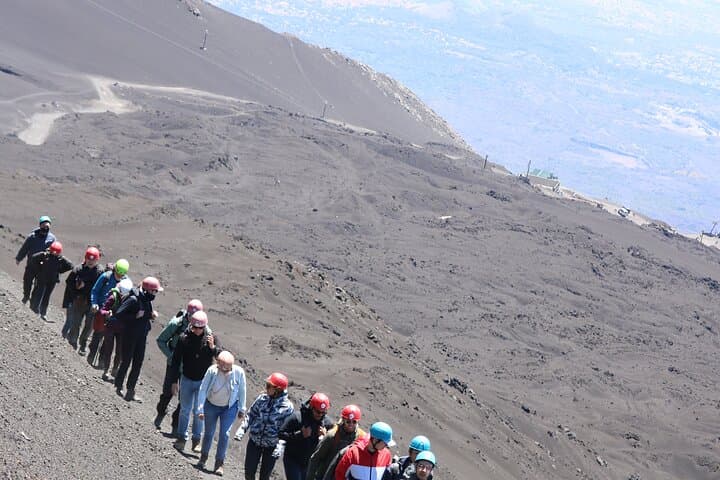
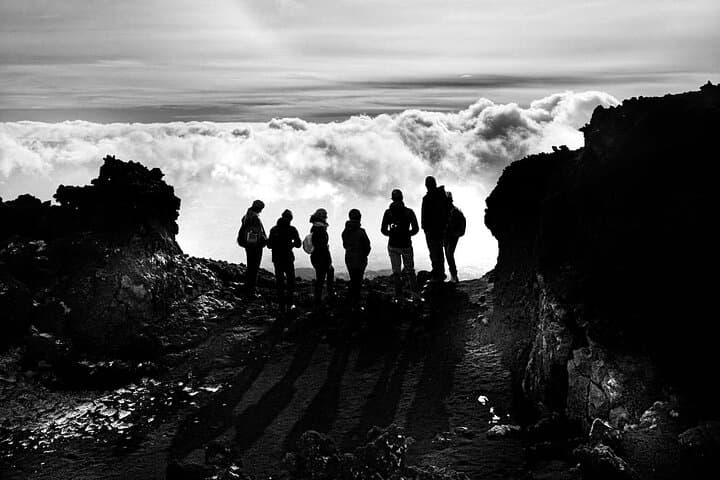
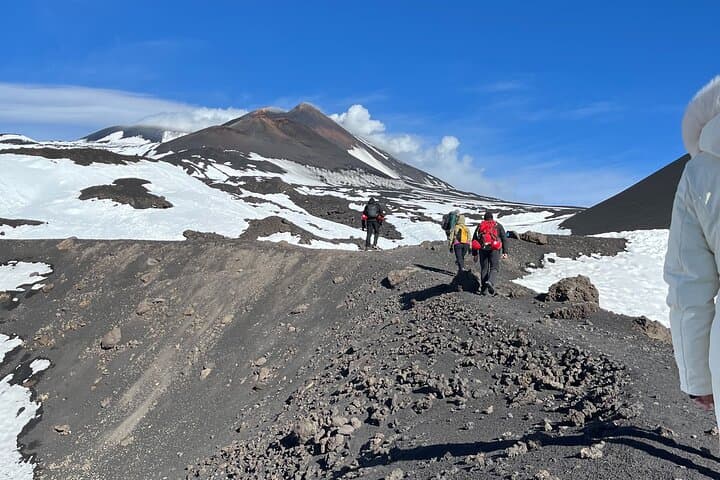
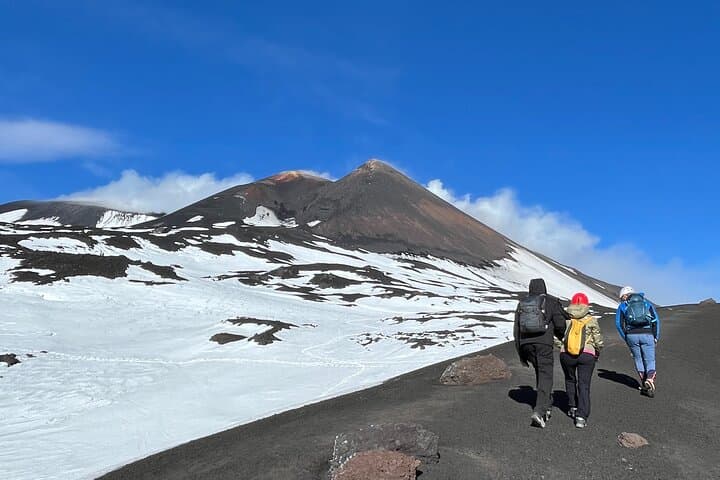
Early mist lifts from the black rock and the cable car deposits you onto a high, wind-scoured ridge where steam still rises from recent fissures. Underfoot, the terrain shifts from compacted ash to rough pahoehoe and blocky ʻaʻā lava; the air smells faintly of sulfur and pine resin. Guides trained in volcanology lead the group, pointing out the fresh 2025 lobes and the collapsed channels that once fed incandescent flows.
Early mist lifts from the black rock and the cable car deposits you onto a high, wind-scoured ridge where steam still rises from recent fissures. Underfoot, the terrain shifts from compacted ash to rough pahoehoe and blocky ʻaʻā lava; the air smells faintly of sulfur and pine resin. Guides trained in volcanology lead the group, pointing out the fresh 2025 lobes and the collapsed channels that once fed incandescent flows.
Mount Etna is Europe’s most active volcano, a landscape written by repeated eruptions and long inclines of basalt. The south flank bears scars from 2001 and 2002–03 eruptions; each crater tells a geologic chapter. Locally, Etna shapes agriculture and culture—villages grow pistachios, citrus and wine from volcanic soils, and mountain villages maintain traditions tied to ash and seasons.
The route climbs roughly 500 m over about 6 km at high altitude; expect loose rock, steep pitches and sudden gusts that push on shells and packs. Guides provide helmets, poles and windbreakers and brief you on volcanic safety before stepping onto the lava fields and reaching Barbagallo and the 2001 crater rim.
Practically, acclimatize in Catania or Nicolosi the day before, carry layered windproof clothing, and bring water and sturdy boots—recent ash can abrade soles. Weather changes fast above 2,500 m; plan for sun and cold in a single day. Follow guide instructions, stay on marked paths, and allow time for photography and short rests to absorb the raw, moving power of Etna.