THE ADVENTURE COLLECTIVE® · Independent discovery and booking for outdoor travel

Walk the historic 8 km Nakasendo route between Magome and Tsumago with a government-licensed guide. This easy day hike blends Edo-period villages, valley lookouts, and quiet forest trail—perfect for a half-day cultural hike in the Kiso Valley.
Walk the historic 8 km Nakasendo route between Magome and Tsumago with a government-licensed guide. This easy day hike blends Edo-period villages, valley lookouts, and quiet forest trail—perfect for a half-day cultural hike in the Kiso Valley.
You step off the small train and the air shifts—cool, cedar-scented, the kind that clears the city out of your lungs. Cobbled lanes rise and fall between wooden inns; a narrow trail threads the forested ridge that once linked Edo to Kyoto. The walk from Magome to Tsumago is compact but rich: 8 kilometres of packed earth and stone, gentle climbs, and viewpoints that open on the Kiso Valley.
Verified experiences and guided adventures in the surrounding area.
Operated by Japan Guide Agency · Nakatsugawa, Gifu Prefecture
You step off the small train and the air shifts—cool, cedar-scented, the kind that clears the city out of your lungs. Cobbled lanes rise and fall between wooden inns; a narrow trail threads the forested ridge that once linked Edo to Kyoto. The walk from Magome to Tsumago is compact but rich: 8 kilometres of packed earth and stone, gentle climbs, and viewpoints that open on the Kiso Valley.
These two villages are living pieces of Edo-period infrastructure. The Nakasendo was a major inland route and both post towns preserve architecture and customs—Magome’s slope-driven promenade offers valley outlooks, while Tsumago’s restored Honjin and unpaved main street recall the waystations that served merchants and samurai.
Geologically the route follows foothills of the Central Japanese Alps, with granite outcrops and well-drained forest soils; cultural touches—tea houses, old mile markers, carved signposts—mark human layers atop that landscape.
Practically: expect 2–3 hours of walking time at a steady pace, longer if you linger in museums or shops. Trails are well-maintained but uneven; good hiking shoes and a daypack are recommended. Public buses and local taxis connect villages and the nearby train stations, and guides will coordinate transport costs in cash.
Timing matters—late spring and fall bring the best weather and colors; winter hiking is restricted for safety. Bring water, respect historic structures, and plan for simple mountain weather: sun, sudden rain, and cool evenings. This is a short, concentrated hike that rewards attention to small details—lantern-lit streets, moss on stones, and the steady presence of the forest pushing you forward.
easy.
3–6 hours.
Suitable for those who can walk 8 km on uneven trails; light cardiovascular fitness and steady balance recommended
The on-trail distance is about 8 kilometres (roughly 5 miles); walking time is around 2 hours at a steady pace, with the full guided day typically lasting 3–6 hours including transfers and stops.
The route has gentle elevation changes and some steep stone steps near Magome; it’s classified as easy but requires stable footwear and basic fitness.
Yes—local buses and taxis connect Magome, Tsumago, Nagiso and Nakatsugawa stations; transport costs are usually paid in cash and can be arranged with the guide.
No—the hiking day tour is not offered from December through February due to icy trail conditions; a bus-based private trip is suggested in winter months.
Magome and Tsumago were Edo-period post towns on the Nakasendo, a major inland route linking Kyoto and Edo; Tsumago was among Japan’s earliest historic preservation projects.
Trails and villages limit changes to preserve historic fabric—stay on marked paths, avoid touching antiques, and pack out waste to minimize impact.
Japan Guide Agency operates guided outdoor trips and adventures with an emphasis on safety, stewardship, and memorable experiences.

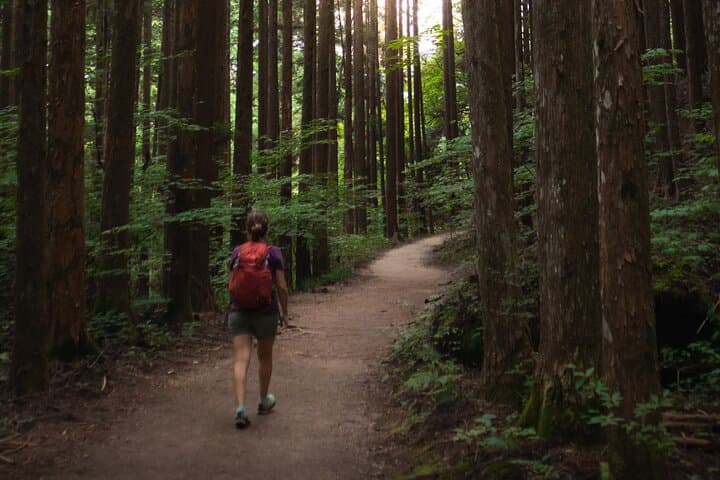

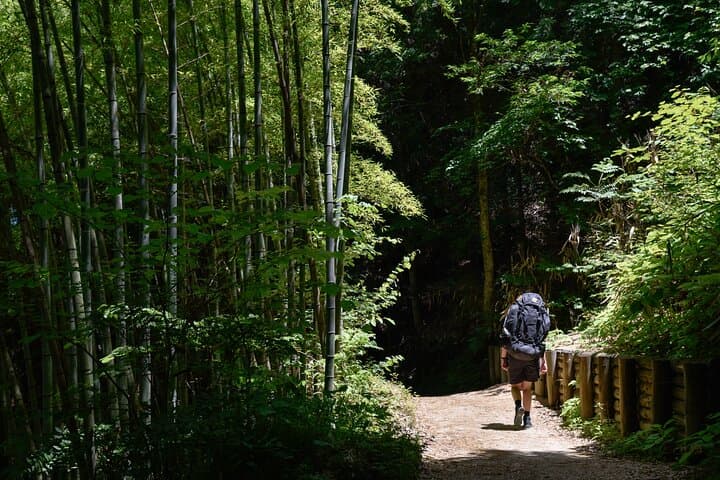
You step off the small train and the air shifts—cool, cedar-scented, the kind that clears the city out of your lungs. Cobbled lanes rise and fall between wooden inns; a narrow trail threads the forested ridge that once linked Edo to Kyoto. The walk from Magome to Tsumago is compact but rich: 8 kilometres of packed earth and stone, gentle climbs, and viewpoints that open on the Kiso Valley.
You step off the small train and the air shifts—cool, cedar-scented, the kind that clears the city out of your lungs. Cobbled lanes rise and fall between wooden inns; a narrow trail threads the forested ridge that once linked Edo to Kyoto. The walk from Magome to Tsumago is compact but rich: 8 kilometres of packed earth and stone, gentle climbs, and viewpoints that open on the Kiso Valley.
These two villages are living pieces of Edo-period infrastructure. The Nakasendo was a major inland route and both post towns preserve architecture and customs—Magome’s slope-driven promenade offers valley outlooks, while Tsumago’s restored Honjin and unpaved main street recall the waystations that served merchants and samurai.
Geologically the route follows foothills of the Central Japanese Alps, with granite outcrops and well-drained forest soils; cultural touches—tea houses, old mile markers, carved signposts—mark human layers atop that landscape.
Practically: expect 2–3 hours of walking time at a steady pace, longer if you linger in museums or shops. Trails are well-maintained but uneven; good hiking shoes and a daypack are recommended. Public buses and local taxis connect villages and the nearby train stations, and guides will coordinate transport costs in cash.
Timing matters—late spring and fall bring the best weather and colors; winter hiking is restricted for safety. Bring water, respect historic structures, and plan for simple mountain weather: sun, sudden rain, and cool evenings. This is a short, concentrated hike that rewards attention to small details—lantern-lit streets, moss on stones, and the steady presence of the forest pushing you forward.