THE ADVENTURE COLLECTIVE® · Independent discovery and booking for outdoor travel

Walk the cliffline between Loubressac and Autoire to see an English-built castle carved into rock and the Autoire waterfall. This three-hour guided hike pairs medieval history with limestone vistas and short, stony trails.
Walk the cliffline between Loubressac and Autoire to see an English-built castle carved into rock and the Autoire waterfall. This three-hour guided hike pairs medieval history with limestone vistas and short, stony trails.
Morning light cuts across limestone cliffs as you step out of the village square in Loubressac. Narrow streets open onto a plateau where oak and chestnut woods crowd the edge and the Dordogne valley drops away—views that make each turn feel earned. The guide leads you toward the cliffline, and the trail tightens into a sequence of switchbacks and stony paths that reward steady footing with long, vaulted vistas over cultivated slopes below.
Verified experiences and guided adventures in the surrounding area.
Operated by Mélissa AYROLES · Loubressac, Lot
Morning light cuts across limestone cliffs as you step out of the village square in Loubressac. Narrow streets open onto a plateau where oak and chestnut woods crowd the edge and the Dordogne valley drops away—views that make each turn feel earned. The guide leads you toward the cliffline, and the trail tightens into a sequence of switchbacks and stony paths that reward steady footing with long, vaulted vistas over cultivated slopes below.
These villages are small chapters of medieval southwest France. Loubressac perches high above the valley; Autoire clusters beneath a cliff face that holds the ruins of an English-built castle erected before the Hundred Years’ War, a marker of old border politics between regional lords. Geologically, the route runs along Jurassic limestone; weathered cliffs, karst features and a hidden spring feed the narrow gorge where the Autoire waterfall spills—an abrupt vertical ribbon that still draws local painters and photographers.
Culture here is quiet and local: farmed terraces, stone houses with slate roofs, and village cafés that open late morning. Expect uneven terrain, short steep sections, and multiple lookout points rather than long ascents—this is a hike of observation as much as of mileage.
Practical notes: the guided outing runs about three hours, requires moderate fitness, and is best earlier in the day for light and cooler temperatures. Wear grippy shoes, bring water and windproof layers, and give space to narrow cliffside paths. Stay on marked trails to protect fragile karst and pastoral fields while you enjoy one of the Dordogne valley’s most photogenic corridors.
moderate.
3 hours.
Suitable for hikers with a moderate level of fitness who can handle short steep sections and uneven ground.
The guided visit runs about three hours total with frequent stops for viewpoints and history—expect a steady walking pace with short pauses.
Children over 8 may participate, but narrow lookout points and exposed cliff sections mean close supervision is required.
Many departures are from Rocamadour or a nearby meeting point; consult your booking confirmation for exact pickup or meeting location.
No technical climbing is required, but there are short steep and uneven trail sections—good footwear and moderate fitness are recommended.
Autoire’s castle was built before the Hundred Years’ War and marks an old border between regional lordships; the villages retain medieval street patterns and stone architecture.
The limestone cliffs and grazing terraces are sensitive to erosion—stay on trails, avoid trampling pasture, and pack out waste to minimize impact.
Mélissa AYROLES operates guided outdoor trips and adventures with an emphasis on safety, stewardship, and memorable experiences.


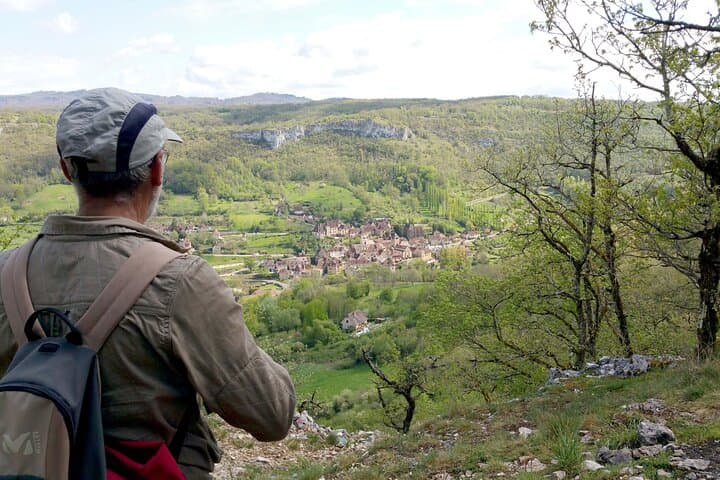

Morning light cuts across limestone cliffs as you step out of the village square in Loubressac. Narrow streets open onto a plateau where oak and chestnut woods crowd the edge and the Dordogne valley drops away—views that make each turn feel earned. The guide leads you toward the cliffline, and the trail tightens into a sequence of switchbacks and stony paths that reward steady footing with long, vaulted vistas over cultivated slopes below.
Morning light cuts across limestone cliffs as you step out of the village square in Loubressac. Narrow streets open onto a plateau where oak and chestnut woods crowd the edge and the Dordogne valley drops away—views that make each turn feel earned. The guide leads you toward the cliffline, and the trail tightens into a sequence of switchbacks and stony paths that reward steady footing with long, vaulted vistas over cultivated slopes below.
These villages are small chapters of medieval southwest France. Loubressac perches high above the valley; Autoire clusters beneath a cliff face that holds the ruins of an English-built castle erected before the Hundred Years’ War, a marker of old border politics between regional lords. Geologically, the route runs along Jurassic limestone; weathered cliffs, karst features and a hidden spring feed the narrow gorge where the Autoire waterfall spills—an abrupt vertical ribbon that still draws local painters and photographers.
Culture here is quiet and local: farmed terraces, stone houses with slate roofs, and village cafés that open late morning. Expect uneven terrain, short steep sections, and multiple lookout points rather than long ascents—this is a hike of observation as much as of mileage.
Practical notes: the guided outing runs about three hours, requires moderate fitness, and is best earlier in the day for light and cooler temperatures. Wear grippy shoes, bring water and windproof layers, and give space to narrow cliffside paths. Stay on marked trails to protect fragile karst and pastoral fields while you enjoy one of the Dordogne valley’s most photogenic corridors.