THE ADVENTURE COLLECTIVE® · Independent discovery and booking for outdoor travel

Experience Jinshanling’s rugged Ming-era watchtowers on a private day trip from Beijing. Expect 6.6 km of uneven stone, dramatic ridgelines, and a 5–6 hour round trip including drive time.
Experience Jinshanling’s rugged Ming-era watchtowers on a private day trip from Beijing. Expect 6.6 km of uneven stone, dramatic ridgelines, and a 5–6 hour round trip including drive time.
You step out of the van onto a sloping grassy shoulder and the wall rises before you — stone ribs cutting across ridgelines, watchtowers punctuating the skyline like old sentries. Wind moves along the parapet with intent, pushing you toward the first crenel as if testing your pace.
Verified experiences and guided adventures in the surrounding area.
Operated by happychinatours · Miyun, Beijing
You step out of the van onto a sloping grassy shoulder and the wall rises before you — stone ribs cutting across ridgelines, watchtowers punctuating the skyline like old sentries. Wind moves along the parapet with intent, pushing you toward the first crenel as if testing your pace.
Jinshanling occupies the seam between Beijing’s Miyun County and Hebei’s Luanping. Built and rebuilt across Ming dynasty campaigns, this 10.5 km stretch is known for its concentration of watchtowers — here the architecture reads as military grammar: barrier walls, semicircular terraces and carefully placed shooting holes. Geologically, the wall rides a series of granite and schist ridges; expect uneven stone steps and loose rubble where restoration gives way to original, dilapidated sections.
Local culture still shows in farmer plots below and the inscriptions on bricks that mark regiments and dates. Photographers prize Jinshanling for long sightlines and dramatic light; hikers come for rugged silhouettes rather than perfectly restored promenades.
Practical guidance: most itineraries are a private day from Beijing — roughly 2.5 hours each way (about 150 km). The advertised hike covers roughly 6.6 km between towers and can take 2–4 hours depending on stops and fitness. Entrance and private transport are commonly included; lunch usually is not. Bring sturdy footwear for irregular stone steps, 1–2 liters of water, sun protection, and layered clothing for fast-changing mountain air. Note health restrictions for those with serious heart or spinal conditions. Aim for early starts to avoid midday heat and to catch the best light on the towers.
moderate.
8–10 hours (including ~5 hours driving).
Moderate fitness required: ability to walk uneven stone steps and short steep sections for 2–4 hours.
Most guided hikes cover about 6.6 km and take roughly 2–4 hours depending on pace and stops.
Private tours typically include round-trip transport by air-conditioned vehicle; confirm pickup location and timing with your operator.
Many private day tours include entrance tickets, but check your booking confirmation to be sure.
The route includes steep, irregular stone steps and some dilapidated sections; it’s not recommended for those with limited mobility or serious spine/heart conditions.
Jinshanling’s current form dates mainly to Ming dynasty rebuilds; its dense cluster of towers reflect its strategic role guarding approaches to Beijing.
Visitors should stay on established routes to protect eroding masonry and local vegetation; carry out all trash and avoid climbing on fragile restored sections.
happychinatours operates guided outdoor trips and adventures with an emphasis on safety, stewardship, and memorable experiences.
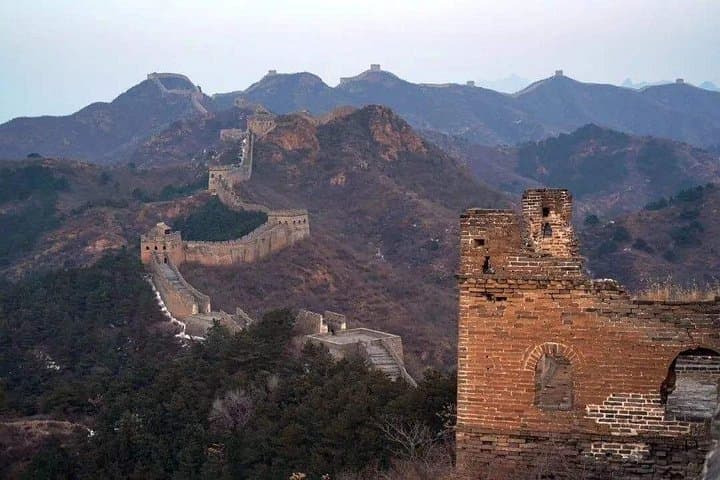
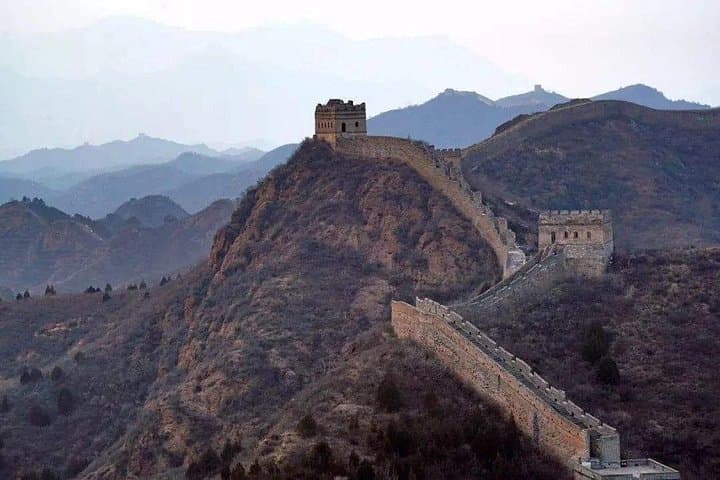


You step out of the van onto a sloping grassy shoulder and the wall rises before you — stone ribs cutting across ridgelines, watchtowers punctuating the skyline like old sentries. Wind moves along the parapet with intent, pushing you toward the first crenel as if testing your pace.
You step out of the van onto a sloping grassy shoulder and the wall rises before you — stone ribs cutting across ridgelines, watchtowers punctuating the skyline like old sentries. Wind moves along the parapet with intent, pushing you toward the first crenel as if testing your pace.
Jinshanling occupies the seam between Beijing’s Miyun County and Hebei’s Luanping. Built and rebuilt across Ming dynasty campaigns, this 10.5 km stretch is known for its concentration of watchtowers — here the architecture reads as military grammar: barrier walls, semicircular terraces and carefully placed shooting holes. Geologically, the wall rides a series of granite and schist ridges; expect uneven stone steps and loose rubble where restoration gives way to original, dilapidated sections.
Local culture still shows in farmer plots below and the inscriptions on bricks that mark regiments and dates. Photographers prize Jinshanling for long sightlines and dramatic light; hikers come for rugged silhouettes rather than perfectly restored promenades.
Practical guidance: most itineraries are a private day from Beijing — roughly 2.5 hours each way (about 150 km). The advertised hike covers roughly 6.6 km between towers and can take 2–4 hours depending on stops and fitness. Entrance and private transport are commonly included; lunch usually is not. Bring sturdy footwear for irregular stone steps, 1–2 liters of water, sun protection, and layered clothing for fast-changing mountain air. Note health restrictions for those with serious heart or spinal conditions. Aim for early starts to avoid midday heat and to catch the best light on the towers.