
Hike Jebel Al Hash in Wadi Rum: Bedouin Tea, Ancient Caves & Sunset at Um Sabatah
Climb Jebel Al Hash in Wadi Rum for sweeping desert panoramas, Bedouin tea on the summit and a traditional lunch beside ancient caves. This full-day hike mixes scrambling, cultural stops and a sunset at Um Sabatah.
An Adventure In Aqaba.
Climb Jebel Al Hash in Wadi Rum for sweeping desert panoramas, Bedouin tea on the summit and a traditional lunch beside ancient caves. This full-day hike mixes scrambling, cultural stops and a sunset at Um Sabatah.
Read the full experience
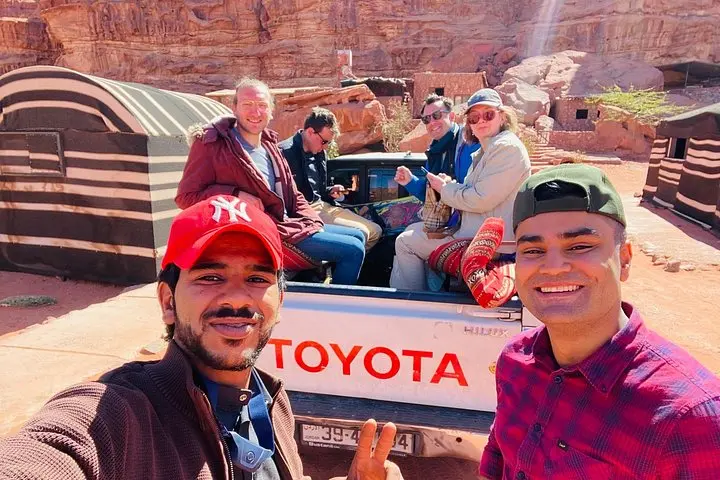
You step out of the jeep onto hard-packed sand and the desert closes around you—rock ribs rising like folded pages, wind polishing the sandstone. A Bedouin guide counts the group and leads you toward a jagged spine: Jebel Al Hash (about 1,700 m above local valley floors), a mountain that sits above Wadi Sabet near the Saudi border.
You step out of the jeep onto hard-packed sand and the desert closes around you—rock ribs rising like folded pages, wind polishing the sandstone. A Bedouin guide counts the group and leads you toward a jagged spine: Jebel Al Hash (about 1,700 m above local valley floors), a mountain that sits above Wadi Sabet near the Saudi border.
This route threads natural history and human story. The cliffs are Cambrian sandstone carved by millennia of wind; scattered fossils and resilient desert plants hint at older seas. Petroglyphs and stone-built caves show Bedouin survival strategies, while simple dams funnel precious runoff into subsurface stores. Guides often point out local tales and Lawrence of Arabia-era traces as you climb.
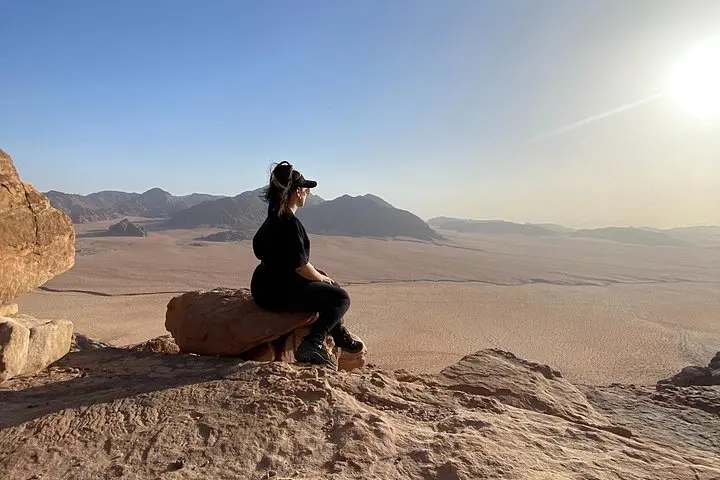
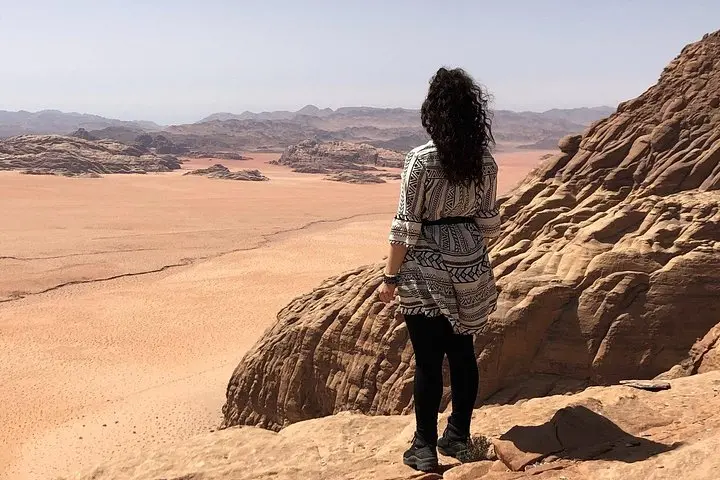
Expect a mix of steep hiking and short sections of scrambling—roughly 2–3 hours up at a steady pace, with panoramic rewards on the ridge: a quiet valley, distant dunes and the red-white contrast of Wadi Rum. At the summit, Bedouin tea breaks the exertion; the descent brings an open-air, fire-cooked lunch. Late in the day the group moves to Um Sabatah for a northwest-facing sunset—one of the cleanest, most vivid desert dusks in Jordan.
Practical notes: bring 2–3 liters of water, sun protection, and sturdy boots with ankle support. The route is exposed in places; people with serious back problems should avoid it. Options exist to add an overnight in a Bedouin camp or sleep in a cave to extend the experience.
Frequently asked questions
The hike includes sustained uphill sections and short scrambling; most groups complete the ascent in 2–3 hours with a moderate fitness level.
Transfers to and from Wadi Rum Village are included; meet at the Rest House in Wadi Rum Village between 09:30–10:00.
Yes—there is an option to extend the trip with a night in a Bedouin camp or sleeping in a cave under the stars.
Travelers should have moderate fitness; the tour is not recommended for those with serious spinal injuries and infants must sit on laps.
About This Experience
Wadi Rum Desert Dreams operates guided outdoor trips and adventures with an emphasis on safety, stewardship, and memorable experiences.
Adventure tips
Recommended gear
- Hiking boots (sturdy, ankle support): Protects feet and provides traction on loose sandstone and during short scrambles.
- 2–3 liters water reservoir or bottles: Desert heat and low humidity make regular hydration critical.
- Wide-brim hat & high-SPF sunscreen: Essential for prolonged sun exposure on exposed ridges and lunches in the open.
- Light wind shell and midlayer: Shields against wind and cool temperatures at higher elevations and after sunset.
Photos of the experience
Related adventures & guides
Read the full experience
You step out of the jeep onto hard-packed sand and the desert closes around you—rock ribs rising like folded pages, wind polishing the sandstone. A Bedouin guide counts the group and leads you toward a jagged spine: Jebel Al Hash (about 1,700 m above local valley floors), a mountain that sits above Wadi Sabet near the Saudi border.
You step out of the jeep onto hard-packed sand and the desert closes around you—rock ribs rising like folded pages, wind polishing the sandstone. A Bedouin guide counts the group and leads you toward a jagged spine: Jebel Al Hash (about 1,700 m above local valley floors), a mountain that sits above Wadi Sabet near the Saudi border.
This route threads natural history and human story. The cliffs are Cambrian sandstone carved by millennia of wind; scattered fossils and resilient desert plants hint at older seas. Petroglyphs and stone-built caves show Bedouin survival strategies, while simple dams funnel precious runoff into subsurface stores. Guides often point out local tales and Lawrence of Arabia-era traces as you climb.
Expect a mix of steep hiking and short sections of scrambling—roughly 2–3 hours up at a steady pace, with panoramic rewards on the ridge: a quiet valley, distant dunes and the red-white contrast of Wadi Rum. At the summit, Bedouin tea breaks the exertion; the descent brings an open-air, fire-cooked lunch. Late in the day the group moves to Um Sabatah for a northwest-facing sunset—one of the cleanest, most vivid desert dusks in Jordan.
Practical notes: bring 2–3 liters of water, sun protection, and sturdy boots with ankle support. The route is exposed in places; people with serious back problems should avoid it. Options exist to add an overnight in a Bedouin camp or sleep in a cave to extend the experience.
Make a day of it nearby.
Verified experiences and guided adventures in the surrounding area.