THE ADVENTURE COLLECTIVE® · Independent discovery and booking for outdoor travel

Stand between two Mexican giants on a high-altitude day hike from Puebla. Choose one of three routes—sandy ridgelines, grassy springs, or a demanding high traverse—and experience sweeping volcano views with a certified guide.
Stand between two Mexican giants on a high-altitude day hike from Puebla. Choose one of three routes—sandy ridgelines, grassy springs, or a demanding high traverse—and experience sweeping volcano views with a certified guide.
Dawn arrives cold and clear at Paso de Cortés, the saddle between two of Mexico’s most famous giants. You step out of the minivan and the air pinches—thin and sharp at roughly 3,600 meters—while two volcanoes dominate the horizon: the sleeping slopes of Iztaccíhuatl to the northwest and the smoking cone of Popocatépetl to the southeast. The guide pulls a map from a pack, points to three routes, and the hike begins: a high-altitude day where geography and legend press close.
Verified experiences and guided adventures in the surrounding area.
Operated by Qué Loco! Tours · Paso de Cortés, Puebla
Dawn arrives cold and clear at Paso de Cortés, the saddle between two of Mexico’s most famous giants. You step out of the minivan and the air pinches—thin and sharp at roughly 3,600 meters—while two volcanoes dominate the horizon: the sleeping slopes of Iztaccíhuatl to the northwest and the smoking cone of Popocatépetl to the southeast. The guide pulls a map from a pack, points to three routes, and the hike begins: a high-altitude day where geography and legend press close.
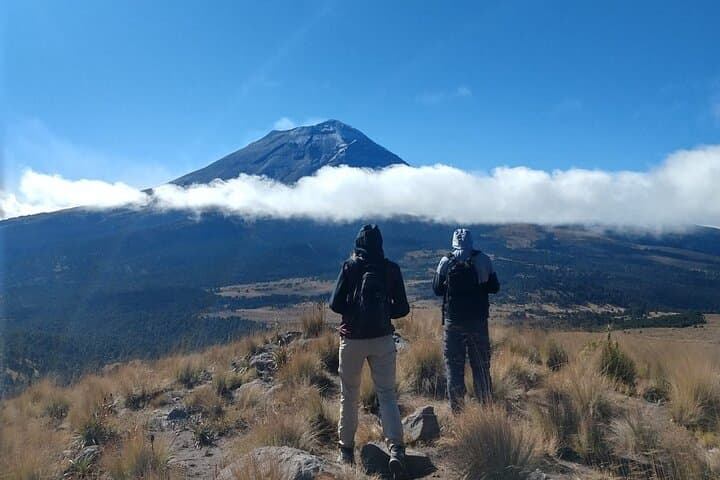
This corridor has been a travel route for millennia. Indigenous Nahua stories give the mountains familiar faces—Iztaccíhuatl, the “white woman,” and Popocatépetl, the “smoking mountain.” Geologically the pair are young stratovolcanoes built by repeated explosive eruptions that left steep ridges, volcanic sand, and stony scree; the landscape shifts from pine-and-fir stands to windswept alpine grass and pumice underfoot.
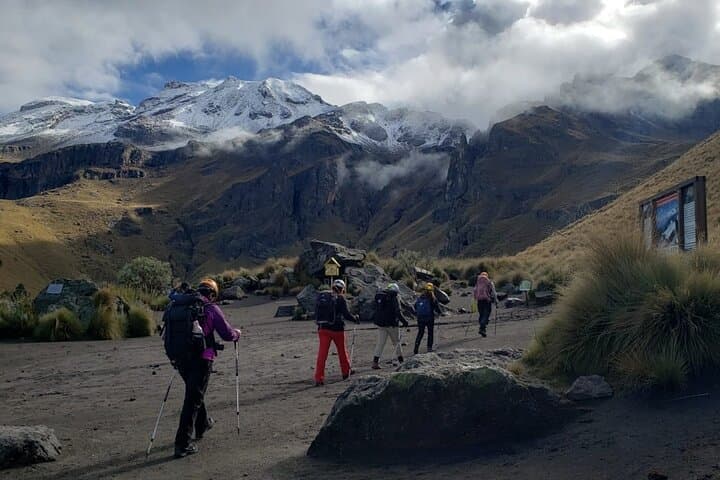
The operator runs three options to suit fitness and appetite for exposure. Level 1 is a marked sandy trail that starts at ~3,600 m and climbs to ~3,980 m across about 8–9 km total—4 km of steady climbs and 4 km of descent, ideal for acclimated hikers wanting dramatic viewpoints without technical terrain. Level 2 extends to 14–15 km and threads springs, grasslands, and less-defined trails with a larger overall drop—expect stretches of loose soil and occasional brush. Level 3 concentrates effort between 4,000 and 4,500 m on sand and stone for a short but demanding 7 km with panoramic exposures and thinner air.
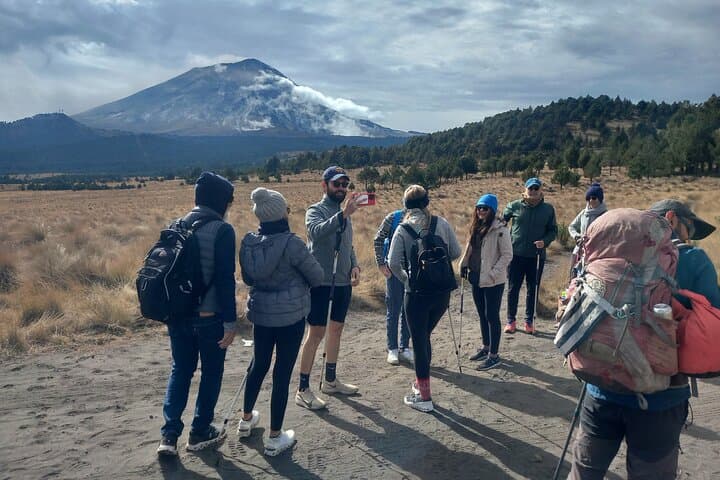
A certified guide accompanies each group, explaining the high-altitude flora—compact pines, resilient grasses—and calling out signs of the rare teporingo, the volcano rabbit, when luck allows. Because Popocatépetl remains active, the park monitors access; the guide will route you to safe gates and carry safety equipment included with the tour.
Practicalities are plain: round-trip transport from Puebla or Cholula is included, pick-up can be arranged from hotels or addresses, and the full outing runs about 8–9 hours. At these elevations, pace matters more than speed—short breaks, steady hydration, and layering for wind and sun will keep the day enjoyable.
Plan for changing weather, carry sun protection and warm layers, and leave no trace—fragile alpine soils recover slowly. If you want a compact, high-country day that pairs geology with clear, cinematic views of two living volcanoes, this trip delivers a raw, straightforward mountain experience just a short drive from Puebla.
challenging.
8–9 hours.
Good cardiovascular fitness and prior high-altitude trekking experience recommended; ability to hike on loose sand and rocky slopes for several hours.
All routes take place between ~3,600 and 4,500 m; even short walks feel harder—expect slower pace and frequent rests if you’re not acclimated.
The park monitors volcanic activity and the guide will adjust routes and access; if authorities restrict zones the operator will follow safety directives.
Level 1 is suitable for fit beginners acclimated to moderate altitude; Levels 2 and 3 require stronger fitness and comfort on loose or uneven terrain.
Round-trip transport from Puebla/Cholula, entry to Izta-Popo National Park, safety equipment, and a certified professional guide are included.
Children may join Level 1 if physically capable of long uphill sections and with parental supervision; confirm ageband requirements with the operator when booking.
Pack a compact, high-energy lunch—sandwiches, nuts, bars—and electrolyte drinks; the guide may carry extra water and basic first aid.
Paso de Cortés has long been a corridor between valleys and featured in local Nahua oral traditions; the volcanoes’ names and legends reflect regional cultural history.
Popocatépetl’s activity and fragile alpine soils necessitate strict trail use and carry-in/carry-out policies; stay on established paths to protect endemic species.
Qué Loco! Tours operates guided outdoor trips and adventures with an emphasis on safety, stewardship, and memorable experiences.
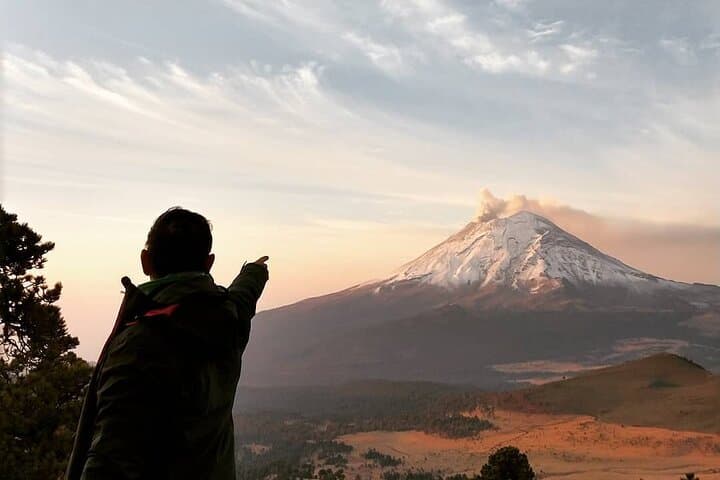
Dawn arrives cold and clear at Paso de Cortés, the saddle between two of Mexico’s most famous giants. You step out of the minivan and the air pinches—thin and sharp at roughly 3,600 meters—while two volcanoes dominate the horizon: the sleeping slopes of Iztaccíhuatl to the northwest and the smoking cone of Popocatépetl to the southeast. The guide pulls a map from a pack, points to three routes, and the hike begins: a high-altitude day where geography and legend press close.
Dawn arrives cold and clear at Paso de Cortés, the saddle between two of Mexico’s most famous giants. You step out of the minivan and the air pinches—thin and sharp at roughly 3,600 meters—while two volcanoes dominate the horizon: the sleeping slopes of Iztaccíhuatl to the northwest and the smoking cone of Popocatépetl to the southeast. The guide pulls a map from a pack, points to three routes, and the hike begins: a high-altitude day where geography and legend press close.
This corridor has been a travel route for millennia. Indigenous Nahua stories give the mountains familiar faces—Iztaccíhuatl, the “white woman,” and Popocatépetl, the “smoking mountain.” Geologically the pair are young stratovolcanoes built by repeated explosive eruptions that left steep ridges, volcanic sand, and stony scree; the landscape shifts from pine-and-fir stands to windswept alpine grass and pumice underfoot.
The operator runs three options to suit fitness and appetite for exposure. Level 1 is a marked sandy trail that starts at ~3,600 m and climbs to ~3,980 m across about 8–9 km total—4 km of steady climbs and 4 km of descent, ideal for acclimated hikers wanting dramatic viewpoints without technical terrain. Level 2 extends to 14–15 km and threads springs, grasslands, and less-defined trails with a larger overall drop—expect stretches of loose soil and occasional brush. Level 3 concentrates effort between 4,000 and 4,500 m on sand and stone for a short but demanding 7 km with panoramic exposures and thinner air.
A certified guide accompanies each group, explaining the high-altitude flora—compact pines, resilient grasses—and calling out signs of the rare teporingo, the volcano rabbit, when luck allows. Because Popocatépetl remains active, the park monitors access; the guide will route you to safe gates and carry safety equipment included with the tour.
Practicalities are plain: round-trip transport from Puebla or Cholula is included, pick-up can be arranged from hotels or addresses, and the full outing runs about 8–9 hours. At these elevations, pace matters more than speed—short breaks, steady hydration, and layering for wind and sun will keep the day enjoyable.
Plan for changing weather, carry sun protection and warm layers, and leave no trace—fragile alpine soils recover slowly. If you want a compact, high-country day that pairs geology with clear, cinematic views of two living volcanoes, this trip delivers a raw, straightforward mountain experience just a short drive from Puebla.