THE ADVENTURE COLLECTIVE® · Independent discovery and booking for outdoor travel

Stand at the rim of Europe's most active volcano on a guided ascent to Mount Etna’s central crater. This 5–6 hour trek blends volcanic geology, brisk altitude, and sweeping Sicilian views.
Stand at the rim of Europe's most active volcano on a guided ascent to Mount Etna’s central crater. This 5–6 hour trek blends volcanic geology, brisk altitude, and sweeping Sicilian views.
A wind-swept ridge opens beneath you; black scoria crunches underfoot and a sulfur-scented breath lifts from the ground. From the south and north flanks you climb toward Etna’s central crater, the jagged throat of Europe’s most active volcano. Steam threads from fumaroles and the skyline is framed by recent lava flows that still read like a geology lesson in motion.
Verified experiences and guided adventures in the surrounding area.
Operated by Etna Touring · Nicolosi, Sicily
A wind-swept ridge opens beneath you; black scoria crunches underfoot and a sulfur-scented breath lifts from the ground. From the south and north flanks you climb toward Etna’s central crater, the jagged throat of Europe’s most active volcano. Steam threads from fumaroles and the skyline is framed by recent lava flows that still read like a geology lesson in motion.
Etna has been reshaped by eruptions for millennia—Greek and Roman writers noted its fires, and successive lava fields record eruptions from the 1600s through the 21st century. The volcano’s layered basalt and ash teach the history of eruptions in plain sight; terraces of hardened lava alternate with tephra, and parasitic cones pock the flanks. Local culture revolves around resilient agriculture—olive and citrus orchards lower on the mountain thrive in volcanic soils—while mountain guides maintain strict safety practices around fumaroles and unstable ground.
Expect a 5–6 hour excursion with varied terrain: groomed service tracks, loose volcanic scree and short steeper pitches near the crater rim. Altitude effects are real at 3,345 m—breathing will feel harder and weather changes fast. The guide provides a jacket, helmet, poles and advice; travelers should bring layered clothing, sturdy boots, water and sun protection. Timing matters: morning departures reduce wind and cloud risk, and operators reserve the right to alter routes for safety. For hikers who like exposed high-country with stark volcanic character, the central crater offers raw, educational terrain and dramatic panoramas of Sicily and the Ionian Sea.
challenging.
5–6 hours.
Suitable for those with regular hiking experience and good cardiovascular fitness; be prepared for high-elevation breathing strain.
The route is physically demanding due to elevation and loose terrain; expect 5–6 hours with short steep sections—moderate to challenging fitness is recommended.
Guides typically provide helmet, trekking poles and a jacket; bring your own boots, layers, water and sun protection.
Children 8+ may join if accustomed to walking; the guide assesses suitability and safety for younger participants.
Operators may cancel or reroute the excursion for safety; refunds or rescheduling are offered per the cancellation policy.
Etna’s eruptions have been documented since antiquity; repeated lava flows and ash layers have influenced local agriculture and settlement patterns for centuries.
Stay on marked paths to protect fragile lichen and prevent erosion; volcanic soils are regenerating but trails can be damaged by off-route travel.
Etna Touring operates guided outdoor trips and adventures with an emphasis on safety, stewardship, and memorable experiences.
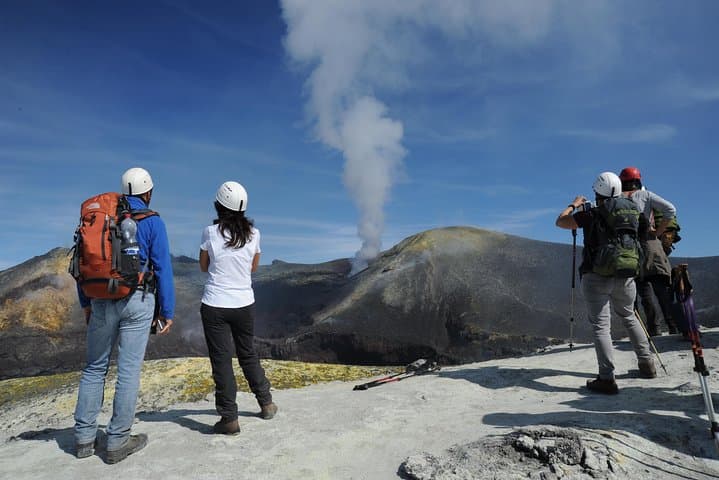
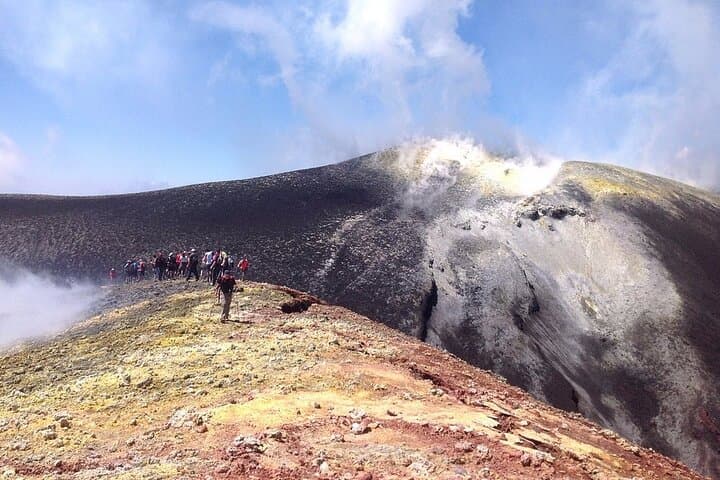
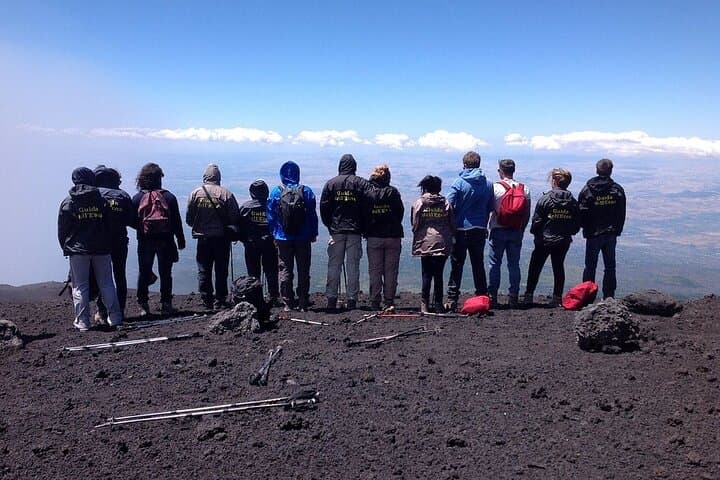
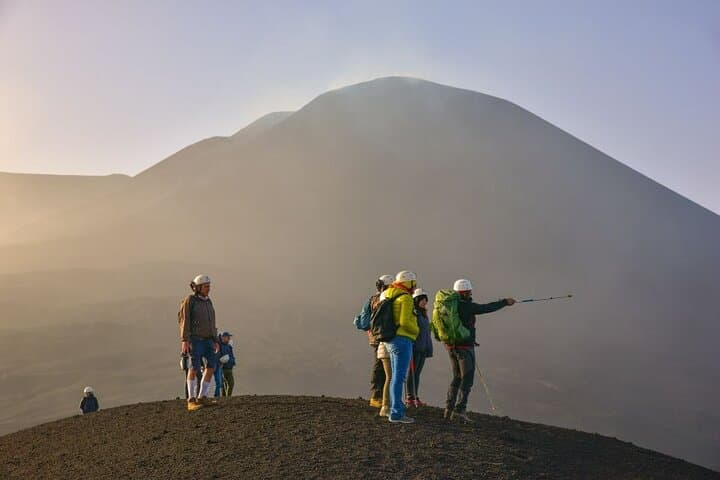
A wind-swept ridge opens beneath you; black scoria crunches underfoot and a sulfur-scented breath lifts from the ground. From the south and north flanks you climb toward Etna’s central crater, the jagged throat of Europe’s most active volcano. Steam threads from fumaroles and the skyline is framed by recent lava flows that still read like a geology lesson in motion.
A wind-swept ridge opens beneath you; black scoria crunches underfoot and a sulfur-scented breath lifts from the ground. From the south and north flanks you climb toward Etna’s central crater, the jagged throat of Europe’s most active volcano. Steam threads from fumaroles and the skyline is framed by recent lava flows that still read like a geology lesson in motion.
Etna has been reshaped by eruptions for millennia—Greek and Roman writers noted its fires, and successive lava fields record eruptions from the 1600s through the 21st century. The volcano’s layered basalt and ash teach the history of eruptions in plain sight; terraces of hardened lava alternate with tephra, and parasitic cones pock the flanks. Local culture revolves around resilient agriculture—olive and citrus orchards lower on the mountain thrive in volcanic soils—while mountain guides maintain strict safety practices around fumaroles and unstable ground.
Expect a 5–6 hour excursion with varied terrain: groomed service tracks, loose volcanic scree and short steeper pitches near the crater rim. Altitude effects are real at 3,345 m—breathing will feel harder and weather changes fast. The guide provides a jacket, helmet, poles and advice; travelers should bring layered clothing, sturdy boots, water and sun protection. Timing matters: morning departures reduce wind and cloud risk, and operators reserve the right to alter routes for safety. For hikers who like exposed high-country with stark volcanic character, the central crater offers raw, educational terrain and dramatic panoramas of Sicily and the Ionian Sea.