THE ADVENTURE COLLECTIVE® · Independent discovery and booking for outdoor travel

A single day that folds volcanic history, coastal bird colonies and fresh island cuisine into an accessible adventure. Hike the rim of Eldfell, visit the Eldheimar museum, and watch puffins swarm the cliffs—then ride the ferry back to Reykjavík with an armful of memories.
A single day that folds volcanic history, coastal bird colonies and fresh island cuisine into an accessible adventure. Hike the rim of Eldfell, visit the Eldheimar museum, and watch puffins swarm the cliffs—then ride the ferry back to Reykjavík with an armful of memories.
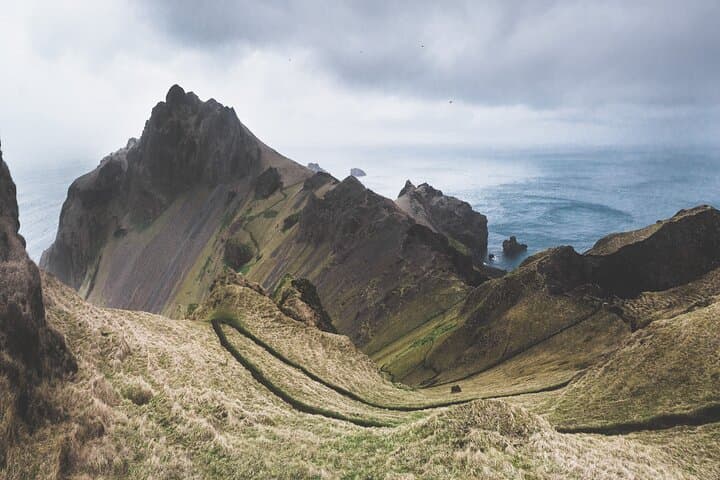
You step off the ferry with salt in your hair and the island already working on you: low, wind-smeared farms, black lava field that still looks angry, and a round, scarred cone rising above the town. Eldfell—the volcano that erupted in 1973—holds the day’s thrust. The climb to its rim is short but physical: a scramble across loose scoria rewarded by a 360-degree sweep where ocean, new land and the small, rebuilt town of Heimaey press close.
Verified experiences and guided adventures in the surrounding area.
Operated by Hidden Iceland · Heimaey, Vestmannaeyjar
You step off the ferry with salt in your hair and the island already working on you: low, wind-smeared farms, black lava field that still looks angry, and a round, scarred cone rising above the town. Eldfell—the volcano that erupted in 1973—holds the day’s thrust. The climb to its rim is short but physical: a scramble across loose scoria rewarded by a 360-degree sweep where ocean, new land and the small, rebuilt town of Heimaey press close.
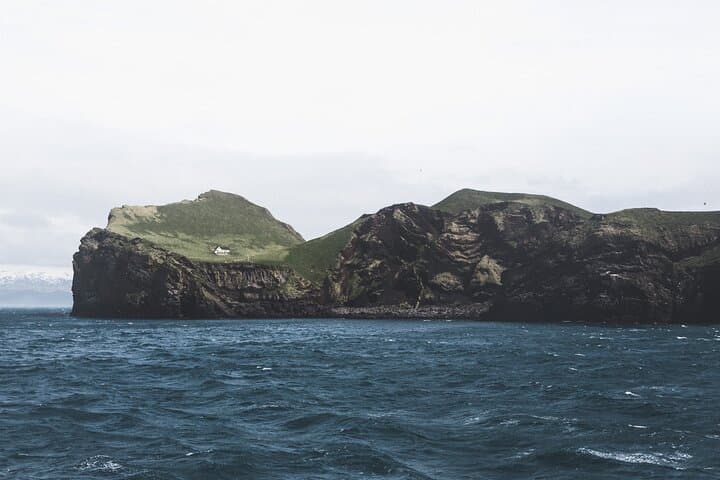
The Westman Islands are young geology in plain view. Surtsey, born in 1963, reminded the world that Iceland’s coast is continually remade by eruptions; Eldfell’s 1973 blast forced a full evacuation and later expansion of Heimaey with lava flows that became new neighborhoods. The interactive Eldheimar museum stitches local testimony into the science—walk through a house frozen in time and imagine the day the sea and fire rearranged lives.
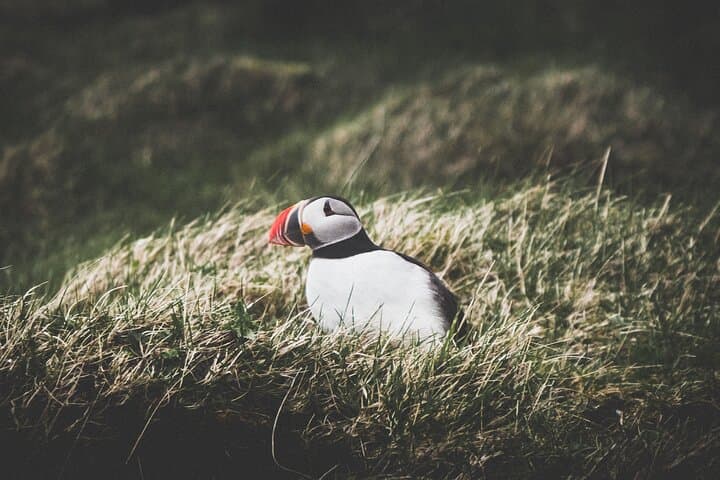
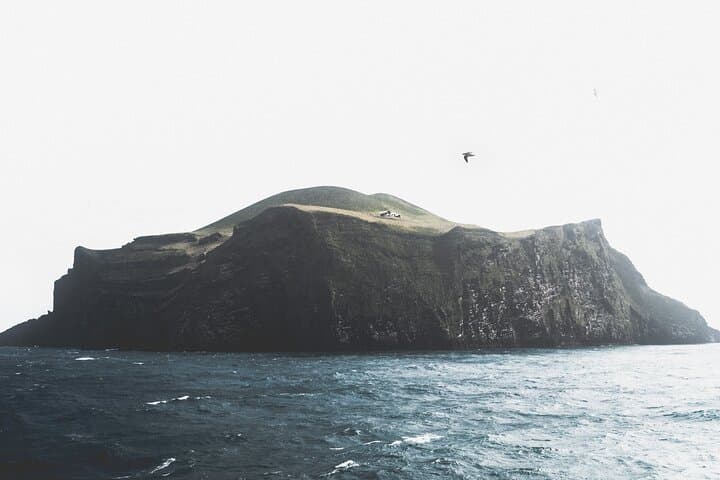
Culture here remains maritime and matter-of-fact: the restaurants focus on the catch, and a lunch at a place like GOTT showcases simple, fresh island cooking—fish, kelp-enhanced sides and Icelandic rye. Outside town the southern cliffs shift the mood: sheer drop-offs used by millions of seabirds as a nursery in summer. In June–August puffins stack the grassy slopes by the dozen; in shoulder seasons the island becomes a study in wind, waves and silence.
Practically, the tour is a long but manageable day. Pickup from Reykjavík early in the morning, a 35-minute ferry crossing, and time on Heimaey for lunch, the Eldheimar museum, a guided walk along the south cliffs and the Eldfell ascent. Expect 10–12 hours from door-to-door. The hike to Eldfell’s rim gains roughly 200–250 meters (about 650–820 feet) over a steep 1–1.5 km stretch with loose volcanic rock underfoot—sturdy footwear and poles help.
Photography and wildlife viewing reward patience: bring binoculars, keep distance from nesting birds, and listen for the shrill warning calls of terns. Weather changes fast—wind, drizzle and sun can alternate in an hour—so layering and waterproof outerwear are not optional. Guides handle logistics, ferry tickets and museum entry; your job is to show up ready to walk, look and learn.
For travelers who like geology served with local food and birdsong, this private day tour compresses Iceland’s elemental forces into a single, memorable loop—where lava created landscape, people rebuilt a town, and millions of puffins keep coming back each summer.
moderate.
10–12 hours.
Comfortable with multiple short hikes and standing for photography; able to manage steep, uneven terrain for up to 1–2 hours.
The ferry ride is about 35 minutes each way; crossing times can be affected by weather and sea conditions.
It’s relatively short (roughly 1–1.5 km one-way) with a 200–250 m ascent over loose volcanic material—moderate fitness and good footwear are recommended.
Puffins nest on the cliffs from late April through August, with the highest visibility and activity in June and July.
Yes—lunch at a local restaurant and admission to the Eldheimar museum are included in the tour price.
The tour is family-friendly and suitable for most fitness levels, but the Eldfell climb may be challenging for those with limited mobility; contact the operator to discuss accommodations.
For a full refund, cancel at least 24 hours before departure; the operator may cancel if weather makes the ferry or activities unsafe and will refund accordingly.
Heimaey was largely evacuated within hours during the 1973 Eldfell eruption; later, residents engineered efforts to cool flowing lava and saved much of the harbor and town.
Puffin colonies are sensitive to disturbance—stick to paths and the guides’ instructions; local tourism supports conservation and research efforts.
Hidden Iceland operates guided outdoor trips and adventures with an emphasis on safety, stewardship, and memorable experiences.
You step off the ferry with salt in your hair and the island already working on you: low, wind-smeared farms, black lava field that still looks angry, and a round, scarred cone rising above the town. Eldfell—the volcano that erupted in 1973—holds the day’s thrust. The climb to its rim is short but physical: a scramble across loose scoria rewarded by a 360-degree sweep where ocean, new land and the small, rebuilt town of Heimaey press close.
You step off the ferry with salt in your hair and the island already working on you: low, wind-smeared farms, black lava field that still looks angry, and a round, scarred cone rising above the town. Eldfell—the volcano that erupted in 1973—holds the day’s thrust. The climb to its rim is short but physical: a scramble across loose scoria rewarded by a 360-degree sweep where ocean, new land and the small, rebuilt town of Heimaey press close.
The Westman Islands are young geology in plain view. Surtsey, born in 1963, reminded the world that Iceland’s coast is continually remade by eruptions; Eldfell’s 1973 blast forced a full evacuation and later expansion of Heimaey with lava flows that became new neighborhoods. The interactive Eldheimar museum stitches local testimony into the science—walk through a house frozen in time and imagine the day the sea and fire rearranged lives.
Culture here remains maritime and matter-of-fact: the restaurants focus on the catch, and a lunch at a place like GOTT showcases simple, fresh island cooking—fish, kelp-enhanced sides and Icelandic rye. Outside town the southern cliffs shift the mood: sheer drop-offs used by millions of seabirds as a nursery in summer. In June–August puffins stack the grassy slopes by the dozen; in shoulder seasons the island becomes a study in wind, waves and silence.
Practically, the tour is a long but manageable day. Pickup from Reykjavík early in the morning, a 35-minute ferry crossing, and time on Heimaey for lunch, the Eldheimar museum, a guided walk along the south cliffs and the Eldfell ascent. Expect 10–12 hours from door-to-door. The hike to Eldfell’s rim gains roughly 200–250 meters (about 650–820 feet) over a steep 1–1.5 km stretch with loose volcanic rock underfoot—sturdy footwear and poles help.
Photography and wildlife viewing reward patience: bring binoculars, keep distance from nesting birds, and listen for the shrill warning calls of terns. Weather changes fast—wind, drizzle and sun can alternate in an hour—so layering and waterproof outerwear are not optional. Guides handle logistics, ferry tickets and museum entry; your job is to show up ready to walk, look and learn.
For travelers who like geology served with local food and birdsong, this private day tour compresses Iceland’s elemental forces into a single, memorable loop—where lava created landscape, people rebuilt a town, and millions of puffins keep coming back each summer.