THE ADVENTURE COLLECTIVE® · Independent discovery and booking for outdoor travel

Climb from Parque Lage through Atlantic Forest to the summit of Corcovado for close-up views of Christ the Redeemer and sweeping panoramas of Rio. This guided, two-hour ascent rewards hikers with dramatic viewpoints and a glimpse into urban rainforest restoration.
Climb from Parque Lage through Atlantic Forest to the summit of Corcovado for close-up views of Christ the Redeemer and sweeping panoramas of Rio. This guided, two-hour ascent rewards hikers with dramatic viewpoints and a glimpse into urban rainforest restoration.
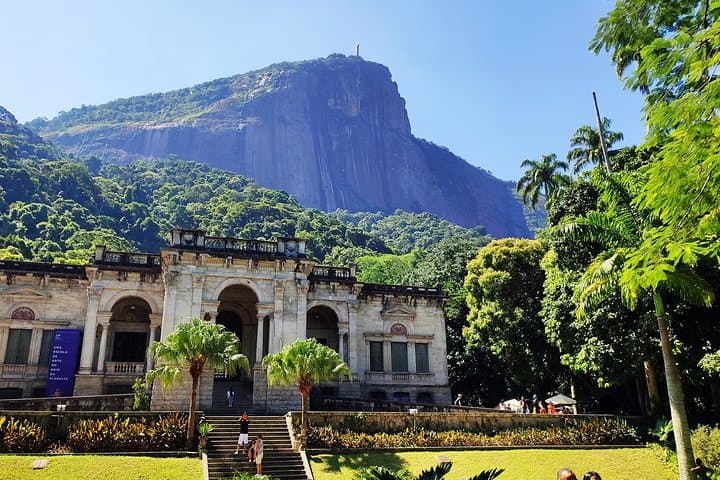
You set off from Parque Lage just as the city exhales—mornings here carry the scent of wet earth and coffee. The trail climbs through Atlantic Forest, leaves brushing your shoulders, the canopy occasionally parting to reveal slivers of Rio and the slow sweep of Guanabara Bay. The mountain seems to watch you, its slopes inviting and insistent until the Christ the Redeemer statue comes into sudden, enormous focus.
Verified experiences and guided adventures in the surrounding area.
Operated by Gray Line Brazil · Rio de Janeiro, Rio de Janeiro
You set off from Parque Lage just as the city exhales—mornings here carry the scent of wet earth and coffee. The trail climbs through Atlantic Forest, leaves brushing your shoulders, the canopy occasionally parting to reveal slivers of Rio and the slow sweep of Guanabara Bay. The mountain seems to watch you, its slopes inviting and insistent until the Christ the Redeemer statue comes into sudden, enormous focus.
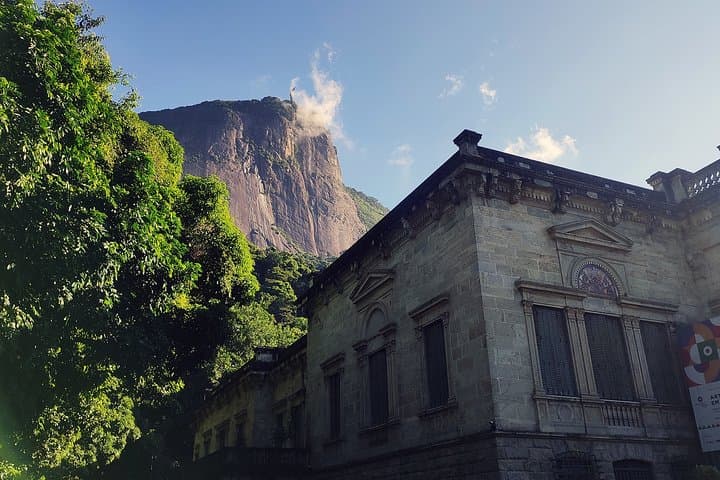
Corcovado (710 m/2,330 ft) sits within Tijuca Forest National Park, a reclaimed urban rainforest replanted in the 19th century to restore Rio’s water supply. Geologically it’s a granite dome carved by weathering, its surfaces polished by centuries of wind and rain. Culturally, the summit is Brazil’s most photographed viewpoint and a pilgrimage of sorts—both for views and for the iconic statue that crowns the peak.
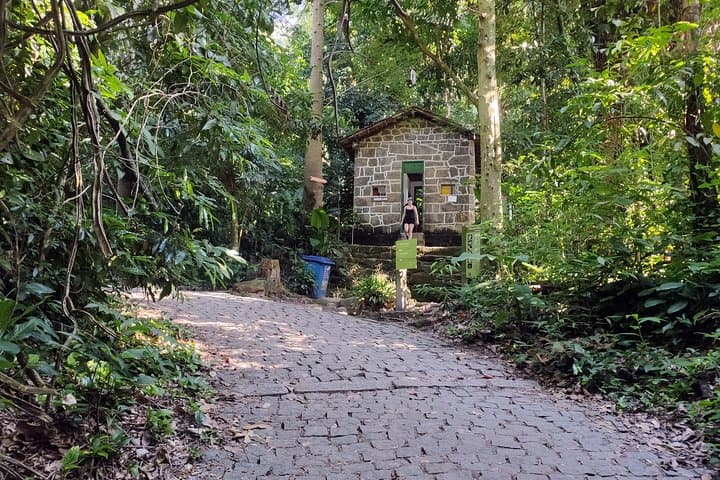
Expect narrow, often steep singletrack with roots and stone steps, about two hours uphill for fit hikers and a gentler descent by vehicle as offered on many tours. The forest hums with birds and the occasional howler monkey; sunlight finds the trail in bright, dappled patches.
Practical guidance: start early to avoid heat and crowds, wear grippy hiking shoes and sun protection, and carry at least 1–2 liters of water and high-energy snacks. Pay the modest park entrance fee locally and check weather—the trail gets slick in heavy rain. Guides navigate permit details and provide context on flora, fauna, and urban conservation, turning a strenuous climb into an informative, unforgettable connection with Rio’s wild heart.
challenging.
3–6 hours (includes transfers and briefing).
Good cardiovascular fitness and comfort on steep, uneven trails; able to sustain 2+ hours of continuous uphill hiking.
The uphill hike takes roughly 2–2.5 hours for fit hikers; descent is often by vehicle as part of many tour itineraries.
This is considered an advanced or challenging hike due to sustained elevation gain; moderately fit beginners may complete it with frequent breaks and guidance.
Most tours include a professional guide and roundtrip transfer from Copacabana, Ipanema, Leblon, or São Conrado hotels—confirm pickup details when booking.
Tours may be canceled or rescheduled for heavy rain or lightning because the trail becomes slippery and summit visibility can be poor; check the cancellation policy and weather forecast.
Tijuca Forest was replanted in the 19th century to restore water resources; Corcovado’s statue was completed in 1931 and remains a cultural landmark.
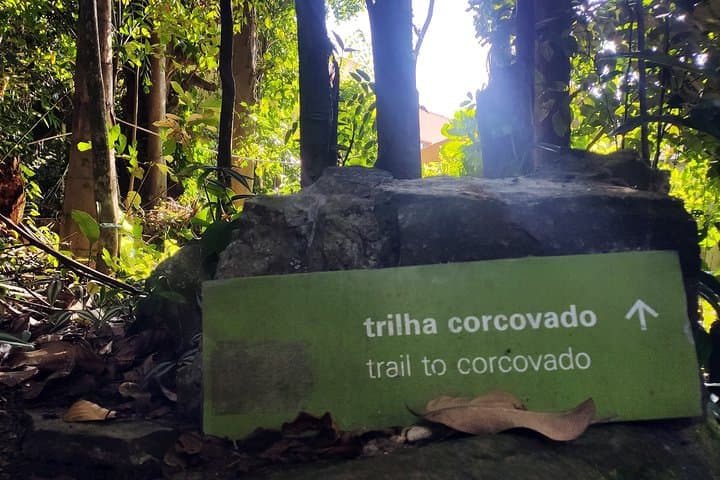
Tijuca is a managed urban rainforest—stay on established trails to prevent erosion and follow local rules to protect native flora and fauna.
Gray Line Brazil operates guided outdoor trips and adventures with an emphasis on safety, stewardship, and memorable experiences.
You set off from Parque Lage just as the city exhales—mornings here carry the scent of wet earth and coffee. The trail climbs through Atlantic Forest, leaves brushing your shoulders, the canopy occasionally parting to reveal slivers of Rio and the slow sweep of Guanabara Bay. The mountain seems to watch you, its slopes inviting and insistent until the Christ the Redeemer statue comes into sudden, enormous focus.
You set off from Parque Lage just as the city exhales—mornings here carry the scent of wet earth and coffee. The trail climbs through Atlantic Forest, leaves brushing your shoulders, the canopy occasionally parting to reveal slivers of Rio and the slow sweep of Guanabara Bay. The mountain seems to watch you, its slopes inviting and insistent until the Christ the Redeemer statue comes into sudden, enormous focus.
Corcovado (710 m/2,330 ft) sits within Tijuca Forest National Park, a reclaimed urban rainforest replanted in the 19th century to restore Rio’s water supply. Geologically it’s a granite dome carved by weathering, its surfaces polished by centuries of wind and rain. Culturally, the summit is Brazil’s most photographed viewpoint and a pilgrimage of sorts—both for views and for the iconic statue that crowns the peak.
Expect narrow, often steep singletrack with roots and stone steps, about two hours uphill for fit hikers and a gentler descent by vehicle as offered on many tours. The forest hums with birds and the occasional howler monkey; sunlight finds the trail in bright, dappled patches.
Practical guidance: start early to avoid heat and crowds, wear grippy hiking shoes and sun protection, and carry at least 1–2 liters of water and high-energy snacks. Pay the modest park entrance fee locally and check weather—the trail gets slick in heavy rain. Guides navigate permit details and provide context on flora, fauna, and urban conservation, turning a strenuous climb into an informative, unforgettable connection with Rio’s wild heart.