THE ADVENTURE COLLECTIVE® · Independent discovery and booking for outdoor travel

A full-day guided climb up Chimborazo’s high slopes to Laguna Condor Cocha—expect thin air, wide sky, and dramatic alpine terrain. This practical guide explains what you’ll see and how to prepare for a 12+ hour, high-altitude day trip from Quito.
A full-day guided climb up Chimborazo’s high slopes to Laguna Condor Cocha—expect thin air, wide sky, and dramatic alpine terrain. This practical guide explains what you’ll see and how to prepare for a 12+ hour, high-altitude day trip from Quito.
You step off the minivan into thin air and the mountain takes a breath back at you — Chimborazo’s flanks cut the sky into cold, bright planes. The route climbs past tussock grass and peat bogs, passing the Hermanos Carriel shelter (≈4,850 m) and the Whymper refuge near 5,000 m before opening to the high basin that holds Laguna Condor Cocha at roughly 5,100 m.
Verified experiences and guided adventures in the surrounding area.
Operated by El Barak Ecuador Travel · Riobamba, Chimborazo
You step off the minivan into thin air and the mountain takes a breath back at you — Chimborazo’s flanks cut the sky into cold, bright planes. The route climbs past tussock grass and peat bogs, passing the Hermanos Carriel shelter (≈4,850 m) and the Whymper refuge near 5,000 m before opening to the high basin that holds Laguna Condor Cocha at roughly 5,100 m.
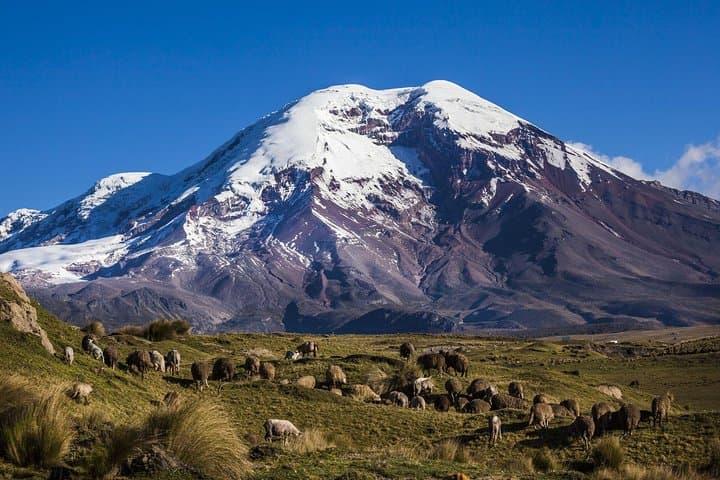
Geology here is blunt and recent: Chimborazo is a heavily eroded stratovolcano whose summit glacier sits near the equator, shaping moraines and shallow tarns. Culturally the mountain has long been a landmark for Andean communities and a challenge for Ecuadorian mountaineers; its slopes are within the Chimborazo Fauna Production Reserve, established to protect native species and sustainable grazing.
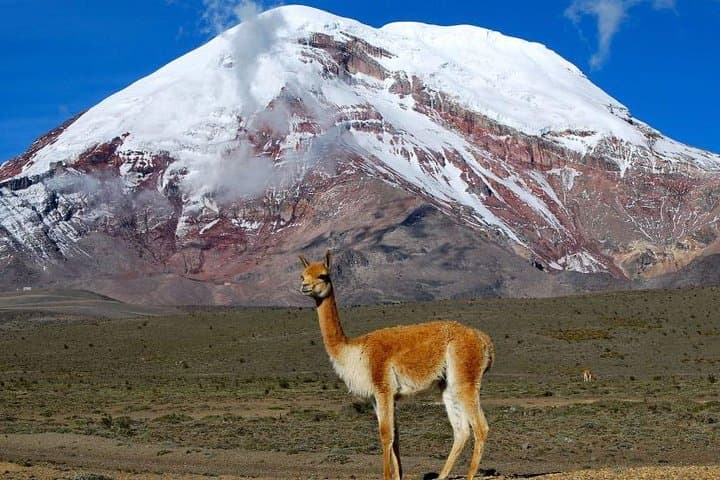
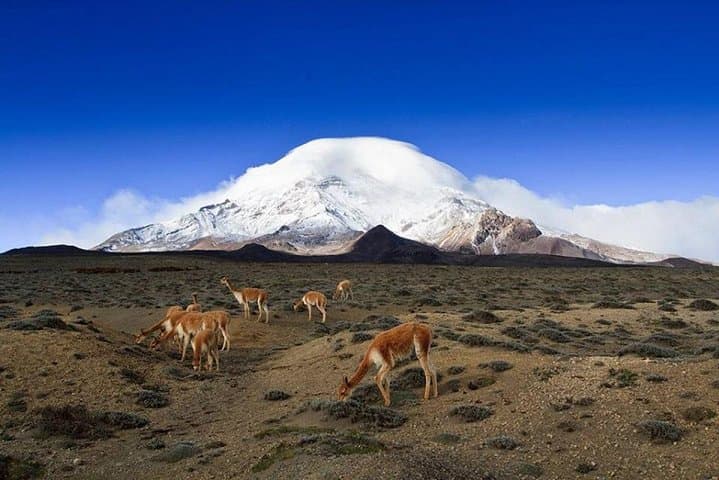
Expect wind that cuts like a ruler, sun that intensifies with altitude, and sparse vegetation — cushion plants and hardy grasses — underfoot. Vicuña and occasional Andean condors share the upper slopes; glaciers and moraine fields frame the route.
Practicalities: the day tour starts in Quito (around 6:30 a.m.) with tourist transport and a bilingual guide, returning in the evening. Altitude is the main challenge — give yourself at least 24–48 hours acclimatization in Quito, drink frequently, and monitor for headache or nausea. Footwear should be stiff-soled hiking boots; bring warm layers, sun protection, and water (or filtration). Trails are non-technical but can be slippery and wind-scoured; the guide will set pace and turnaround points. For longer plans, consider adding Quilotoa, Cotopaxi, or Baños as follow-up stops.
challenging.
12–13 hours.
Should have good aerobic fitness, prior high-altitude hiking experience, and ability to walk several hours with elevation gain.
The tour reaches Laguna Condor Cocha at approximately 5,100 meters; nearby refuges visited are around 4,850–5,000 meters.
No technical gear is required for the standard day itinerary — routes are non-technical hikes — but weather can make surfaces slippery, so good boots and poles are recommended.
The full excursion is about 12–13 hours round trip, with an early morning departure (around 6:30 a.m.) and evening return to Quito.
Travelers with cardiovascular problems, severe respiratory issues, or those unable to tolerate high-altitude conditions should not participate.
Chimborazo has been an important landmark for Andean peoples and was the focus of early scientific and mountaineering expeditions; it’s also often described as the point farthest from the earth’s center due to equatorial bulge.
The area sits within the Chimborazo Fauna Production Reserve, which balances grazing, wildlife protection, and eco-tourism — stay on trails and pack out waste to limit impact.
El Barak Ecuador Travel operates guided outdoor trips and adventures with an emphasis on safety, stewardship, and memorable experiences.
You step off the minivan into thin air and the mountain takes a breath back at you — Chimborazo’s flanks cut the sky into cold, bright planes. The route climbs past tussock grass and peat bogs, passing the Hermanos Carriel shelter (≈4,850 m) and the Whymper refuge near 5,000 m before opening to the high basin that holds Laguna Condor Cocha at roughly 5,100 m.
You step off the minivan into thin air and the mountain takes a breath back at you — Chimborazo’s flanks cut the sky into cold, bright planes. The route climbs past tussock grass and peat bogs, passing the Hermanos Carriel shelter (≈4,850 m) and the Whymper refuge near 5,000 m before opening to the high basin that holds Laguna Condor Cocha at roughly 5,100 m.
Geology here is blunt and recent: Chimborazo is a heavily eroded stratovolcano whose summit glacier sits near the equator, shaping moraines and shallow tarns. Culturally the mountain has long been a landmark for Andean communities and a challenge for Ecuadorian mountaineers; its slopes are within the Chimborazo Fauna Production Reserve, established to protect native species and sustainable grazing.
Expect wind that cuts like a ruler, sun that intensifies with altitude, and sparse vegetation — cushion plants and hardy grasses — underfoot. Vicuña and occasional Andean condors share the upper slopes; glaciers and moraine fields frame the route.
Practicalities: the day tour starts in Quito (around 6:30 a.m.) with tourist transport and a bilingual guide, returning in the evening. Altitude is the main challenge — give yourself at least 24–48 hours acclimatization in Quito, drink frequently, and monitor for headache or nausea. Footwear should be stiff-soled hiking boots; bring warm layers, sun protection, and water (or filtration). Trails are non-technical but can be slippery and wind-scoured; the guide will set pace and turnaround points. For longer plans, consider adding Quilotoa, Cotopaxi, or Baños as follow-up stops.