THE ADVENTURE COLLECTIVE® · Independent discovery and booking for outdoor travel

Walk between two oceans on a private, full‑day hike through Cape Point Nature Reserve. Coastal paths, rock scrambles, the old lighthouse and a penguin colony make this an unforgettable Cape Peninsula day trip.
Walk between two oceans on a private, full‑day hike through Cape Point Nature Reserve. Coastal paths, rock scrambles, the old lighthouse and a penguin colony make this an unforgettable Cape Peninsula day trip.
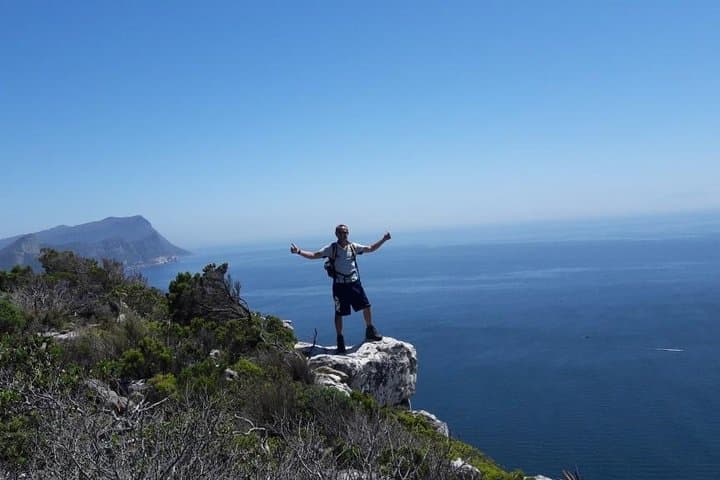
The morning wind off the Atlantic cuts a clean line across the peninsula as your guide closes the van door at Maiden's Cove. Sea-salt and roasted coffee hang in the air; behind you, the white teeth of Clifton’s beaches slip away, ahead the route falls toward the raw, stony shoreline of the Cape of Good Hope Nature Reserve. Over the next eight hours you move between two oceans’ moods — rocky headlands that dare you to look down, quiet bays where sand invites you to pause, and the old lighthouse at Cape Point circling the horizon like a patient, iron-eyed guardian.
Verified experiences and guided adventures in the surrounding area.
Operated by Table Mountain hiking and sightseeing tours · Cape Town, Western Cape
The morning wind off the Atlantic cuts a clean line across the peninsula as your guide closes the van door at Maiden's Cove. Sea-salt and roasted coffee hang in the air; behind you, the white teeth of Clifton’s beaches slip away, ahead the route falls toward the raw, stony shoreline of the Cape of Good Hope Nature Reserve. Over the next eight hours you move between two oceans’ moods — rocky headlands that dare you to look down, quiet bays where sand invites you to pause, and the old lighthouse at Cape Point circling the horizon like a patient, iron-eyed guardian.
Geology here reads like a field notebook: Cape granite thrust beneath younger sandstones along steep coastal scarps; Chapman's Peak Drive carves through grey granite and darker sandstone, a 9 km ribbon with 114 turns that frames the sea. European maritime history toes the line between myth and map — the Portuguese named this coastline the Cape of Storms before the name softened to Good Hope — and seals of shipwreck lore still echo in guide stories. Botanically, spring brings a flamboyance of fynbos, the low, fire-adapted shrubs unique to the Cape Floristic Region, while seasonal currents lure southern right whales into False Bay.
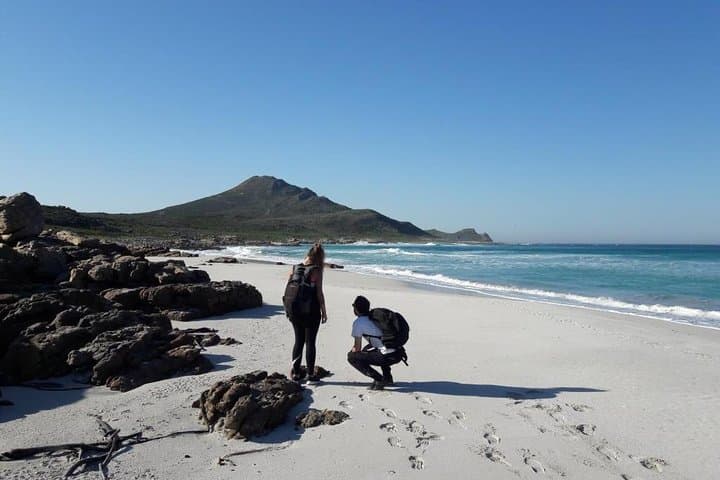
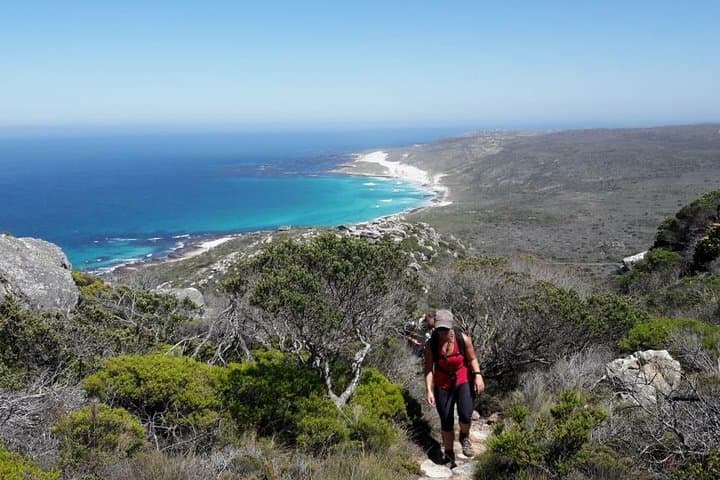
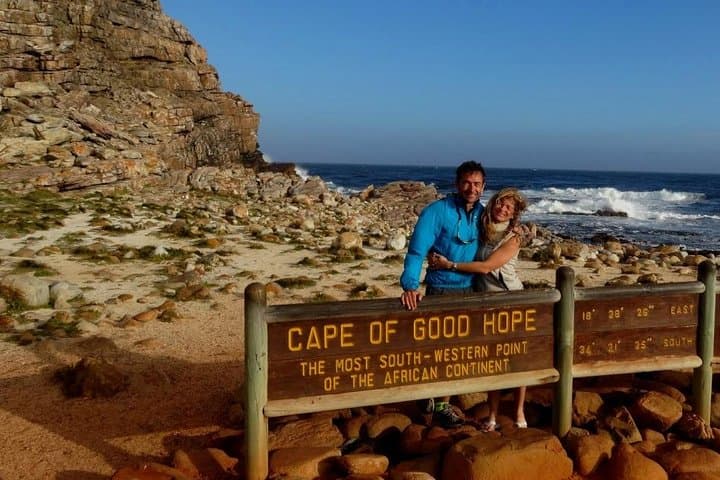
The route itself is practical and unpretentious: roughly 8–12 km of walking depending on exact variations, with up to 300 m cumulative elevation gain as you drop to beaches and climb to headlands. Terrain alternates coastal paths and boardwalks, sandy bays, and sections of easy rock scrambling where hands steady your steps. You’ll pass Diaz and Dias Beach viewpoints, take the stepped path (or short funicular ride) to the old lighthouse at Cape Point, then walk the wooden boardwalk to the Cape of Good Hope promontory for the classic photograph. Expect close encounters with local wildlife — curious chacma baboons and, later, tuxedoed African penguins at Boulders Beach.
Practical edge: start early to avoid mid-day wind, wear a supportive trail shoe with good grip for scramble sections, and bring layers — ocean weather changes fast. Hydrate steadily; there are no reliable water refills on-trail. The tour includes hotel pickup in Cape Town’s city bowl and returns via Simon’s Town and the penguin colony, so pack a small daypack, a windbreaker, sun protection, snacks, and a charged camera.
This is a private, customizable excursion that trades technical difficulty for sustained coastal exposure and cultural payoff: whale watching in season, fynbos in bloom in spring, and a late-afternoon return through one of South Africa’s oldest naval towns. For travellers who want a full-day immersion in the peninsula’s extremes — cliffs that push the sea back and beaches that beg you to rest — this route delivers a clear, robust experience framed by excellent guide knowledge and logistical ease.
moderate.
8 hours.
Good level of fitness for repeated short climbs and 8–12 km of mixed terrain; able to handle occasional scrambling.
The tour is a full-day (about 8 hours) experience with roughly 8–12 km of walking, depending on route choices; expect up to ~300 m cumulative elevation gain.
Yes — southern right whales frequent False Bay in season (roughly July–November), and the tour includes a stop at Boulders Beach to see African penguins up close from boardwalks.
Children who can handle the distance and some scrambling can join; older participants should assess mobility for uneven terrain — the tour is customizable and guide assistance is available.
Baboons are common in the reserve; keep distance, secure bags, don’t feed them, and follow your guide’s instructions to avoid conflict.
Yes — hotel pickup and drop-off from Cape Town city bowl are included in the tour price, and travel between viewpoints is by air‑conditioned vehicle.
If conditions are unsuitable the operator offers an alternative date, activity, or a full refund; cancel at least 24 hours for a full refund under the standard policy.
European sailors named this coastline severe and treacherous; the Cape played a pivotal role in global maritime routes and the Age of Discovery.
The Cape Floristic Region is a global biodiversity hotspot; visitors are asked to stick to trails to protect fragile fynbos and avoid disturbing wildlife.
Table Mountain hiking and sightseeing tours operates guided outdoor trips and adventures with an emphasis on safety, stewardship, and memorable experiences.
The morning wind off the Atlantic cuts a clean line across the peninsula as your guide closes the van door at Maiden's Cove. Sea-salt and roasted coffee hang in the air; behind you, the white teeth of Clifton’s beaches slip away, ahead the route falls toward the raw, stony shoreline of the Cape of Good Hope Nature Reserve. Over the next eight hours you move between two oceans’ moods — rocky headlands that dare you to look down, quiet bays where sand invites you to pause, and the old lighthouse at Cape Point circling the horizon like a patient, iron-eyed guardian.
The morning wind off the Atlantic cuts a clean line across the peninsula as your guide closes the van door at Maiden's Cove. Sea-salt and roasted coffee hang in the air; behind you, the white teeth of Clifton’s beaches slip away, ahead the route falls toward the raw, stony shoreline of the Cape of Good Hope Nature Reserve. Over the next eight hours you move between two oceans’ moods — rocky headlands that dare you to look down, quiet bays where sand invites you to pause, and the old lighthouse at Cape Point circling the horizon like a patient, iron-eyed guardian.
Geology here reads like a field notebook: Cape granite thrust beneath younger sandstones along steep coastal scarps; Chapman's Peak Drive carves through grey granite and darker sandstone, a 9 km ribbon with 114 turns that frames the sea. European maritime history toes the line between myth and map — the Portuguese named this coastline the Cape of Storms before the name softened to Good Hope — and seals of shipwreck lore still echo in guide stories. Botanically, spring brings a flamboyance of fynbos, the low, fire-adapted shrubs unique to the Cape Floristic Region, while seasonal currents lure southern right whales into False Bay.
The route itself is practical and unpretentious: roughly 8–12 km of walking depending on exact variations, with up to 300 m cumulative elevation gain as you drop to beaches and climb to headlands. Terrain alternates coastal paths and boardwalks, sandy bays, and sections of easy rock scrambling where hands steady your steps. You’ll pass Diaz and Dias Beach viewpoints, take the stepped path (or short funicular ride) to the old lighthouse at Cape Point, then walk the wooden boardwalk to the Cape of Good Hope promontory for the classic photograph. Expect close encounters with local wildlife — curious chacma baboons and, later, tuxedoed African penguins at Boulders Beach.
Practical edge: start early to avoid mid-day wind, wear a supportive trail shoe with good grip for scramble sections, and bring layers — ocean weather changes fast. Hydrate steadily; there are no reliable water refills on-trail. The tour includes hotel pickup in Cape Town’s city bowl and returns via Simon’s Town and the penguin colony, so pack a small daypack, a windbreaker, sun protection, snacks, and a charged camera.
This is a private, customizable excursion that trades technical difficulty for sustained coastal exposure and cultural payoff: whale watching in season, fynbos in bloom in spring, and a late-afternoon return through one of South Africa’s oldest naval towns. For travellers who want a full-day immersion in the peninsula’s extremes — cliffs that push the sea back and beaches that beg you to rest — this route delivers a clear, robust experience framed by excellent guide knowledge and logistical ease.