THE ADVENTURE COLLECTIVE® · Independent discovery and booking for outdoor travel

Leave the city behind for a day and climb Baegundae, Bukhansan National Park’s highest point. This full-day private hike from Seoul pairs a mountain expert with routes past Doseonsa Temple, granite ridges, and a summit view that frames the entire metropolis.
Leave the city behind for a day and climb Baegundae, Bukhansan National Park’s highest point. This full-day private hike from Seoul pairs a mountain expert with routes past Doseonsa Temple, granite ridges, and a summit view that frames the entire metropolis.
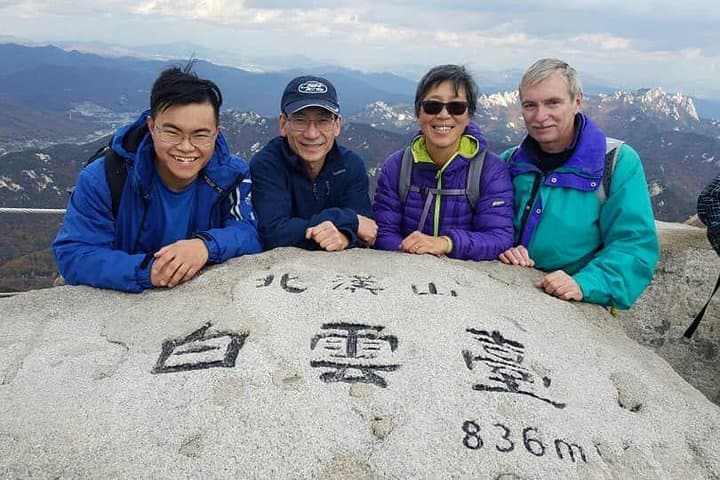
A thin cold wind runs down the granite ribs of Bukhansan as the morning light slips over Seoul, and suddenly the city’s noise feels like a memory. On a full-day guided hike to Baegundae (836.5 m), the mountain rearranges perspective: pine-scented gullies give way to steep granite slabs, and the Han River below becomes a ribbon of silver. The route climbs past Doseonsa Temple, where prayer flags tremble and monks' bells mark time, then threads narrow ridges toward the summit, where Seoul spreads out in gridded detail beneath a sky that seems to widen with every step.
Verified experiences and guided adventures in the surrounding area.
Operated by Outdoors Korea · Seoul, Seoul
A thin cold wind runs down the granite ribs of Bukhansan as the morning light slips over Seoul, and suddenly the city’s noise feels like a memory. On a full-day guided hike to Baegundae (836.5 m), the mountain rearranges perspective: pine-scented gullies give way to steep granite slabs, and the Han River below becomes a ribbon of silver. The route climbs past Doseonsa Temple, where prayer flags tremble and monks' bells mark time, then threads narrow ridges toward the summit, where Seoul spreads out in gridded detail beneath a sky that seems to widen with every step.
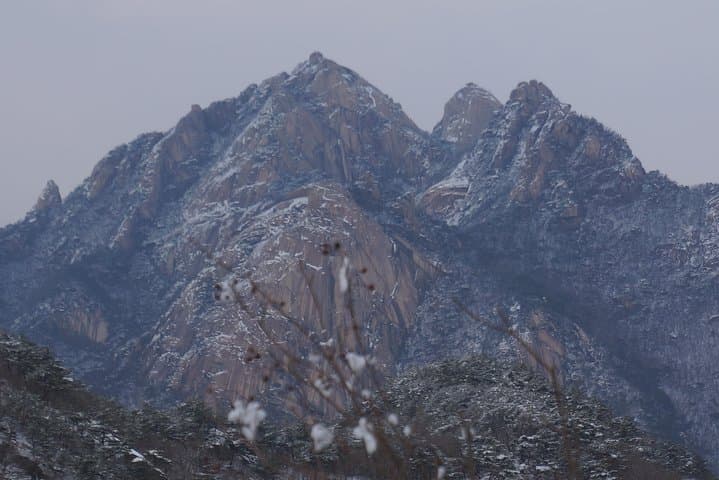
Bukhansan National Park is an unusual urban preserve—designated Korea’s 15th national park in 1983—whose granite outcrops were sculpted by ancient tectonics and polished by millennia of weather. Its steep faces and cleft valleys are part of the greater Gyeonggi massif; hikers encounter exfoliated slabs, lichen-streaked boulders, and streams that insist on finding their way down to the city.
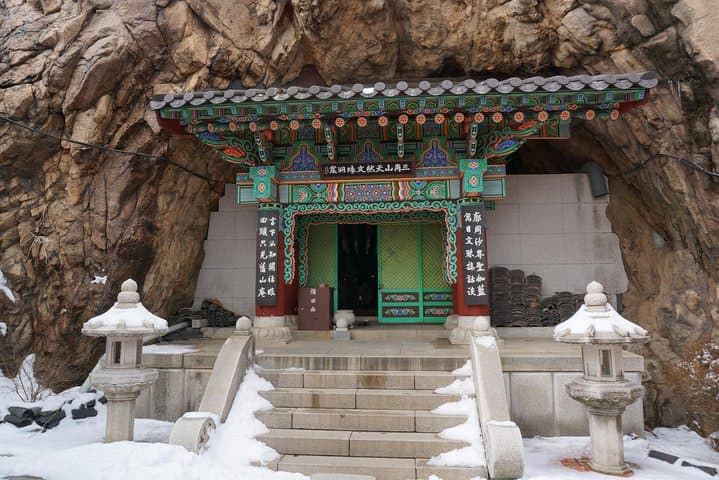
The cultural layer here is immediate: shamanic shrines and Buddhist temples like Doseonsa sit on the lower slopes, offering a view into Korea’s mountain-centered spiritual practices. Local climbers favor technical routes on Insubong and neighboring peaks, while family trekkers and solo walkers claim the gentler valley trails—each route a different conversation between human movement and the mountain’s slow geology.
Practically, the full-day private tour with a mountain expert takes roughly 4–6 hours depending on pace and chosen route. The guide handles logistics—hotel pickup and drop-off across Seoul, route selection, even winter-time crampons if snow arrives—and doubles as a translator and safety officer. Trails can be steep and exposed in sections; expect granite steps and rooted, uneven dirt. Water and a packed lunch are included on the tour, but bringing extra fluids and a warm layer is wise.
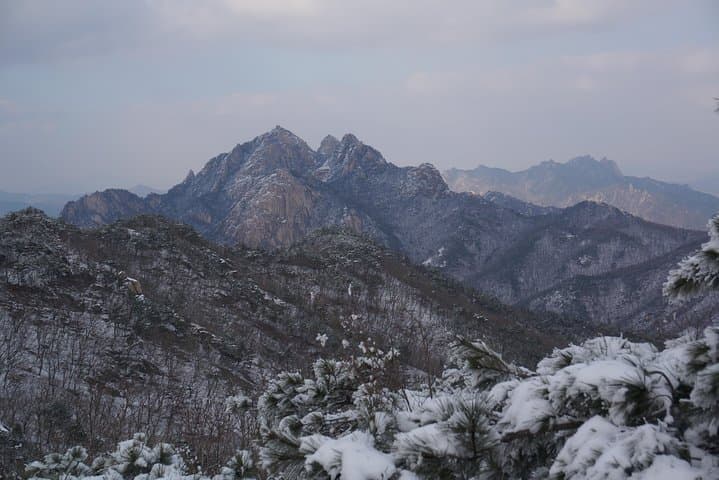
Timing matters: spring brings fresh buds and cooler weather for climbing; autumn paints the slopes in vivid colors and is the busiest season. Winter offers quiet, snowy panoramas but demands crampons and warmer gear; summer afternoons can be humid and sudden thunderstorms possible.
For travelers accustomed to day hikes, Baegundae is approachable but rewarding: it tests lungs and steadiness without requiring technical climbing skills. The payoff is a summit that looks back at Seoul, an expansive, almost civic view that frames the metropolis against mountain sky. Whether a first-time visitor or a regular on Korea’s trails, the guided ascent to Baegundae is a clear, efficient way to turn a city trip into a genuine mountain day—where granite seems to push hikers forward and the ridge asks only that they keep walking.
moderate.
4–6 hours.
Moderate cardiovascular fitness and comfort on sustained uphill trails; occasional scrambling over rock.
The guided full-day trek typically lasts 4–6 hours round trip, depending on pace and route.
Yes—while steep sections exist, no technical climbing skills are required; guides tailor the route to group ability.
Children over 10 are allowed but must be accompanied by an adult, per the provider’s policy.
Yes—winter-time snow crampons are provided when conditions require them; check with the operator in advance.
The tour includes a mountain expert guide, hotel pickup and drop-off in Seoul, bottled water, an on-mountain lunch box, and an air-conditioned vehicle.
The tour operator will cancel in bad weather; full refunds are available if canceled at least 24 hours before departure.
Bukhansan was designated Korea’s 15th national park in 1983 and has long been a site of spiritual practice and local pilgrimage.
High visitor numbers strain trails—stick to marked paths, pack out trash, and respect temple sites to limit impact.
Outdoors Korea operates guided outdoor trips and adventures with an emphasis on safety, stewardship, and memorable experiences.
A thin cold wind runs down the granite ribs of Bukhansan as the morning light slips over Seoul, and suddenly the city’s noise feels like a memory. On a full-day guided hike to Baegundae (836.5 m), the mountain rearranges perspective: pine-scented gullies give way to steep granite slabs, and the Han River below becomes a ribbon of silver. The route climbs past Doseonsa Temple, where prayer flags tremble and monks' bells mark time, then threads narrow ridges toward the summit, where Seoul spreads out in gridded detail beneath a sky that seems to widen with every step.
A thin cold wind runs down the granite ribs of Bukhansan as the morning light slips over Seoul, and suddenly the city’s noise feels like a memory. On a full-day guided hike to Baegundae (836.5 m), the mountain rearranges perspective: pine-scented gullies give way to steep granite slabs, and the Han River below becomes a ribbon of silver. The route climbs past Doseonsa Temple, where prayer flags tremble and monks' bells mark time, then threads narrow ridges toward the summit, where Seoul spreads out in gridded detail beneath a sky that seems to widen with every step.
Bukhansan National Park is an unusual urban preserve—designated Korea’s 15th national park in 1983—whose granite outcrops were sculpted by ancient tectonics and polished by millennia of weather. Its steep faces and cleft valleys are part of the greater Gyeonggi massif; hikers encounter exfoliated slabs, lichen-streaked boulders, and streams that insist on finding their way down to the city.
The cultural layer here is immediate: shamanic shrines and Buddhist temples like Doseonsa sit on the lower slopes, offering a view into Korea’s mountain-centered spiritual practices. Local climbers favor technical routes on Insubong and neighboring peaks, while family trekkers and solo walkers claim the gentler valley trails—each route a different conversation between human movement and the mountain’s slow geology.
Practically, the full-day private tour with a mountain expert takes roughly 4–6 hours depending on pace and chosen route. The guide handles logistics—hotel pickup and drop-off across Seoul, route selection, even winter-time crampons if snow arrives—and doubles as a translator and safety officer. Trails can be steep and exposed in sections; expect granite steps and rooted, uneven dirt. Water and a packed lunch are included on the tour, but bringing extra fluids and a warm layer is wise.
Timing matters: spring brings fresh buds and cooler weather for climbing; autumn paints the slopes in vivid colors and is the busiest season. Winter offers quiet, snowy panoramas but demands crampons and warmer gear; summer afternoons can be humid and sudden thunderstorms possible.
For travelers accustomed to day hikes, Baegundae is approachable but rewarding: it tests lungs and steadiness without requiring technical climbing skills. The payoff is a summit that looks back at Seoul, an expansive, almost civic view that frames the metropolis against mountain sky. Whether a first-time visitor or a regular on Korea’s trails, the guided ascent to Baegundae is a clear, efficient way to turn a city trip into a genuine mountain day—where granite seems to push hikers forward and the ridge asks only that they keep walking.