THE ADVENTURE COLLECTIVE® · Independent discovery and booking for outdoor travel

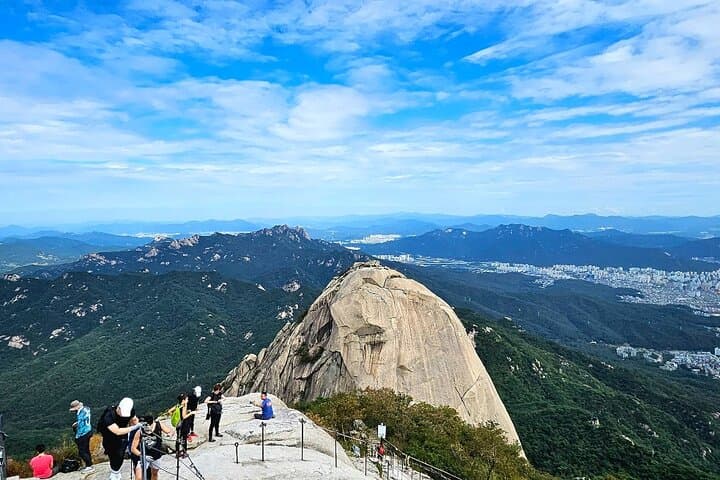
Granite ridges rise abruptly from Seoul’s suburbs to form Bukhansan National Park. Hike to Baegundae for city-overlook panoramas, temple stops, and the classic post-hike comfort of gimbap and makgeolli.
Granite ridges rise abruptly from Seoul’s suburbs to form Bukhansan National Park. Hike to Baegundae for city-overlook panoramas, temple stops, and the classic post-hike comfort of gimbap and makgeolli.
You push through a ribbon of subway-smelling air and, within an hour, granite ridgelines rise like a natural city wall over Seoul. The trailhead hums with morning chat—Seoulites tightening boots, older hikers clipping poles—then the forest swallows the sound and the city thins to a distant grid.
Verified experiences and guided adventures in the surrounding area.
Operated by Kevin Lee · Seoul, Seoul
You push through a ribbon of subway-smelling air and, within an hour, granite ridgelines rise like a natural city wall over Seoul. The trailhead hums with morning chat—Seoulites tightening boots, older hikers clipping poles—then the forest swallows the sound and the city thins to a distant grid.
Bukhansan is Seoul’s backyard mountain range and the 15th national park in South Korea. The massif is dominated by exposed granite spires—Baegundae, the high point at 835.6 m—carved by slow uplift and millennia of frost and runoff. Along the ascent you’ll pass sections of the Joseon-era Bukhansanseong fortress and small Buddhist hermitages like Dosonsa, reminders that these slopes have long held strategic and spiritual value.
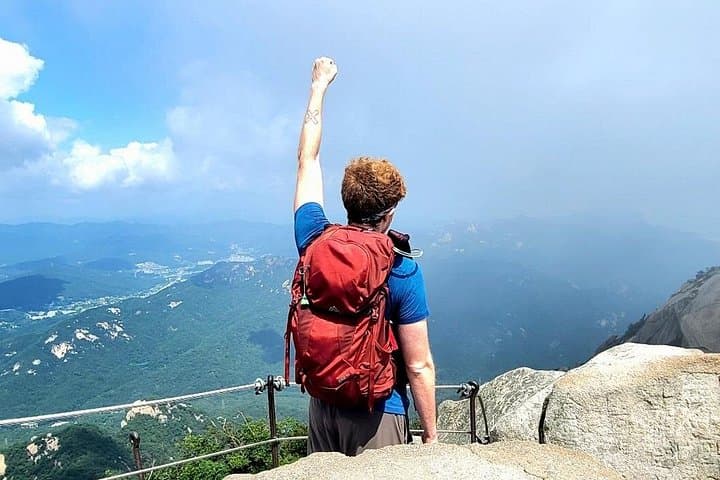
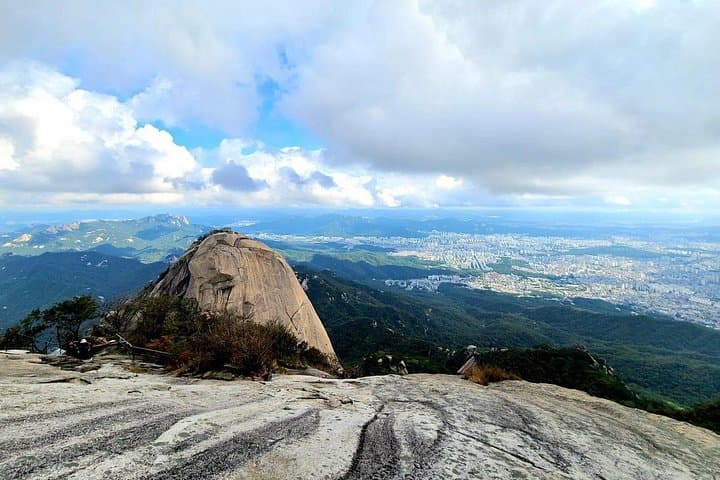
Trails vary from wooded switchbacks to steep, rocky steps and short scrambles. A typical route to Baegundae takes 3–4 hours round-trip and rewards hikers with broad panoramas of Seoul’s skyline pressing up against green ridgelines. Culturally, the post-hike ritual is as important as the climb: gimbap and thermoses of makgeolli or a pajeon shared at a mountain-side eatery ease tired legs and make the day feel complete.
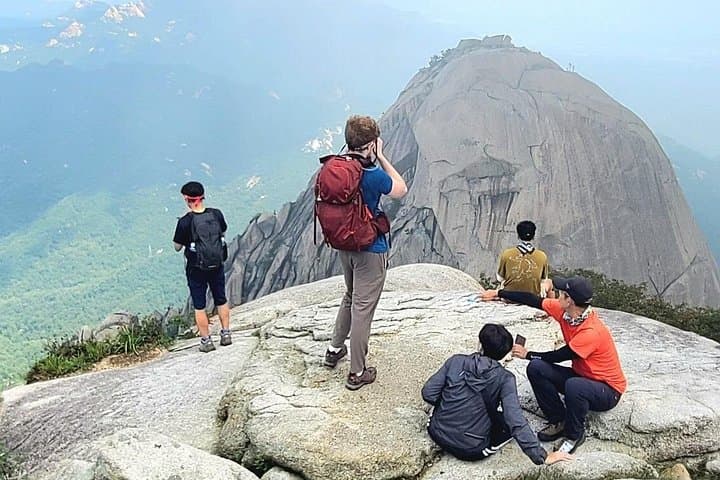
Practical notes: start early to avoid midweek crowds and afternoon haze; the route is well-marked but expect uneven rock and occasional ladders. Pack 1–2 liters of water, sturdy hiking shoes, and a light rain layer in season. Public transit reaches several trailheads, but private shuttles and guided options simplify logistics for first-time visitors. Respect temple spaces, stick to marked trails, and carry out your trash—these slopes see heavy urban use and conserve their wild character only with careful stewardship.
moderate.
3–4 hours.
Suitable for hikers with regular aerobic activity; expect steep climbs and short scrambles that require moderate endurance.
A standard round-trip to Baegundae from common trailheads takes roughly 3–4 hours depending on pace and stops.
Yes—several subway lines and bus routes reach park entrances; organized tours or private pickups are also common for convenience.
Yes—small temples and hermitages like Dosonsa lie along descending routes; visitors should be quiet and follow temple rules.
Fit beginners can complete the hike if prepared for steep sections and rocky terrain; choose a gentler approach and allow extra time.
Bukhansanseong fortress dates to the Joseon Dynasty, built to protect the capital; trails pass stone walls and historic gate sites.
Heavy urban visitation stresses trails and vegetation—stick to marked paths and carry out waste to protect fragile alpine flora.
Kevin Lee operates guided outdoor trips and adventures with an emphasis on safety, stewardship, and memorable experiences.
You push through a ribbon of subway-smelling air and, within an hour, granite ridgelines rise like a natural city wall over Seoul. The trailhead hums with morning chat—Seoulites tightening boots, older hikers clipping poles—then the forest swallows the sound and the city thins to a distant grid.
You push through a ribbon of subway-smelling air and, within an hour, granite ridgelines rise like a natural city wall over Seoul. The trailhead hums with morning chat—Seoulites tightening boots, older hikers clipping poles—then the forest swallows the sound and the city thins to a distant grid.
Bukhansan is Seoul’s backyard mountain range and the 15th national park in South Korea. The massif is dominated by exposed granite spires—Baegundae, the high point at 835.6 m—carved by slow uplift and millennia of frost and runoff. Along the ascent you’ll pass sections of the Joseon-era Bukhansanseong fortress and small Buddhist hermitages like Dosonsa, reminders that these slopes have long held strategic and spiritual value.
Trails vary from wooded switchbacks to steep, rocky steps and short scrambles. A typical route to Baegundae takes 3–4 hours round-trip and rewards hikers with broad panoramas of Seoul’s skyline pressing up against green ridgelines. Culturally, the post-hike ritual is as important as the climb: gimbap and thermoses of makgeolli or a pajeon shared at a mountain-side eatery ease tired legs and make the day feel complete.
Practical notes: start early to avoid midweek crowds and afternoon haze; the route is well-marked but expect uneven rock and occasional ladders. Pack 1–2 liters of water, sturdy hiking shoes, and a light rain layer in season. Public transit reaches several trailheads, but private shuttles and guided options simplify logistics for first-time visitors. Respect temple spaces, stick to marked trails, and carry out your trash—these slopes see heavy urban use and conserve their wild character only with careful stewardship.