THE ADVENTURE COLLECTIVE® · Independent discovery and booking for outdoor travel

Walk across recent lava flows, thread jungle routes and camp near Arenal’s looming cone. This self-guided park offers 2–3 km trails, basic camping, and the chance to observe regrowth where fire once ruled.
Walk across recent lava flows, thread jungle routes and camp near Arenal’s looming cone. This self-guided park offers 2–3 km trails, basic camping, and the chance to observe regrowth where fire once ruled.
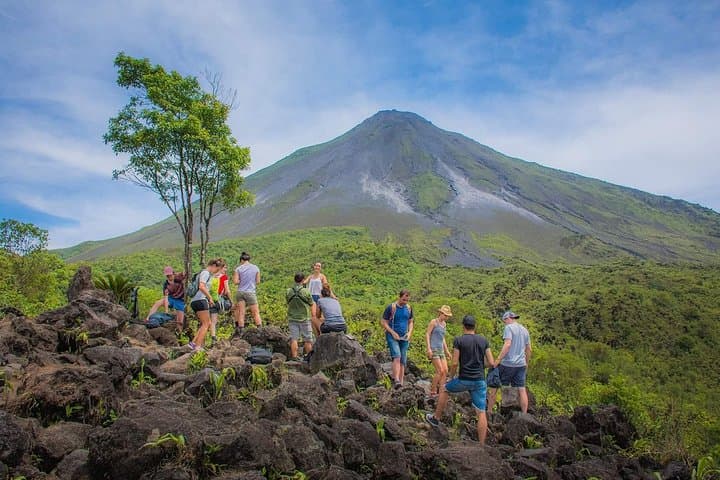
Fog lifts off the slope as the trail opens onto hardened black lava, the air carrying a humid green smell and the distant rumble of an ancient cone. At Arenal Volcano Ecological Park hikers step onto paths that run along the 2010 and older lava flows, where forest reclaims basalt and orchids cling to fist-sized crevices.
Verified experiences and guided adventures in the surrounding area.
Operated by Go Adventure Park · La Fortuna, Alajuela
Fog lifts off the slope as the trail opens onto hardened black lava, the air carrying a humid green smell and the distant rumble of an ancient cone. At Arenal Volcano Ecological Park hikers step onto paths that run along the 2010 and older lava flows, where forest reclaims basalt and orchids cling to fist-sized crevices.
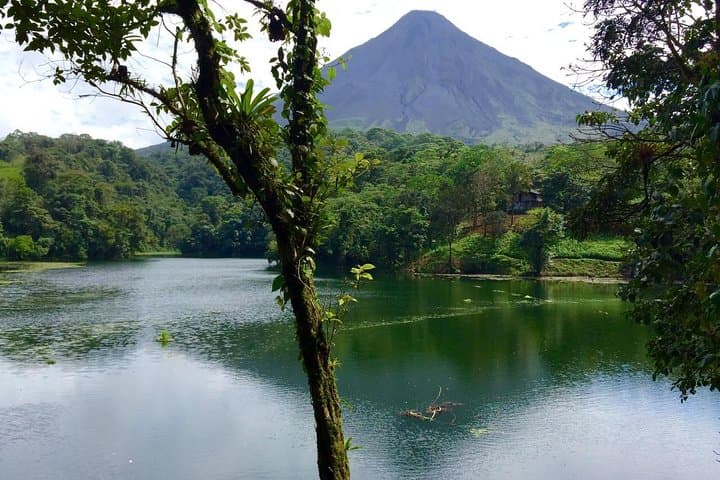
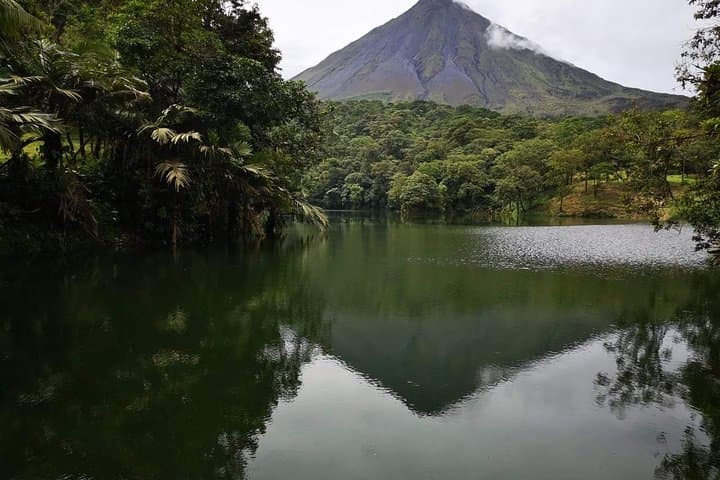
Geology here is immediate: layers of pahoehoe and a'a sculpt the ground into ridges and runnels. The park sits on volcanic soils that fuel dense secondary rainforest; culturally the area is part of San Carlos canton and a longtime hub for farmers, guides, and naturalists who watch the mountain’s moods. Small lagoons and the Tobacco Green Lagoon punctuate the trails, offering still-water reflections and amphibian song.
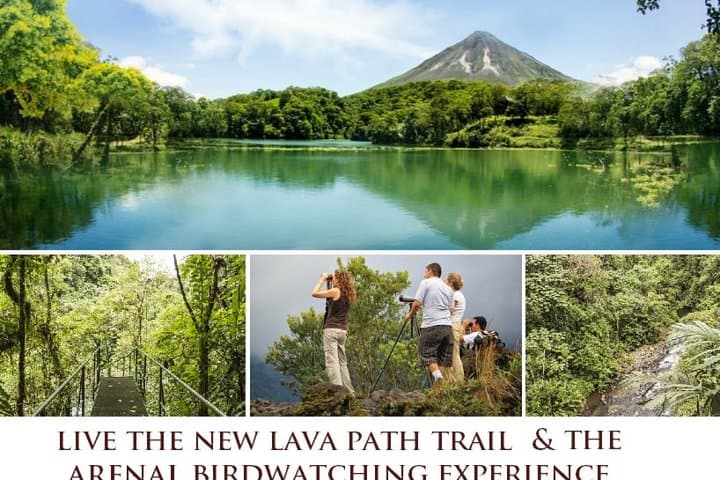
Two marked options suit different appetites: a 2 km tourist-friendly loop with viewpoints and wildlife observation, and a 3 km jungle route that gets steeper and softer underfoot. Basic camping facilities are available—outdoor and indoor areas, tent rentals, showers and kitchens—so overnight stays are possible with reservations.
Practical guidance: wear grippy hiking shoes for mixed lava and rooty jungle terrain, carry 2–3 liters of water, and plan 3–5 hours for a relaxed self-guided visit. The park accepts mobile tickets and has on-site guide rentals if you prefer interpretation. Rain can be sudden; a compact rain jacket and quick-dry layers make the difference between a soggy scramble and a comfortable exploration. Leave no trace and stick to marked trails to protect fragile regrowth on the lava fields.
moderate.
3–5 hours.
Moderate fitness: able to handle uneven ground and short steep sections; suitable for regular walkers.
No, trails are marked and self-guided routes are common; local guides are available at the entrance for interpretation and deeper jungle routes.
Yes—there are outdoor and indoor camping areas with showers, kitchens and tent rentals, but book in advance during high season.
Families with children can do the 2 km loop, but supervise closely on lava fields and near lagoon edges; avoid the steeper 3 km route for very young kids.
The dry season (roughly December–April) offers the clearest views, though mornings can be best any time to avoid clouds forming over the cone.
Arenal’s modern story includes explosive eruptions in the 20th century and the dramatic 1968 event that reshaped the region; the park preserves lava fields from the 2010 activity and earlier flows.
Regeneration on lava is slow; staying on trails and using established campsites reduces erosion and protects rare pioneer plant communities.
Go Adventure Park operates guided outdoor trips and adventures with an emphasis on safety, stewardship, and memorable experiences.
Fog lifts off the slope as the trail opens onto hardened black lava, the air carrying a humid green smell and the distant rumble of an ancient cone. At Arenal Volcano Ecological Park hikers step onto paths that run along the 2010 and older lava flows, where forest reclaims basalt and orchids cling to fist-sized crevices.
Fog lifts off the slope as the trail opens onto hardened black lava, the air carrying a humid green smell and the distant rumble of an ancient cone. At Arenal Volcano Ecological Park hikers step onto paths that run along the 2010 and older lava flows, where forest reclaims basalt and orchids cling to fist-sized crevices.
Geology here is immediate: layers of pahoehoe and a'a sculpt the ground into ridges and runnels. The park sits on volcanic soils that fuel dense secondary rainforest; culturally the area is part of San Carlos canton and a longtime hub for farmers, guides, and naturalists who watch the mountain’s moods. Small lagoons and the Tobacco Green Lagoon punctuate the trails, offering still-water reflections and amphibian song.
Two marked options suit different appetites: a 2 km tourist-friendly loop with viewpoints and wildlife observation, and a 3 km jungle route that gets steeper and softer underfoot. Basic camping facilities are available—outdoor and indoor areas, tent rentals, showers and kitchens—so overnight stays are possible with reservations.
Practical guidance: wear grippy hiking shoes for mixed lava and rooty jungle terrain, carry 2–3 liters of water, and plan 3–5 hours for a relaxed self-guided visit. The park accepts mobile tickets and has on-site guide rentals if you prefer interpretation. Rain can be sudden; a compact rain jacket and quick-dry layers make the difference between a soggy scramble and a comfortable exploration. Leave no trace and stick to marked trails to protect fragile regrowth on the lava fields.